
Introduction to Ampoule Packaging
An ampoule is a small, sealed glass container that manufacturers use to hold a single dose of a liquid drug. Pharmaceutical companies rely on ampoules to protect injectable medicines from air, light, and microbial contamination. This makes ampoule packaging one of the most critical stages in pharmaceutical manufacturing.
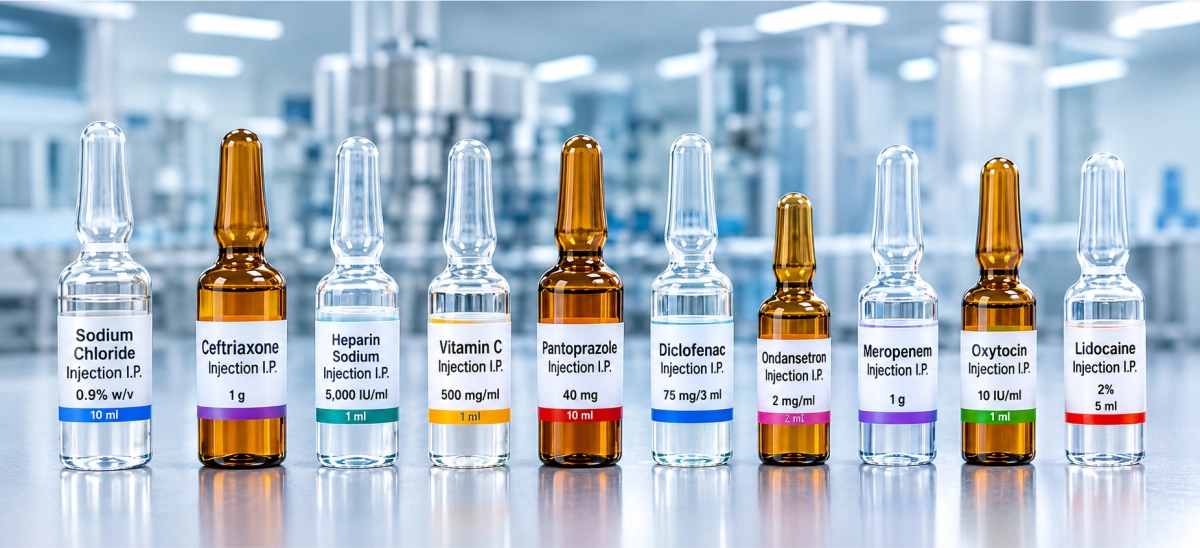
Manufacturers choose ampoules for injectable drugs because glass offers excellent chemical resistance and creates an airtight barrier once sealed. This barrier keeps the drug stable and sterile from the moment of filling until the moment a healthcare provider administers it to a patient.
Sterile packaging matters enormously in this context. Even a small breach in sterility can compromise an entire batch of medicine and put patient safety at risk. That’s why pharmaceutical companies invest heavily in validated, GMP-compliant packaging processes.
Demand for automated ampoule packaging lines has grown steadily across the pharmaceutical industry. Industry researchers value the global market for pharmaceutical glass ampoules in the billions of dollars, and that figure keeps climbing as vaccine programs, biologics, and injectable therapies expand worldwide. As drug volumes rise and regulatory scrutiny tightens, manufacturers increasingly turn to automation to improve consistency, reduce the risk of contamination, and meet strict global quality standards. This guide walks through the complete ampoule packaging line, its process, equipment, benefits, and the standards that govern it.
Understanding Ampoule Glass: Types, Forms, and Identification
What Is an Ampoule and How Is It Made?
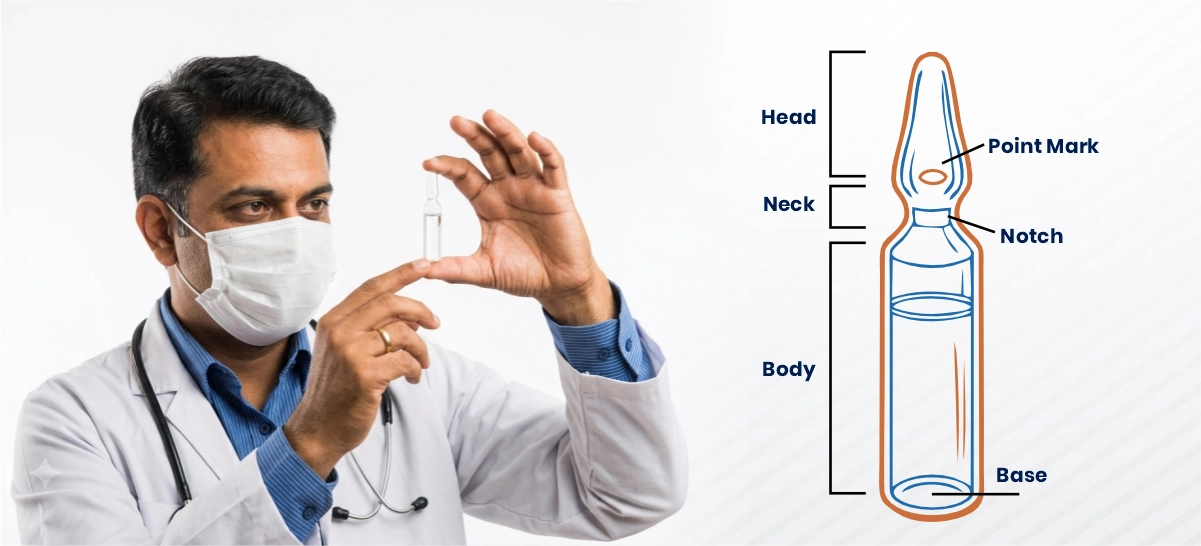
Before diving into the packaging line itself, it helps to understand what an ampoule actually is and how it’s built. An ampoule is a small, hermetically sealed glass vessel, closed by melting its narrow neck shut with an open flame. Manufacturers form them from short lengths of glass tubing on automated production lines, heating and shaping the glass with gas torches while computer vision systems monitor dimensional accuracy throughout the process.
Type I vs. Type III Glass: Choosing the Right Grade
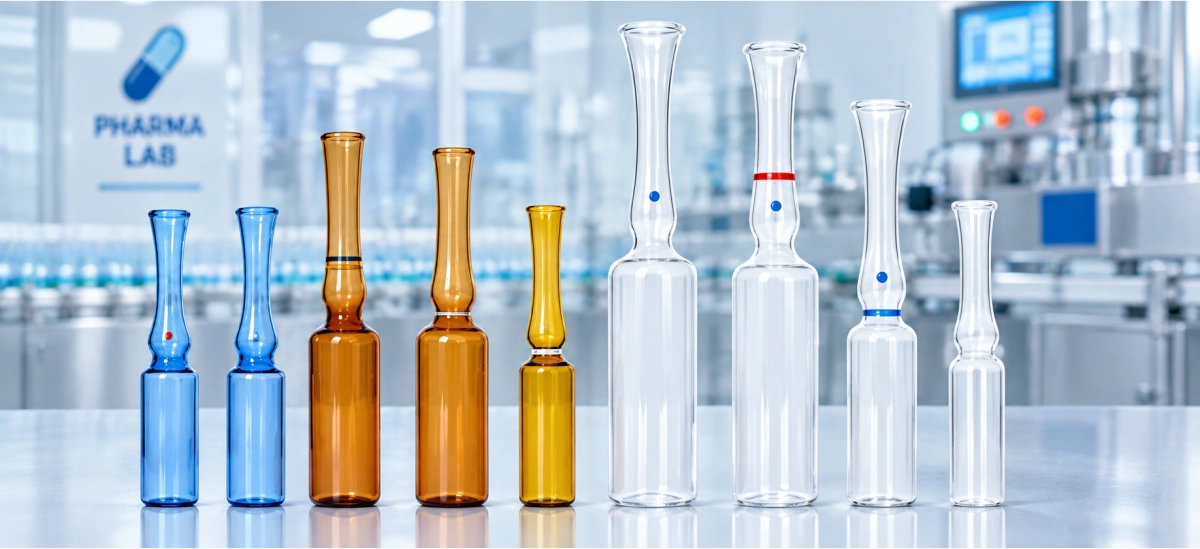
Glass grade matters. Ampoules typically use one of two types of pharmaceutical glass. Type I glass, commonly known as borosilicate glass, offers the highest chemical resistance and the best protection against ion leaching, making it the standard choice for sensitive injectable drugs. Type III glass, a treated soda-lime glass, costs less and suits less sensitive formulations such as oral solutions. Choosing the right glass type at the design stage directly affects long-term drug stability.
ISO 9187-1 Forms and the One-Point Cut (OPC) System
Standardized forms and safe opening. The international standard ISO 9187-1 governs ampoule dimensions, capacity, and performance, and defines three standardised forms still in use: Form B (cut/straight), Form C (open-funnel), and Form D (sealed). Most modern ampoules also feature a one-point cut (OPC), a tiny pre-made score on the neck marked by a colored dot which lets a healthcare worker snap the top off cleanly with the press of a thumb, without needing a file.
Colour-Coded Rings for Fast Identification
Colour coding for fast identification. Manufacturers often apply colored rings or enamel bands around the ampoule neck during production, between the forming and annealing ovens. These machine-readable rings let hospital staff and packaging lines quickly identify the substance inside, supporting safer handling, storage, and labelling further down the supply chain.
The Glass Particle Risk and How Design Reduces It
A known limitation worth designing around. Because ampoules are glass, opening them by snapping the neck can shed microscopic glass particles into the liquid. This is a well-documented concern in clinical literature, and it’s part of the reason inspection, careful glass forming, and OPC technology matter so much and why healthcare providers are often advised to draw medication through a filter needle. A well-engineered packaging line reduces this risk at the source through consistent glass quality and precise sealing.
What is an Ampoule Packaging Line?
An ampoule packaging line brings together a series of connected machines that carry ampoules through every stage of production, from raw glass to a finished, labelled carton ready for shipment. Each machine performs a specific function, and together they form a continuous, automated flow.
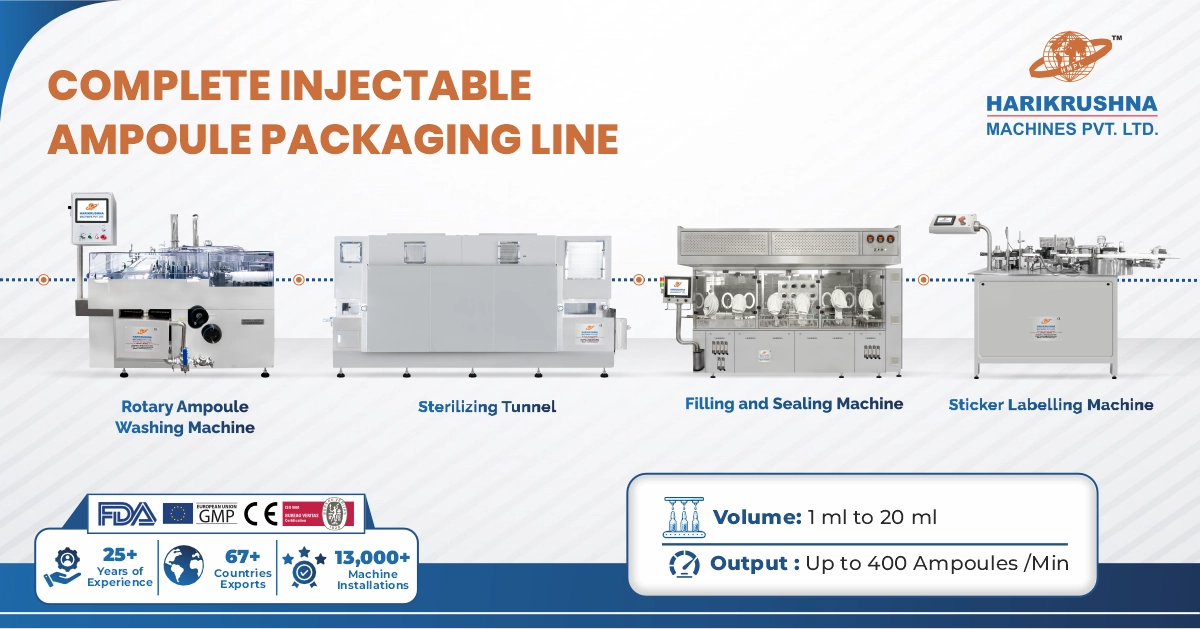
Here’s how the production flow typically looks:
Ampoule Washing Machine → Tunnel Sterilization Machine → Ampoule Filling & Sealing Machine → Ampoule Visual Inspection Machine → Ampoule Sticker Labelling Machine → Ampoule Tray Packing Machine → Cartoning Machine
This sequence ensures that ampoules move from cleaning to sterilization, then to filling and sealing, followed by inspection, labelling, and final packaging, all without manual handling that could introduce contamination.
HMPL offers integrated solutions that bring all of these stages together into a single, synchronized line, with the ampoule filling and sealing machine sitting at its core. Rather than sourcing machines from multiple vendors and struggling with compatibility issues, pharmaceutical manufacturers can implement a complete, validated system designed to work as one unit from day one.
Ampoule Packaging Process Step-by-Step
A. Ampoule Washing Machine
The process begins with thorough washing of every ampoule. Machines wash both the internal and external surfaces to remove glass particles, dust, and any residual contaminants from the manufacturing of the glass itself.
A multi-stage washing system repeats this cleaning cycle multiple times, using different combinations of water and air to achieve a consistently high level of cleanliness. Manufacturers use Water for Injection (WFI) and sterile air during these stages, since ordinary water or air could reintroduce the very contaminants the process aims to eliminate.
B. Sterilization & Depyrogenation
After washing, ampoules pass through a sterilization tunnel that removes pyrogens fever-inducing substances that can remain on glass surfaces even after washing. This step operates at high temperatures, often exceeding 300°C, to destroy any remaining microbial life and pyrogenic material.
This depyrogenation step gives manufacturers strong sterility assurance before the ampoules ever reach the filling stage, which is essential for any product that will be injected directly into a patient’s bloodstream.
C. Ampoule Filling and Sealing Machine
Once sterilized, ampoules move to the ampoule filling and sealing machine, the heart of the entire line. This machine doses each ampoule with an accurate, pre-set volume of liquid drug, ensuring every unit meets exact dosage requirements.
Many machines offer a nitrogen flushing option, which displaces oxygen inside the ampoule before sealing. This protects oxygen-sensitive drugs from degradation and extends shelf life. The machine then seals each ampoule using flame sealing technology, melting the glass tip to create a permanent, airtight closure.
Throughout this stage, the system works to prevent contamination by minimizing human contact and operating within a controlled, often laminar-flow, environment.
D. Inspection Machine
Every sealed ampoule then passes through a visual inspection stage. Inspection machines check for cracks in the glass, which could compromise sterility, as well as cosmetic defects that might indicate a manufacturing flaw.
These machines also detect particulate matter inside the liquid itself. Even microscopic particles can pose a serious risk if injected, so this inspection stage acts as a critical quality checkpoint before any ampoule proceeds further down the line.
Modern inspection stations increasingly rely on machine vision cameras paired with lighting configurations tuned specifically for glass to spot hairline cracks, fill-level inconsistencies, and foreign particles that the human eye would likely miss at production speed. Academic research into ampoule inspection systems has shown that lighting configuration alone can significantly change defect-detection accuracy, which is why serious packaging line manufacturers treat vision system design as its own engineering discipline rather than an afterthought.
E. Labelling & Secondary Packaging Machine
In the final stage, machines apply labels to each ampoule to support traceability throughout the supply chain. Batch coding on each label allows manufacturers and regulators to trace a specific unit back to its exact production batch, which is essential for recalls and quality audits.
Ampoules then move into trays and cartons, which protect them during transportation and storage. Proper secondary packaging prevents breakage and keeps ampoules organized for distribution to hospitals, pharmacies, and clinics.
Because glass ampoules are fragile and easy to chip, leading secondary packaging systems increasingly use robotic arms and sensor-guided singulation rather than rigid mechanical pushers, so each ampoule is picked up, tilted, and placed into its tray or carton with minimal shock. High-throughput cartoning and case-packing equipment on the market today can process several hundred units per minute while still handling multiple pack formats on the same machine, with tool-free format changeovers that take well under an hour.
Key Components of a Complete Ampoule Packaging Line
The table below summarizes the core equipment in a complete ampoule packaging line and the function each machine performs.
| Equipment | Function |
|---|---|
| Ampoule Washing Machine | Cleaning |
| Sterilization Tunnel | Depyrogenation |
| Ampoule Filling & Sealing Machine | Filling & Sealing |
| Visual Inspection Machine | Quality Control |
| Labelling Machine | Product Identification |
| Cartoning Machine | Secondary Packaging |
Each of these machines plays a specific, non-negotiable role. Skipping or under-investing in any single stage can compromise the sterility, accuracy, or traceability of the finished product.
Benefits of Automated Ampoule Packaging
- Improved Accuracy: Automated filling systems deliver precise filling volumes for every single ampoule, eliminating the inconsistency that comes with manual dosing.
- Higher Production Speed: Automated lines significantly increase output, allowing manufacturers to meet large-scale demand without sacrificing quality.
- Reduced Human Intervention: By minimizing manual handling, automated lines lower the risk of contamination that comes from direct human contact with sterile components.
- Regulatory Compliance: Automated systems help manufacturers maintain consistent GMP compliance, since machines follow validated, repeatable processes every time.
- Lower Product Wastage: Better process control across washing, filling, and sealing reduces the number of rejected or defective units, cutting down on wasted drug product.
- Enhanced Product Safety: A fully automated, sterile manufacturing environment protects the final product and, ultimately, the patients who receive it.
Pharmaceutical Standards and Compliance
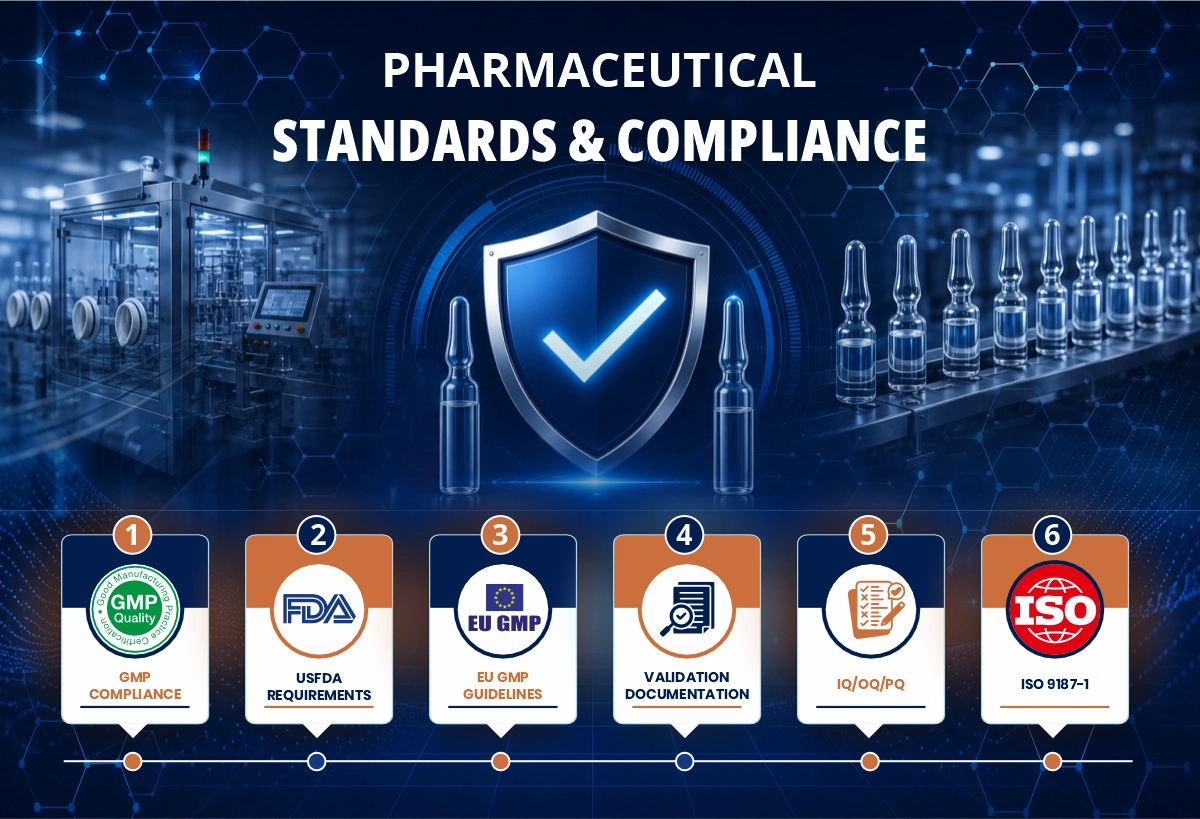
Ampoule packaging lines must meet a range of pharmaceutical standards before manufacturers can use them for commercial production. Key requirements include:
- GMP Compliance – Good Manufacturing Practice guidelines govern every stage of production, from equipment design to operator procedures.
- USFDA Requirements – Manufacturers exporting to the United States must meet the U.S. Food and Drug Administration’s strict requirements for sterile drug packaging.
- EU GMP Guidelines – The European Union enforces its own detailed GMP framework for pharmaceutical packaging equipment.
- 21 CFR Part 11 – Where applicable, this regulation governs electronic records and signatures, relevant for lines with digital data logging and traceability features.
- Validation Documentation – Manufacturers must maintain thorough documentation proving that each machine performs consistently and reliably.
- IQ/OQ/PQ – Installation Qualification, Operational Qualification, and Performance Qualification protocols verify that equipment is installed correctly, operates as intended, and performs consistently under real production conditions.
- ISO 9187-1 – This international standard specifically governs ampoule materials, dimensions, capacity, and performance, giving manufacturers a shared benchmark for container quality across markets.
Meeting these standards isn’t optional; it’s the foundation that allows pharmaceutical companies to sell their products in regulated global markets.
Applications of Ampoule Packaging
- Pharmaceutical Products: Ampoule packaging serves a wide range of pharmaceutical products, including injectable drugs, vaccines, antibiotics, and analgesics. Each of these product categories depends on sterile, tamper-proof packaging to remain safe and effective.
- Biotechnology Products: Biotechnology companies use ampoule packaging for specialized sterile formulations, particularly where product stability and contamination control are especially critical.
- Veterinary Products: Ampoule packaging also extends to injectable veterinary medicines, which require the same level of sterility and dosage accuracy as human pharmaceutical products.
Glass Ampoules vs. Plastic Ampoules
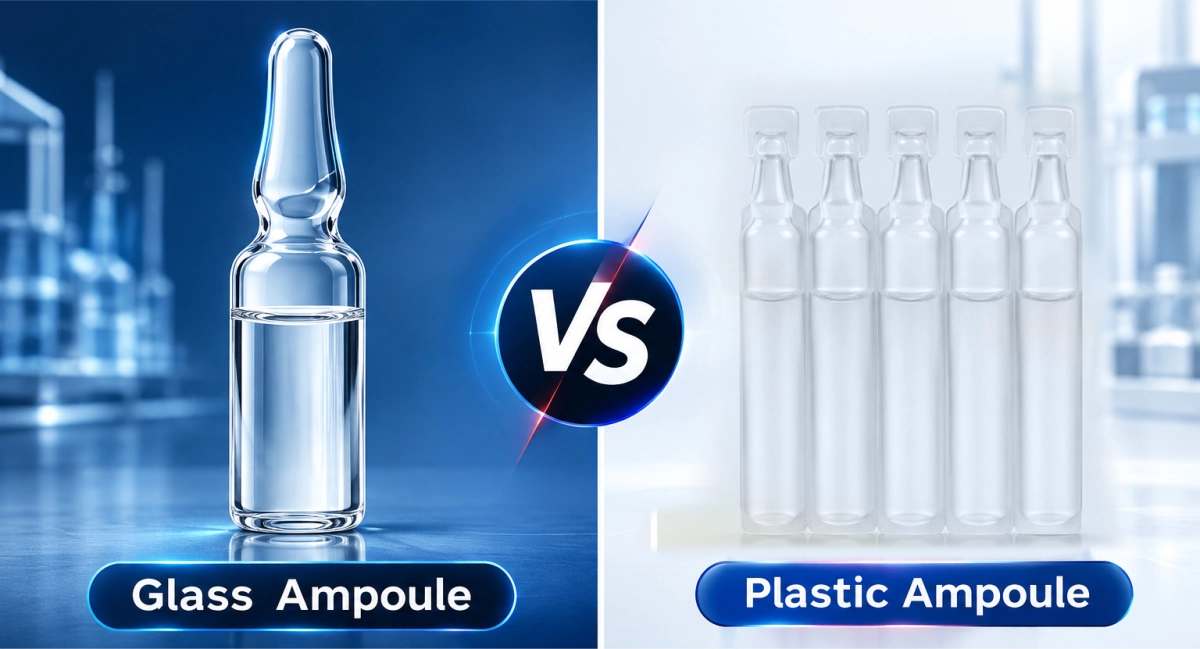
Not every product calls for glass. Manufacturers choosing packaging for a new formulation often weigh glass ampoules against plastic alternatives, and the right choice depends on the drug itself.
Glass wins on chemical inertness and barrier performance; it offers a near-perfect barrier against gases and moisture and won’t leach ions into the formulation, which matters most for highly sensitive injectables. Glass can also be tinted amber to shield light-sensitive compounds. The trade-off is fragility: glass ampoules can chip or crack during transport, and breaking the neck to open one carries a small risk of shedding glass particles into the dose.
Plastic ampoules trade some of that chemical inertness for durability and convenience. They resist shattering, weigh less (which lowers shipping costs), and open with a simple twist or snap rather than a scored-glass break. For less sensitive formulations, many over-the-counter liquids, certain cosmetic actives, or products where user convenience outweighs maximum barrier performance, plastic is often the practical choice.
For manufacturers standardizing around glass, which remains the dominant format for injectable pharmaceuticals, the packaging line described in this guide represents the proven, regulator-trusted path.
Features to Look for in an Ampoule Filling and Sealing Machine
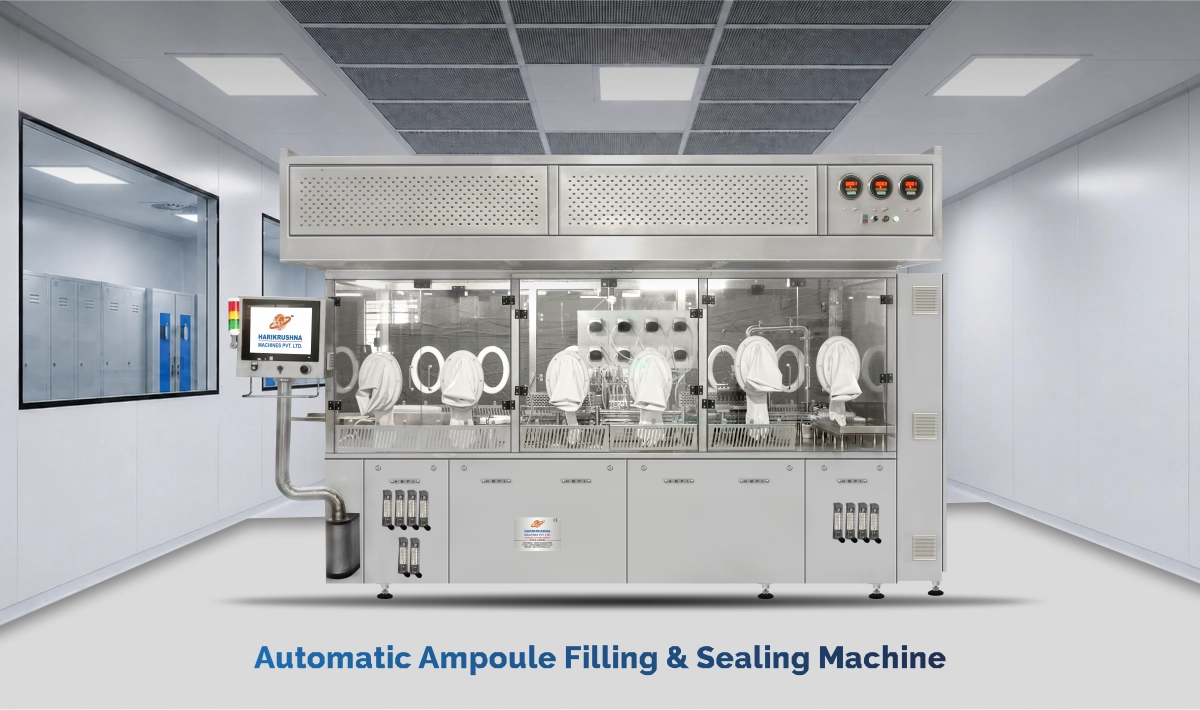
When evaluating an ampoule filling and sealing machine, manufacturers should look for the following features:
- Servo-driven filling system for precise, repeatable dosing accuracy
- No ampoule, no filling functionality, which prevents wasted product when an ampoule is missing or misaligned
- Nitrogen flushing to protect oxygen-sensitive formulations
- PLC + HMI controls for intuitive operation and process monitoring
- CIP/SIP compatibility (Clean-in-Place/Sterilize-in-Place) for efficient, thorough sanitation between batches
- Tool-less changeover to reduce downtime when switching between ampoule sizes or products
- Online rejection system to automatically remove defective units without stopping the line
- Compact GMP design that fits cleanroom space constraints while meeting regulatory standards
These features directly impact production efficiency, product safety, and long-term operating costs, so they deserve careful consideration during the equipment selection process.
Why Choose HMPL? A Leading Ampoule Filling Machines Manufacturer in India
Harikrushna Machines Pvt. Ltd. (HMPL) is a leading manufacturer and exporter of liquid processing and packaging machinery[cite: 1]. HMPL stands out as an end-to-end ampoule packaging line manufacturer, offering complete solutions rather than standalone machines. This approach gives pharmaceutical manufacturers a single point of accountability across their entire packaging process.
As one of the established ampoule filling machines manufacturers in India, HMPL combines local engineering expertise with globally benchmarked design standards, making it a practical choice for both domestic pharmaceutical companies and international buyers sourcing equipment from India.
HMPL delivers customized solutions tailored to each client’s production volume, ampoule sizes, and specific formulation requirements. Every machine HMPL builds is GMP-compliant, designed from the ground up to meet the sterility and documentation standards regulators demand.
With an impressive track record of over 13,000 installations across 67 countries[cite: 1], HMPL brings proven experience to pharmaceutical manufacturers of every scale. As a full-line ampoule filling machines manufacturer in India, the company also provides comprehensive technical support and validation support, helping clients navigate IQ/OQ/PQ documentation and regulatory audits with confidence.
Beyond installation, HMPL offers training and after-sales service, ensuring that operators know how to run and maintain their equipment correctly for years to come. This full-lifecycle support sets HMPL apart as a long-term partner rather than a one-time equipment vendor.
Future Trends in Ampoule Packaging
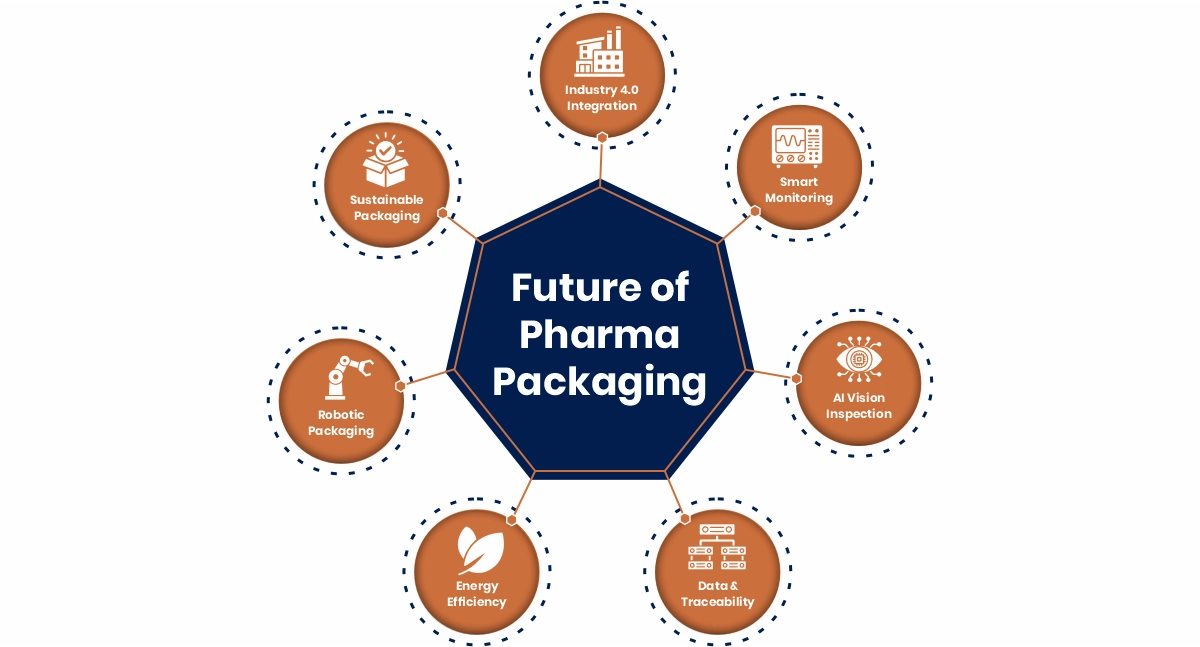
The ampoule packaging industry continues to evolve alongside broader manufacturing technology trends. Key developments shaping the future include:
- Industry 4.0 integration, connecting packaging lines to broader digital manufacturing ecosystems
- Smart monitoring systems that track machine performance and flag issues before they cause downtime
- Automated inspection using AI vision, which improves defect detection accuracy beyond traditional visual inspection methods
- Data logging and traceability, supporting compliance with electronic record-keeping regulations
- Energy-efficient equipment, reducing the environmental footprint and operating costs of packaging lines
- Robotic packaging solutions, further reducing human intervention and improving speed and precision at the secondary packaging stage.
- Sustainable secondary packaging, with a growing number of manufacturers replacing plastic trays with molded paperboard or card trays to cut plastic use without compromising product protection
As these technologies mature, pharmaceutical manufacturers who invest in modern, upgradable ampoule packaging lines will find themselves better positioned to meet rising production demands and tightening regulatory expectations.
Frequently Asked Questions
What is ampoule packaging?
What is an ampoule packaging line?
What is an ampoule filling and sealing machine?
What are the main steps in the ampoule packaging process?
What is the difference between glass and plastic ampoules?
What standards govern ampoule packaging equipment?
How fast can an automated ampoule packaging line run?
Who is a reliable ampoule filling machines manufacturer in India?
Eye Drop Packaging: History, Design, and Machinery
Eye drops look simple. A small bottle, a narrow tip, a twist cap. Yet behind that simplicity sits one of the most demanding packaging challenges in the entire pharmaceutical industry. The eye is one of the most sensitive and unforgiving organs in the human body. Any product that touches it must clear a much higher bar than almost any other drug delivery format. That bar starts with the packaging.
At HMPL Sterile, we design and manufacture eye and ear drop filling, plugging, capping, labelling, and cartoning machinery for pharmaceutical companies worldwide. We spend our working days thinking about bottlenecks, torque specifications, dropper tip apertures, and sterility assurance. We know that a packaging line is not just equipment on a factory floor. It is the last line of defence between a formulation and a patient’s eye.
This guide walks through five areas: what eye drops are, how eye drop packaging has evolved, what goes into designing a safe and functional bottle, why packaging matters so much in this category, and how a complete packaging line brings all of it together.
What Are Eye Drops, and How Do People Use Them?
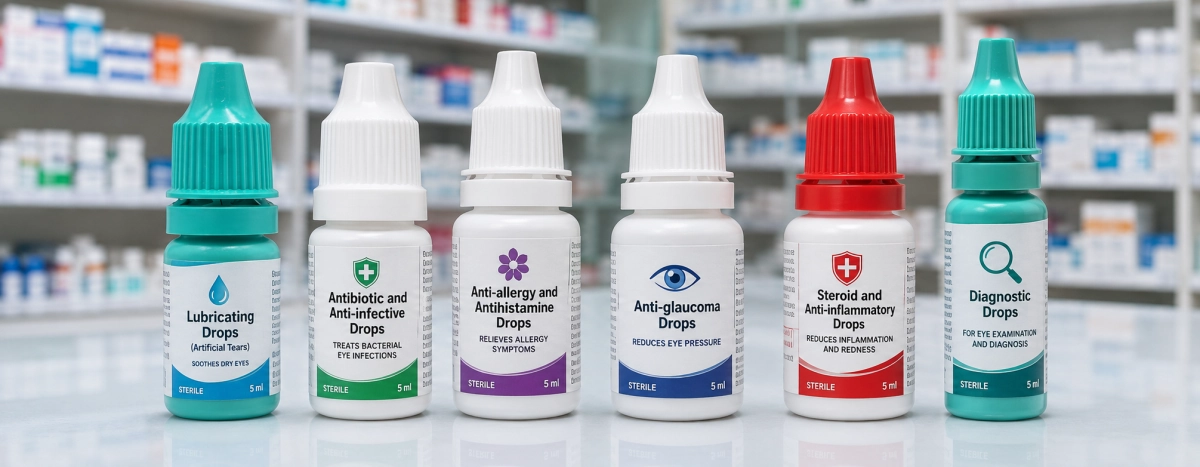
Eye drops, known formally as ophthalmic solutions, are liquid medications that patients apply directly to the eye. They treat a wide range of conditions and needs, and manufacturers generally group them into a few broad categories.
- Lubricating drops (artificial tears) relieve dryness, irritation, and the gritty discomfort that comes from reduced tear production. Retailers sell these widely over the counter. Millions of people who spend long hours in front of screens or live in dry climates use them.
- Antibiotic and anti-infective drops treat bacterial infections such as conjunctivitis. These require a prescription and demand strict sterility. Any contamination the patient introduces during use can worsen the very infection the drug is meant to treat.
- Anti-allergy and antihistamine drops reduce the itching, redness, and watering associated with seasonal or chronic allergic conjunctivitis.
- Anti-glaucoma drops lower intraocular pressure, and patients managing glaucoma often use them daily, sometimes for life. Because these products serve a chronic need among an ageing patient population, ease of use and dosing accuracy carry extra weight.
- Steroid and anti-inflammatory drops manage post-surgical inflammation, uveitis, and other inflammatory eye conditions, typically under close medical supervision.
- Diagnostic drops, such as mydriatics that dilate the pupil, appear in clinical settings. Doctors use them before an eye examination rather than at home.
Each of these categories comes with its own packaging demands. A preservative-free lubricant meant for frequent daily use calls for a different container strategy. A glaucoma medication meant to last thirty days after opening needs a different approach entirely. This is exactly why manufacturers cannot treat eye drop packaging as one-size-fits-all. It is also why they work closely with packaging engineers from the earliest stages of formulation.
Eye Drop Packaging in the Market: From History to Latest Trends
Eye drop packaging has changed dramatically over the past century. Each shift has pursued the same underlying goal: reducing risk to the eye while making the product easier and safer to use.
The Early Days: Glass Bottles and Rubber Droppers
Manufacturers commonly dispensed early ophthalmic preparations in glass bottles with separate rubber-bulb droppers, a format older generations of patients still remember. Glass offered excellent chemical inertness and clarity, but it was fragile and heavier to transport. The separate dropper also introduced extra handling steps that raised contamination risk every time it touched a surface or the eye itself.
The Shift to Plastic Squeeze Bottles
The mid-to-late twentieth century brought a shift to plastic. Manufacturers began using low-density polyethylene (LDPE) squeeze bottles with an integrated dropper tip molded directly into the bottle. This single change solved several problems at once. It removed the loose rubber bulb and reduced breakage during shipping and handling. It also cut manufacturing costs and let the bottle itself control drop size through the design of the tip orifice.
Advances in Closure Systems
From there, packaging engineers turned their attention to the closure system. Tamper-evident bands, induction seals, and integrated piercing pins became standard. Regulators pushed for stronger proof that no one had opened or adulterated a product before it reached the patient. Multi-piece dropper assemblies typically a bottle, a separate dropper tip insert, and a screw cap became the dominant format. They let manufacturers fine-tune drop volume independently of the bottle body.
Solving the Preservative Problem
The most recent wave of innovation addresses a different problem entirely: preservatives. Many multi-dose eye drops rely on preservatives such as benzalkonium chloride to prevent microbial growth once patients open the bottle and expose it to repeated air and finger contact. Preservatives, however, can irritate sensitive eyes with long-term use.
This has pushed the market toward preservative-free multi-dose systems. These systems use one-way valves, filtering membranes, or airless pump mechanisms to keep the internal contents of the bottle sterile without any added preservative. These systems cost more to manufacture but answer a genuine clinical need, particularly for patients using glaucoma medication daily for years.
Sustainability in Modern Packaging Design
Alongside these functional changes, sustainability has entered the conversation. Manufacturers are increasingly evaluating recyclable resins and lighter-weight bottle designs that use less plastic without compromising squeezability. They are also investing in packaging lines flexible enough to switch between multiple bottle formats without long changeover times.
Ophthalmic Eye Drop Bottle: Parts, Packaging, and Materials
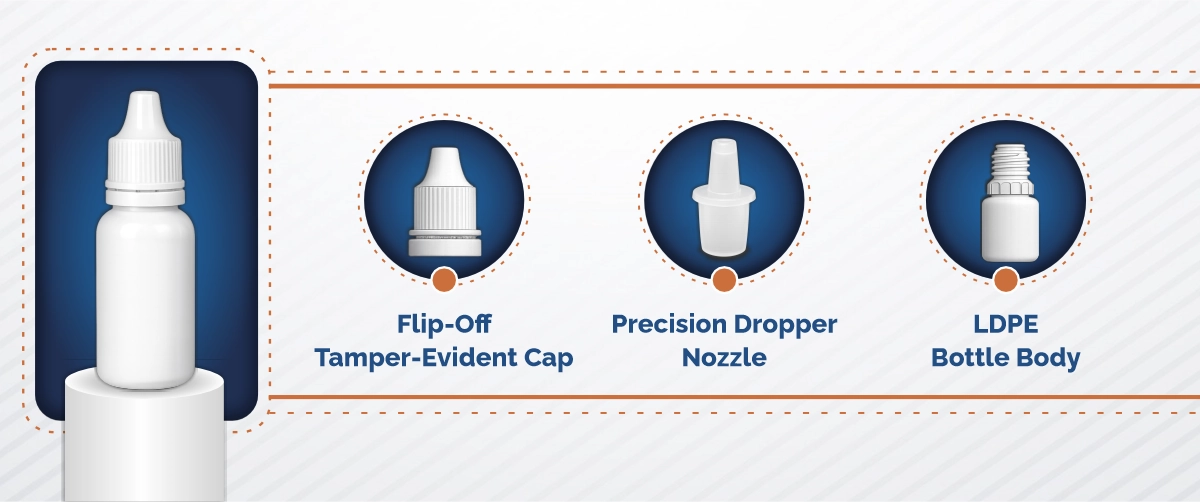
An eye drop bottle looks like one part, but it is really a small assembly of components, each engineered to a specific tolerance.
The Bottle Body
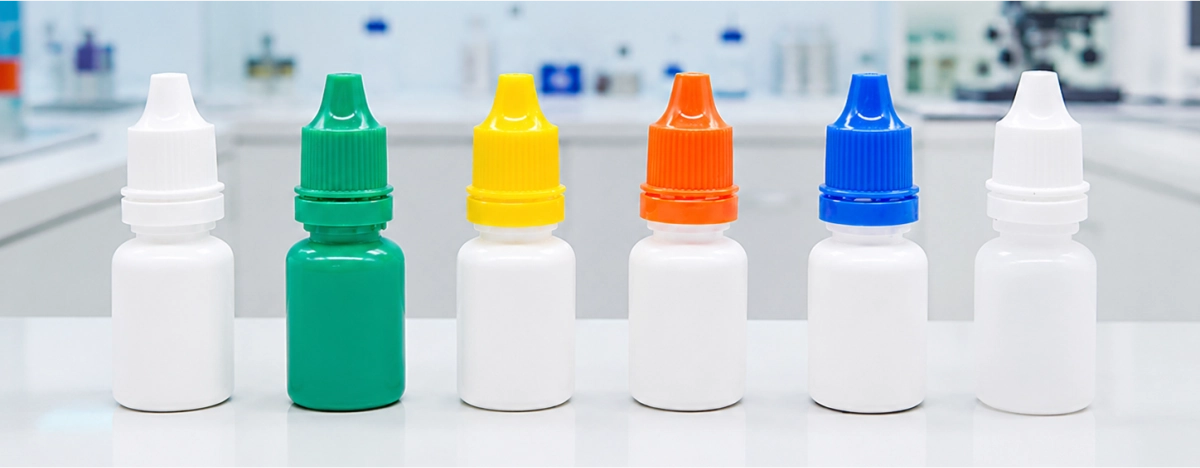
Manufacturers almost always make the bottle body from LDPE or a blend of LDPE and other polyolefins. They choose this material for several reasons. It is chemically compatible with most ophthalmic formulations and does not leach compounds into the liquid. It is also soft enough to squeeze evenly with light finger pressure, and transparent or translucent enough to allow a visual fill-level check.
The Dropper Tip
The dropper tip or orifice insert controls drop size and drop consistency, arguably the single most safety-critical dimension in the entire package. A tip that is even slightly too large delivers an oversized drop and wastes product. It can also shorten the number of usable days a patient gets from a bottle meant to last a set treatment period. A tip that is too small may frustrate dosing or clog. Engineers measure precision here in fractions of a millimeter.
The Plug or Insert
The plug or insert sits inside the neck of the bottle. It is often the piece responsible for maintaining a seal between doses while still allowing controlled dispensing when the bottle is squeezed. In many designs, this plug also houses a filter or valve system for preservative-free formulations.
The Cap
The cap provides the final barrier against contamination and environmental exposure. Cap torque is a deceptively important specification. If the cap is too tight, older adults or patients with limited hand strength or dexterity cannot open the bottle without help. If it is too loose, the seal may not hold, or the tamper-evident feature may break prematurely during shipping.
The Tamper-Evident Band or Seal
The tamper-evident band or seal proves to the patient that no one has opened the product before first use. Manufacturers industry-wide have documented this as a source of design problems. Loose or non-retaining tamper-evident rings can slip down the bottle neck. In rare but serious cases reported to regulators, they fall directly onto a patient’s eye during use, sometimes leaving sharp plastic edges that scratch the cornea. This shows how a seemingly minor packaging component can become a genuine safety issue if the engineering is not right.
Secondary Packaging
Secondary packaging, typically a printed carton with a folded package insert, protects the bottle physically and shields light-sensitive formulations from degradation. It also carries the labelling and dosing instructions patients rely on.
Material Selection and Compatibility Testing
Compatibility testing governs material selection throughout all of these components. Packaging engineers test for extractables and leachables, moisture and oxygen barrier performance, and resistance to the specific pH and preservative system of the formulation inside. A bottle resin that works perfectly for one drug can be entirely wrong for another. This is why manufacturers qualify materials on a product-by-product basis rather than once for an entire product line.
Why Eye Drop Bottle Packaging Matters So Much in Pharma?
It is worth pausing on why this category of packaging carries so much weight, because the reasons are not obvious until you look closely.
The Eye Has Almost No Natural Defence Against Contamination
Unlike the digestive system or skin, the eye has very limited natural barriers against introduced microbes. Regulators require any drug applied to the eye to be sterile. That sterility has to survive not just manufacturing and shipping but weeks of repeated patient use, opening, closing, and occasional accidental contact between the dropper tip and fingers, eyelashes, or surfaces. The packaging is what stands between a sterile fill and a contaminated bottle three weeks into use.
Recalls in This Category Are Frequent and Severe
Regulatory bodies have issued multiple safety alerts and nationwide recalls in recent years tied directly to contamination risk in eye drop products. Consequences have ranged from eye infections to permanent vision loss. These recalls almost always trace back to either manufacturing sterility failures or packaging design flaws. Common flaws include inadequate seals, closures that invite contamination, or dispensing mechanisms that fail to control drop volume.
Dosing Accuracy Depends Entirely on the Bottle, Not the Formulation
A well-formulated drug delivered through a poorly designed dropper tip can still under-treat or over-treat a patient. Regulatory reviewers pay close attention to drop volume consistency. This matters especially when they compare a generic product’s packaging performance against the reference product it is meant to match. A meaningfully larger or smaller drop size changes how long a bottle lasts and how much drug actually reaches the eye.
Patient Usability Is a Genuine Safety Factor, Not a Convenience Issue
Many chronic eye conditions, glaucoma in particular, disproportionately affect older patients, some of whom have reduced hand strength or dexterity. A cap that requires excessive torque to open, or a multi-step piercing procedure that confuses the user, can push some patients toward using household tools like scissors to open a dropper tip. This introduces an entirely avoidable injury risk. Packaging that a healthy twenty-five-year-old finds effortless may be genuinely difficult for the patient actually using the product.
Packaging Protects the Drug From Itself, and From the Environment
Many ophthalmic actives are light-sensitive or oxygen-sensitive. Amber or opaque bottles and cartons, combined with tight closure systems, extend shelf life and preserve potency for the full labelled duration of use.
A Distinct and Heavily Scrutinized Category
Put together, these factors explain why regulators treat ophthalmic container closure systems as a distinct and heavily scrutinized category, separate from general pharmaceutical packaging rules. For manufacturers, that means the packaging line producing these bottles has to run with pharmaceutical-grade precision on every single unit, not just on average.
Eye Drop Bottle Packaging Machinery: Primary to Secondary
A finished, sealed carton of eye drops on a pharmacy shelf is the result of a sequence of machines. Each machine handles one precise step. At HMPL Sterile, we build and supply the individual machines and complete lines that carry a bottle from raw component to shelf-ready product.
Unscrambler with Air Jet Cleaning Machine
Before a single drop of liquid touches a bottle, the bottle itself has to be clean and correctly oriented. An unscrambler receives bulk-loaded empty bottles, often eye-ear drop bottles, nasal spray bottles, or general PP bottles. It automatically orients every bottle upright and in the correct position for the line ahead. Built-in high-pressure air jet cleaning stations blow out any dust, plastic shavings, or manufacturing debris trapped inside each bottle before it proceeds to filling. This step matters more than it might seem: any particulate left inside a bottle becomes a particulate the patient eventually applies to their eye.
Automatic 3-Piece Eye Drop Filling, Plugging and Capping Machine
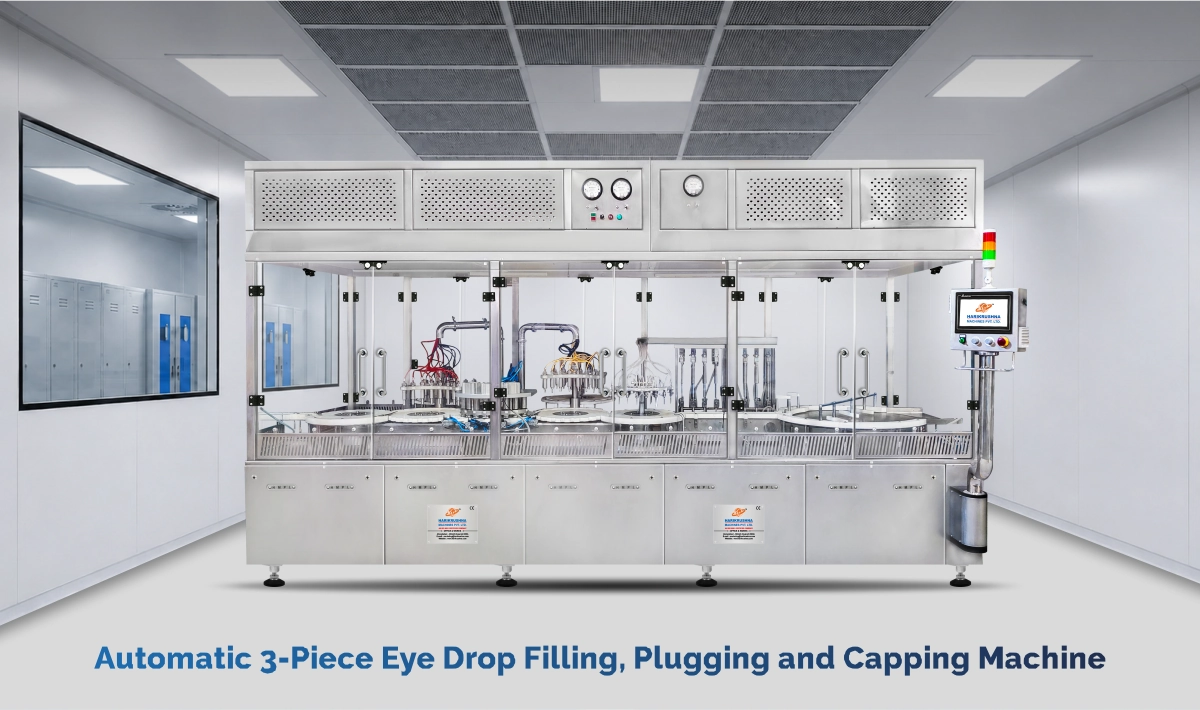
This is the heart of the primary packaging process. An Automatic 3-Piece Eye Drop Filling, Plugging and Capping Machine performs the sequence that turns an empty, clean bottle into a sealed, dosed product. This includes precise liquid filling to the correct volume, insertion of the plug or dropper-tip insert, and application and torquing of the cap, all in a single continuous, automated flow. Eye and ear drop formulations are typically low-viscosity, free-flowing liquids filled in small volumes, so filling accuracy at this stage has to be tight. The machine’s plugging and capping stations also have to apply consistent, repeatable force. This ensures every bottle leaving the line has the same seal integrity and the same cap torque.
Automatic High-Speed Rotary Sticker Labelling Machine
Once manufacturers fill and seal a bottle, it needs a label carrying the product name, batch number, expiry date, and regulatory information. A rotary sticker labelling machine applies labels at high speed and with tight positional accuracy across a wide range of bottle diameters. This matters because eye-ear drop bottles and vials vary considerably in size from one product line to the next. Output speeds in the range of hundreds of bottles per minute allow this station to keep pace with upstream filling without becoming a bottleneck.
Automatic Shrink Sleeve Applicator Machine
Some products need a full-body sleeve label, tamper-evident neck banding, or brand graphics wrapped around an irregular bottle shape. For these, a shrink sleeve applicator machine feeds a pre-cut sleeve over the bottle, then passes it through a heat tunnel that shrinks the sleeve tightly onto the container’s contours. This equipment typically includes a rotary cutter to size each sleeve and a cooling fan after the shrink tunnel to set the sleeve in place. It also includes safety guarding around the moving components. Manufacturers use this step wherever tamper evidence or shelf branding needs to sit directly on the bottle rather than relying on the cap alone.
Automatic Eye-Ear Drop Bottle Cartoning Machine
At this stage, filled and labelled bottles move from primary to secondary packaging. A cartoning machine checks that each incoming product is present and correctly filled. It embosses or prints batch codes onto the carton, erects a flat carton blank into its final box shape, inserts the folded package leaflet alongside the bottle, closes the carton, and discharges the finished pack. Continuous-motion cartoning machines in this category can run anywhere from around 120 to 240 cartons per minute. Manufacturers typically configure them to handle a defined range of carton lengths, depending on whether the line uses a two-chain, three-chain, or four-chain configuration.
Packing Conveyor
Every stage above needs to hand product to the next stage smoothly, and that is the job of the packing conveyor. It moves bottles and cartons between machines on a continuously running belt. This keeps the line synchronized so that no station starves for input or backs up with excess output. In a well-designed line, engineers size and speed-match conveyors precisely to the throughput of the filling, labelling, and cartoning stations they connect.
BOPP Tape Sealing Machine
At the very end of the secondary packaging process, outer shipping cartons need to be closed and sealed for transport. A BOPP tape sealing machine automates this step. It applies tape across the top and bottom flaps of each shipping carton with consistent pressure and placement, protecting the sealed integrity of the shipment and giving it a clean, professional finish before it leaves the facility.
Complete Eye-Ear Drop Packaging Line
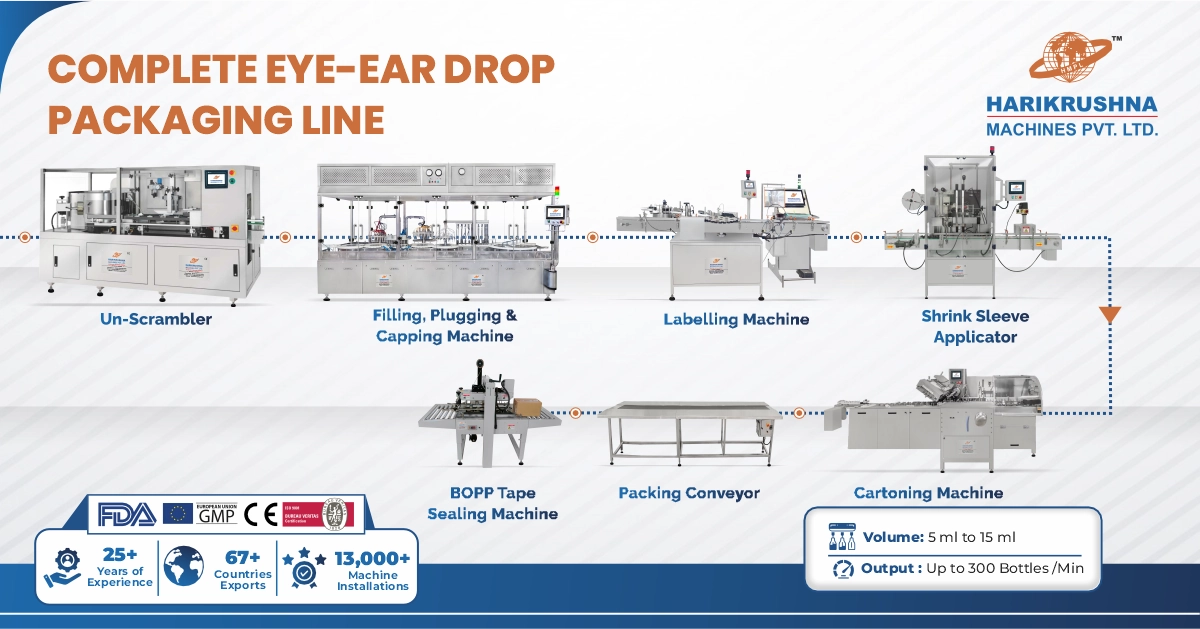
Individually, each of the machines above solves one problem. Connected, they form a complete eye-ear drop packaging line. This line takes empty bottles in at one end and delivers sealed, labelled, cartoned, and shipment-ready product out the other, with minimal manual intervention in between.
HMPL Sterile builds its complete eye-ear drop packaging line for free-flow liquid fills from 5 ml to 15 ml, running at speeds up to 200 bottles per minute. A few characteristics define what makes a line like this work well in a real pharmaceutical production environment:
- Accurate filling: Volume consistency across every single bottle on the line is non-negotiable in ophthalmic production, where drop size directly affects dosing and treatment duration.
- Aseptic packaging and compliance: Engineers design the line around the sterility requirements that regulators apply specifically to ophthalmic products, from bottle cleaning through final sealing.
- Versatility: Pharmaceutical manufacturers rarely run just one SKU. A line that can switch between different bottle sizes, cap types, and carton formats without excessive downtime keeps a facility flexible as product portfolios grow.
- High speed and efficiency: Throughput has to scale with commercial demand without sacrificing the accuracy that regulators and patients depend on.
- Customization: No two manufacturers run identical processes. A packaging line worth investing in should adapt to the specific bottle geometry, closure system, and carton design. It should match what a manufacturer has already validated for their product.
The Importance of International Standards for Eye-Ear Drops Worldwide
Because ophthalmic products carry heightened patient risk, regulators subject them to close and specific attention nearly everywhere they are sold. National health authorities require manufacturers producing eye drops for markets like the United States to register their facilities. These authorities also actively monitor products already on shelves through sampling, testing, and adverse event tracking, not just at the point of initial approval.
Regulators review container closure systems for ophthalmic products as part of the drug approval process itself. They do not treat these systems as an afterthought to the formulation. Regulators expect manufacturers to qualify packaging components such as tamper-evident collars, speciality seals, and dropper-tip assemblies. Manufacturers must also demonstrate that these components perform their intended function reliably before a product reaches the market. Where a company changes a packaging component after approval, that change typically requires its own supporting data and, in many cases, regulatory notification or approval.
Good manufacturing practice (GMP) requirements extend across the entire packaging line, not just the filling station. That means equipment cleanliness, material traceability, batch coding accuracy, and validated process parameters for filling, plugging, capping, and sealing all fall within scope for regulatory inspection. This is precisely why packaging line design cannot be an isolated engineering decision. Manufacturers have to build compliance in from the first machine to the last.
For manufacturers exporting across multiple markets, packaging that satisfies one regulator’s expectations does not automatically satisfy another’s. Building a packaging line with the flexibility to meet varying international standards, while maintaining consistent core quality controls, gives manufacturers room to grow into new markets. They can do this without redesigning their production process each time.
Building the Right Packaging Line for Your Eye Drop Products
Eye drop packaging sits at the intersection of formulation science, mechanical precision, and patient safety in a way that few other pharmaceutical categories do. A bottle that looks identical to a competitor’s on a shelf can behave very differently once it reaches a patient’s hands. Those differences show up in dosing accuracy, contamination risk, shelf life, and patient trust.
At HMPL Sterile, we build unscramblers, filling-plugging-capping machines, labelling systems, shrink sleeve applicators, cartoning machines, conveyors, and tape sealing equipment. We offer these both as standalone units and as fully integrated eye-ear drop packaging lines, engineered around the accuracy and compliance this category demands.
If your team is evaluating new packaging equipment, upgrading an existing line, or planning a facility built around ophthalmic production, we would welcome the conversation. Let’s talk about what that line should look like for your specific product.
About Harikrushna Machines Pvt. Ltd.
Harikrushna Machines Pvt. Ltd. (HMPL) is an ISO 9001:2015 and CE-certified company with over 25 years of expertise as a leading Original Equipment Manufacturer (OEM) for pharmaceutical processing and packaging solutions. We design and manufacture Oral Liquid Manufacturing Plants, Complete Packaging Lines, Standalone Machines, and Packaging Ancillary Equipment, delivering reliable, high-performance solutions tailored to the pharmaceutical industry.
With 13,000+ successful machine installations across 67+ countries, HMPL has earned the trust of pharmaceutical manufacturers worldwide. Our USFDA and EU GMP-compliant machines combine precision engineering, advanced automation, and regulatory compliance to help customers achieve efficient, reliable, and world-class pharmaceutical manufacturing.
About HMPL Sterile
HMPL Sterile is the specialized division of Harikrushna Machines Pvt. Ltd., dedicated to manufacturing advanced aseptic packaging machinery in the pharmaceutical industry. We engineer high-performance equipment that delivers precision, reliability, and compliance with global regulatory standards. By combining innovation with robust engineering, we help pharmaceutical manufacturers achieve efficient, safe, and consistent aseptic packaging operations.
Frequently Asked Questions
SteriShield: Aseptic Vial Filling Machine by HMPL
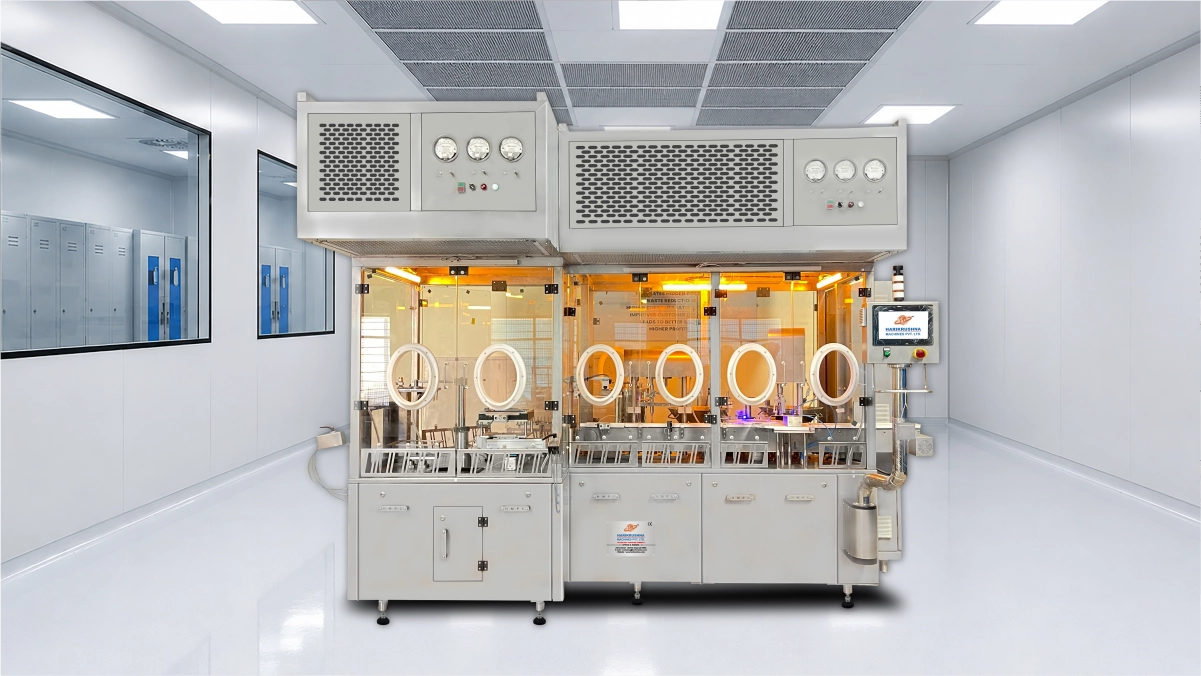
Aseptic vial filling is one of the most unforgiving processes in pharmaceutical manufacturing. A single deviation in containment, dosing accuracy, or operator handling can contaminate an entire batch, trigger a regulatory hold, or write off a high-value biologic formulation overnight.
For Plant Managers and Procurement Heads, the real question is not whether aseptic filling is challenging. It always is. The real question is whether your current aseptic vial filling machine actively reduces risk or quietly increases it through manual handling, inconsistent dosing, and unplanned downtime. HMPL SteriShield is purpose-built to eliminate these challenges by delivering precise, reliable, and compliant aseptic vial filling performance.
Before looking at any solution, it helps to name the problem in numbers your finance team already tracks:
- Product wastage: Every percentage point of fill-volume variance on a high-value biologic or oncology drug translates directly into lost product cost.
- Unplanned downtime: Manual nest handling and changeovers between batches add non-productive hours that procurement rarely budgets for upfront.
- Compliance exposure:A contamination event during fill-finish can lead to batch rejection, regulatory deviations, and significant production losses.
- Operator safety risk: Open or semi-open filling environments increase operator exposure when working with cytotoxic or high-potency formulations.
Inside HMPL SteriShield: Engineered for Zero-Compromise Aseptic Filling

SteriShield is engineered as a fully integrated aseptic filling line rather than a collection of standalone stations, making it ideal for 0.2 ml to 5 ml vial applications. Every stage, from nest handling and precision filling to stoppering, capping, and final rejection, operates within a single controlled and validated environment to ensure product integrity, process consistency, and regulatory compliance.
1. Isolator or Closed RABS Containment
Manufacturers can specify either a full isolator or a Closed Restricted Access Barrier System (RABS), depending on the potency profile of their product and existing facility design. Both configurations maintain Grade A conditions around the filling zone while protecting operators from exposure.
2. Servo-Driven D-Nesting and XY Gantry Vial Placement
Pre-sterilized nested vials are automatically de-nested and transferred using a high-precision servo-controlled XY gantry system. This advanced automation ensures accurate, repeatable vial positioning throughout the process, enabling high-speed handling of small-format vials while minimizing human intervention and maintaining aseptic integrity.
3. Precision Piston Pump Filling with Volumetric Accuracy up to 0.2 ml
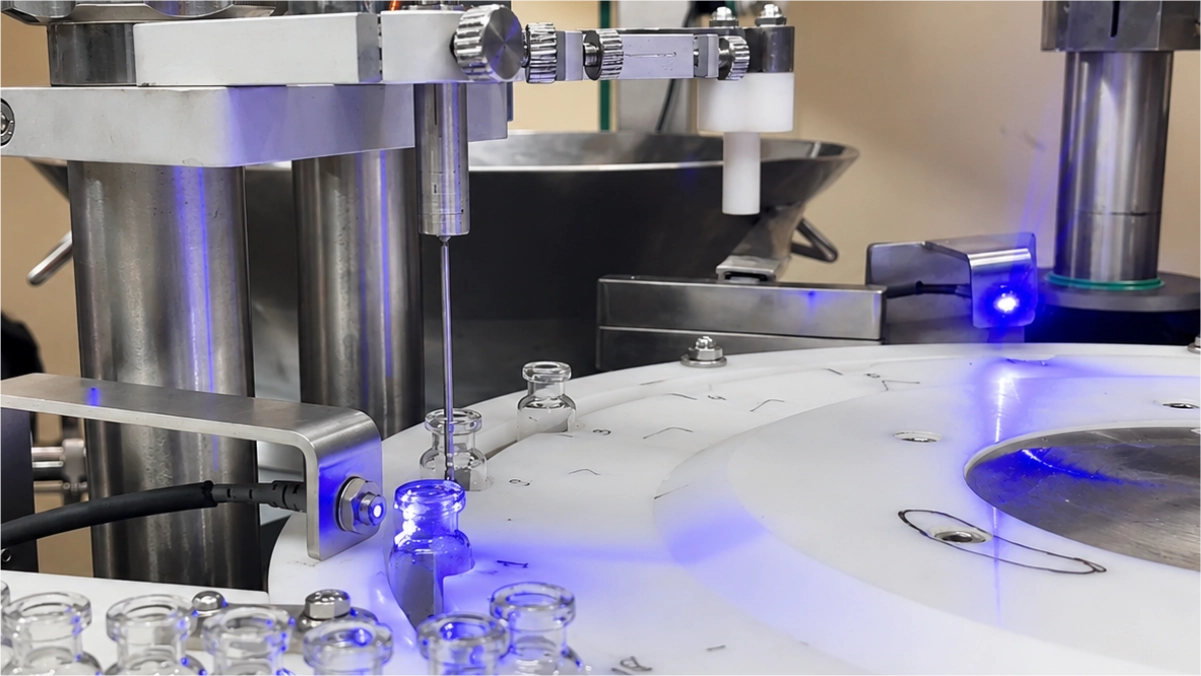
At the core of the system, the advanced piston pump filling unit delivers highly accurate volumetric dosing for every vial. Integrated pre- and post-fill load-cell verification continuously monitors each fill in real time, ensuring precise weight confirmation for every vial while maintaining consistent product quality and regulatory compliance.
This level of control is what makes SteriShield suitable for oncology drugs, vaccines, and other low-volume, high-value formulations where even a 1-2% dosing variance is commercially unacceptable.
4. Integrated Stoppering, Capping & Automatic Rejection
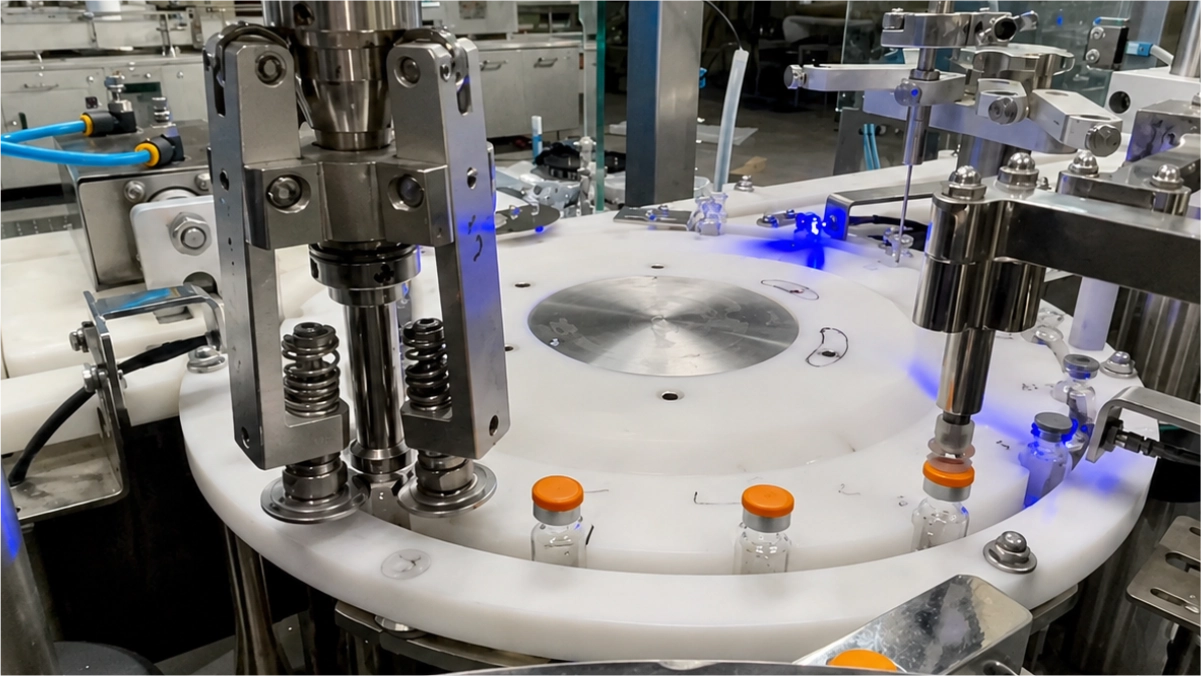
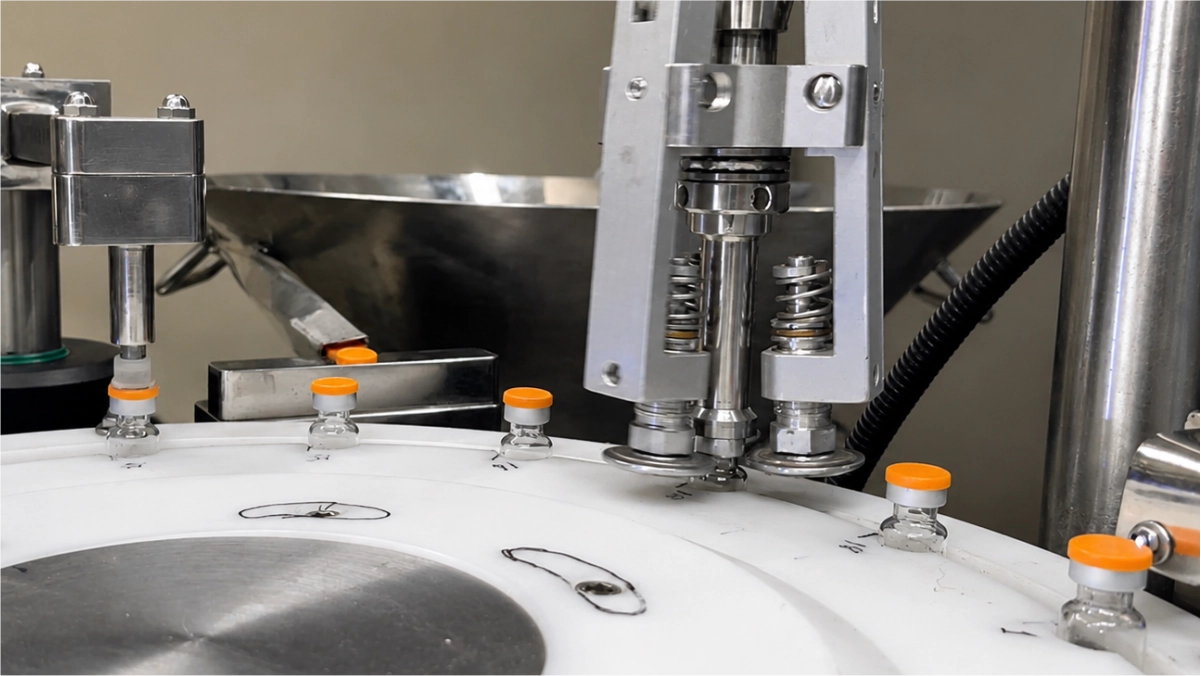
Following the filling process, the system automatically performs stoppering and capping within the same controlled aseptic environment, preserving product sterility throughout production. An integrated in-line inspection system verifies fill volume, stopper placement, and cap integrity, automatically rejecting any vial that does not meet predefined quality specifications to ensure consistent product quality and regulatory compliance.
Business Impact: How SteriShield Improves Your ROI
Technical precision only matters if it shows up on the P&L. Here is how each SteriShield capability maps to a measurable business outcome.
| Pain Point | SteriShield Capability | Business Impact |
|---|---|---|
| Product wastage on high-value drugs | Load-cell verified piston pump dosing (0.2 ml-5 ml) | Tighter fill tolerance reduces give-away volume and rejected batches |
| Manual handling delays | Servo-driven D-nesting and XY gantry placement | Faster, repeatable changeovers cut non-productive line time |
| Contamination / deviation risk | Isolator or Closed RABS containment | Fewer environmental monitoring excursions and deviation reports |
| Legacy line compatibility | SCADA-ready integration with existing equipment | Upgrade aseptic capability without a full line replacement |
| Validation delays | Complete IQ/OQ/PQ documentation package | Shorter qualification timeline, faster time-to-production |
Validation Support and Seamless Integration
The automated stoppering and capping system securely seals each vial within the same controlled aseptic environment immediately after filling, preserving sterility throughout the process. An integrated in-line inspection system continuously verifies fill volume, stopper positioning, and cap integrity, automatically removing any non-conforming vials to ensure consistent quality, product safety, and regulatory compliance.
Built for Global Compliance and Export Markets
HMPL designs and manufactures CE-marked pharmaceutical machinery in compliance with WHO-GMP and EU GMP standards, utilizing FDA-grade product contact materials and GAMP 5-aligned automation. Backed by 13,000+ successful machine installations across 67+ countries, our aseptic filling solutions deliver the reliability, precision, and regulatory compliance required by pharmaceutical manufacturers operating in highly regulated global markets.
| Standard / Certification | What It Covers |
|---|---|
| CE Marking | European conformity for machine safety and design |
| WHO-GMP | Good Manufacturing Practice design alignment |
| EU GMP (incl. Annex 1 principles) | Sterile/aseptic manufacturing environment standards |
| FDA-Grade Materials | Product-contact parts suitable for regulated drug manufacturing |
| GAMP 5 | Risk-based automation and computer system validation |
About Harikrushna Machines Pvt. Ltd.
Harikrushna Machines Pvt. Ltd. (HMPL) is an ISO 9001:2015 and CE-certified company with over 25 years of expertise as a leading Original Equipment Manufacturer (OEM) for pharmaceutical processing and packaging solutions. We design and manufacture Oral Liquid Manufacturing Plants, Complete Packaging Lines, Standalone Machines, and Packaging Ancillary Equipment, delivering reliable, high-performance solutions tailored to the pharmaceutical industry.
With 13,000+ successful machine installations across 67+ countries, HMPL has earned the trust of pharmaceutical manufacturers worldwide. Our USFDA and EU GMP-compliant machines combine precision engineering, advanced automation, and regulatory compliance to help customers achieve efficient, reliable, and world-class pharmaceutical manufacturing. Explore Our Infrastructure and our achievements.
Behind every high-performance pharmaceutical machine is a world-class manufacturing facility. Explore our advanced infrastructure to see how cutting-edge technology, precision engineering, and stringent quality standards enable us to deliver reliable pharmaceutical machinery.
Our achievements reflect a legacy of innovation, engineering excellence, and long-standing customer trust. Discover how our global presence, commitment to quality, and proven track record in delivering advanced pharmaceutical machinery have positioned HMPL as a preferred partner for manufacturers worldwide.
About HMPL Sterile
HMPL Sterile is the specialized division of Harikrushna Machines Pvt. Ltd., dedicated to manufacturing advanced aseptic packaging machinery in the pharmaceutical industry. We engineer high-performance equipment that delivers precision, reliability, and compliance with global regulatory standards.By combining innovation with robust engineering, we help pharmaceutical manufacturers achieve efficient, safe, and consistent aseptic packaging operations.
Conclusion
Vial packaging plays a critical role in protecting sterile pharmaceutical products by maintaining container integrity, product stability, and contamination-free storage throughout the product lifecycle. Precision filling, secure sealing, and accurate labelling are essential to ensure regulatory compliance, patient safety, and consistent product quality.
Discover the key stages, technologies, and best practices in our comprehensive Vial Packaging Guide and learn how advanced packaging solutions optimize efficiency while safeguarding every dose.
Aseptic vial filling demands uncompromising performance to protect both product sterility and operator safety. HMPL SteriShield combines advanced containment technology, servo-driven automation, precision piston pump filling, and integrated verification within a single validation-ready platform for 0.2 ml to 5 ml vial applications, delivering consistent, reliable, and compliant aseptic manufacturing.
For plant managers evaluating a new aseptic vial filling machine, or procurement heads comparing fill-finish lines on total cost of ownership, SteriShield is engineered to reduce wastage, downtime, and compliance risk in equal measure.
For plant managers evaluating a new aseptic vial filling machine, or procurement heads comparing fill-finish lines on total cost of ownership, SteriShield is engineered to reduce wastage, downtime, and compliance risk in equal measure.
Frequently Asked Questions
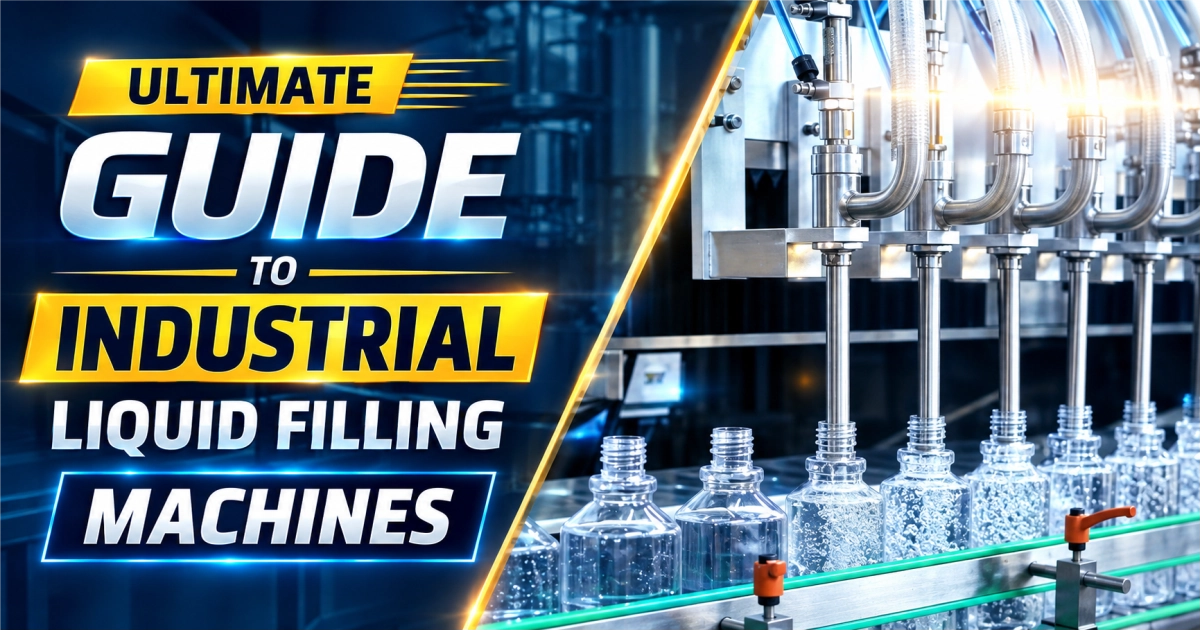
The modern industrial manufacturing landscape requires an uncompromising fusion of precision engineering, high-speed automation, and unwavering regulatory compliance. At the very core of these complex operations is the automatic liquid filling machine. Whether a facility is processing highly viscous cosmetic creams, corrosive agrochemical pesticides, or hyper-sterile pharmaceutical injectables, the operational efficiency of the packaging line directly dictates the overarching profitability of the entire plant.
As global supply chains become more demanding, reliance on outdated, manual, or semi-automated packaging processes is no longer a viable business strategy. This comprehensive guide explores the deep engineering principles behind advanced liquid filling systems, details the critical components of complete turnkey packaging lines, and examines how industries ranging from food and beverage to pharmaceuticals are leveraging an advanced automatic liquid filling machine to achieve unprecedented throughput and regulatory mastery.
Understanding Fluid Dynamics for an Automatic Liquid Filling Machine
The most fundamental engineering challenge in liquid packaging is managing the unique physical characteristics of the product being dispensed. Liquids behave radically differently under pressure, temperature variations, and kinetic movement. Applying a generalized, one-size-fits-all approach to filling machinery inevitably leads to catastrophic product waste, inconsistent dosing, and severe mechanical downtime.
The Critical Role of Viscosity in Pump Selection
Viscosity—the scientific measure of a fluid's resistance to flow—is the primary defining metric that must dictate the selection of your automatic liquid filling machine's pump and nozzle architecture. Free-flowing liquids, possessing a water-like viscosity, behave predictably but require careful handling to prevent splashing and product aeration. For these applications, engineers typically deploy standard volumetric systems utilizing highly sanitary peristaltic pumps. Peristaltic pumps ensure absolute sterility, as the liquid only makes contact with the internal flexible tubing, entirely bypassing the mechanical components of the pump itself.
Conversely, semi-viscous to highly viscous liquids present entirely different flow dynamics. Products such as heavy edible oils, cosmetic creams, honey, and petroleum jelly flow sluggishly and require immense mechanical assistance to move from the hopper to the container. For these challenging formulations, manufacturers must deploy piston filling machines or highly pressurized, servo-driven automatic liquid filling machine setups. Piston pumps provide the necessary pneumatic or mechanical force required to handle high-viscosity liquids, precisely pushing the heavy product out through the filling nozzle and severing the liquid stream cleanly to prevent dripping.
Engineering Solutions for Foaming and Suspended Particulates
Certain liquid formulations, particularly heavy-duty detergents, dairy products, and specialized chemical solutions, are inherently prone to severe foaming when agitated or dispensed at high velocities. To combat this phenomenon, advanced volumetric systems utilize a highly synchronized diving nozzle system.
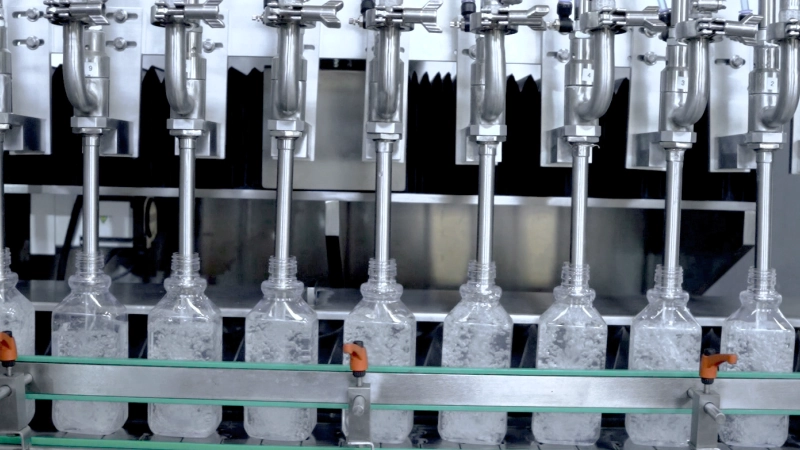
In this mechanical configuration, the filling nozzles descend deeply into the container before the dispensing cycle initiates. As the liquid level gradually rises, the nozzle slowly retracts in perfect synchronization, ensuring the dispensing tip remains submerged below the surface of the liquid throughout the entire fill cycle. This sub-surface filling technique entirely eliminates the aeration that causes foaming, allowing for maximum operational speeds without the risk of product overflow.
Furthermore, liquids containing suspended particulates—such as pulpy citrus juices in the beverage industry or suspended active solids in certain agrochemical slurries—require specialized engineering. The internal pathways, valves, and pump chambers of the automatic liquid filling machine must be adequately sized and contoured to allow particulates to flow unhindered. This careful sizing prevents the clogging of nozzles and ensures a uniform, homogenous distribution of the solid particulates within every single container processed on the line.
Core Technologies: Categorization of Liquid Filling Machines
The selection of appropriate filling machinery is intrinsically linked to the facility's required bottles per minute (BPM), the desired level of labor automation, the available footprint, and the specific industry application.
Automatic Volumetric Liquid Filling Machines
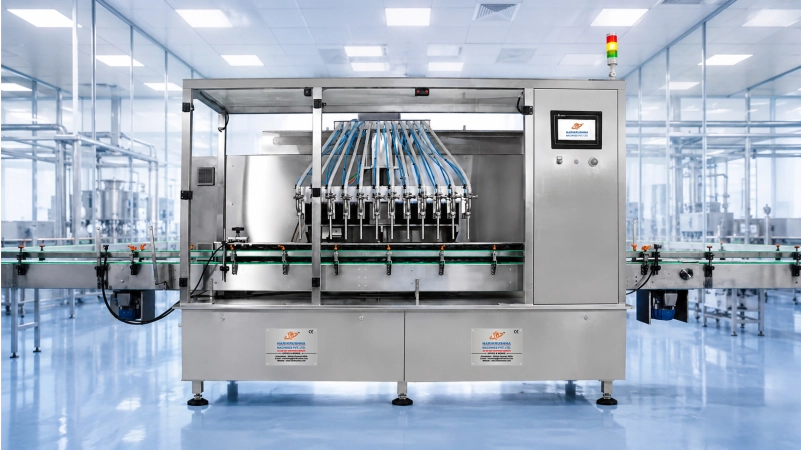
Automatic volumetric fillers serve as the primary workhorses of the global packaging industry. State-of-the-art systems, such as the Automatic Volumetric Liquid Filling Machine engineered for 15mm to 90mm diameter glass and PET bottles, operate utilizing hyper-precise syringes and adjustable dosing blocks. The hallmarks of elite automatic liquid filling machine systems include several critical engineering features:
- High Precision Tolerances: Advanced machines guarantee a ± 1% filling accuracy tolerance on a single dose. This precision is critical for expensive pharmaceutical or chemical formulations where a 2% overfill across a million units results in massive financial losses.
- Intelligent "No Bottle, No Filling" Mechanisms: Integrated smart sensors continuously monitor the presence of a container on the conveyor belt. If a spatial gap is detected, the machine's PLC instantly halts the specific nozzle operation for that position, preventing product waste.
- GMP-Compliant MOC Standards: To comply with strict Good Manufacturing Practice (GMP) requirements, the heavy-duty frame structures feature MS painted cladding with access doors constructed of SS 304. Crucially, every single component that makes direct contact with the liquid product must be manufactured from premium SS 316 stainless steel to prevent corrosion, pitting, and ensure absolute sanitation.
| Machine Configuration | Throughput Range (BPM) | Material Compliance | Optimal Fluid Types |
|---|---|---|---|
| 2-Head Entry System | 10 - 20 BPM | SS 304 / SS 316 Contact Parts | Free-flowing Liquids, Low Viscosity Syrups |
| 4-Head / 6-Head Modular | 30 - 60 BPM | SS 316 Premium Contact Parts | Semi-viscous Oils, Standard Chemicals |
| 12-Head Servo-Driven | 100 - 120 BPM | Full GMP SS 316L Framework | Highly Viscous Creams, Foaming Detergents |
These automatic systems are highly modular and scalable, available in diverse configurations ranging from entry-level 2-head systems scaling up to massive 12-head servo-driven systems capable of sustaining 100 to 120 Bottles Per Minute during continuous 24/7 operations.
Semi-Automatic Piston Filling Machines
While a fully automatic liquid filling machine dominates high-volume manufacturing, semi-automatic piston filling machines offer immense strategic value for smaller operations, pilot plants, and facilities handling extremely viscous materials in smaller, diverse batches. The primary advantage of semi-automatic machinery is extraordinary flexibility. They require lower initial capital investment, feature significantly shorter changeover times due to their simpler mechanics, and allow facilities to rapidly pivot production between vastly different product formats and viscosities with minimal engineering intervention.
Architectural Integration: Designing Turnkey Packaging Lines
A high-speed filling machine, regardless of its precision, cannot operate efficiently in an isolated vacuum. To realize true industrial ROI, manufacturers must implement complete turnkey packaging lines where every upstream and downstream process is seamlessly automated, synchronized, and monitored.
Phase 1: Precision Washing and Absolute Sterilization
Before the automatic liquid filling machine process can commence, containers must be impeccably clean. Automatic rotary bottle washing machines utilize sequential, high-pressure jets of water, compressed air, and specialized chemical cleaning agents to remove dust and microscopic particulates. In the highly regulated pharmaceutical sector, this washing phase is immediately followed by passage through advanced Sterilization Tunnels. These massive thermal units subject glass vials or ampoules to extreme dry heat, ensuring absolute sterility and the destruction of all pyrogens before the containers are allowed to enter the highly classified cleanroom filling environment.
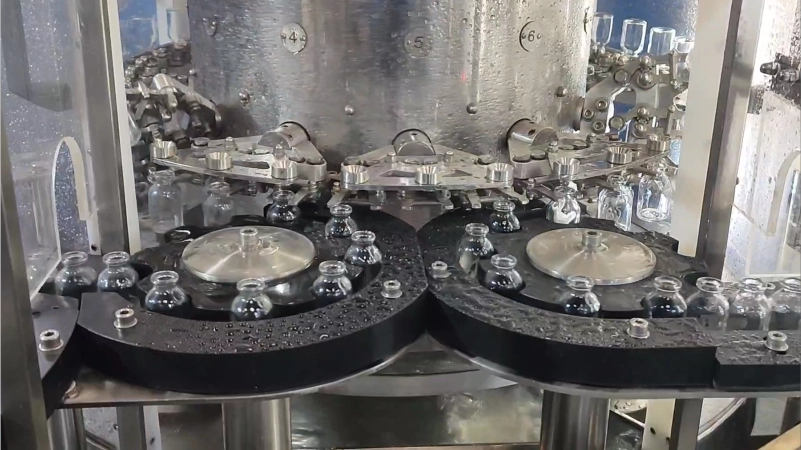
Phase 2: Hermetic Sealing and Capping Machinery
Once the precise volume of liquid is dispensed, the container must be immediately and securely sealed to maintain product integrity, prevent oxidation, and secure it against contamination. Continuous thread cappers use sets of matched, precisely calibrated discs to spin caps down onto bottles as they move rapidly along a conveyor system. Vibratory bowls or mechanized elevators act as auxiliary equipment, automatically feeding the caps into the sorting chute to ensure a continuous supply. For comprehensive system setups, advanced Sealing and Capping Machinery ensures hermetic integrity across vast production batches.
For the distillery and pharmaceutical industries, Roll-On Pilfer-Proof (ROPP) capping machines are the standard. A specialized, rapidly rotating capping head descends, and precision rollers form the threads directly onto the bottle while simultaneously tucking a tamper-evident ring under the neck finish, providing both a hermetic seal and undeniable tamper evidence.
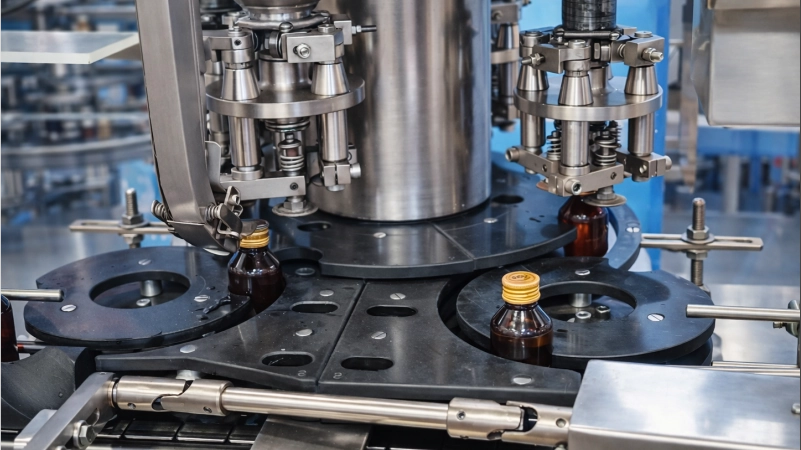
Phase 3: Traceable Labeling and End-of-Line Packaging
The final stages of the turnkey line involve high-speed automatic sticker labeling machines. These versatile units can apply wrap-around labels on round bottles, or execute precise double-sided label applications on flat containers, at speeds that perfectly match the upstream equipment. For advanced compliance, particularly in pharmaceuticals, these labeling machines are inextricably integrated with 21 CFR Part 11 compliant computer systems, ensuring rigorous digital traceability and immutable audit trails.
Following the labeling phase, shrink sleeve applicator machines apply full-body graphical sleeves or tamper-evident neck bands. The containers then pass through specialized shrink tunnels, utilizing controlled heat to conform the plastic seamlessly. Finally, automated case packers and highly accurate multihead weighers prepare the individual units for palletizing, ensuring the final shipped product meets all weight regulations prior to global distribution.
Sector-Specific Compliance and Application Engineering
Advanced Pharmaceutical Packaging Lines
The pharmaceutical industry operates under the most stringent, unforgiving regulatory environments globally. Injectable medications, which bypass the human digestive system and enter the bloodstream directly, require packaging architectures that guarantee absolute sterility, stability, and impenetrable Container Closure Integrity (CCI). Highly sophisticated Pharmaceutical Packaging Lines managing vials—whether utilizing moulded glass for structural mechanical stability or tubular borosilicate glass for high precision and thermal resistance—must be handled with extreme care to prevent micro-fractures during high-speed transit from the automatic liquid filling machine.
Furthermore, Water for Injection (WFI) containers represent the absolute pinnacle of sterile packaging requirements. They must be manufactured with high-grade, infinitely secure seals to maintain absolute purity, preventing any microscopic ingress of environmental contaminants that could catastrophically compromise life-saving medical formulations. The industry is also seeing a massive shift toward advanced robotic pre-filled syringe (PFS) filling and stoppering machines.
Chemical and Agrochemical (Pesticide) Operations
The packaging of industrial pesticides, concentrated fertilizers, and raw chemicals presents unique, life-critical hazards. These liquid formulations are frequently highly toxic, intensely corrosive, and volatile. The entire packaging line in these facilities must be constructed with specialized anti-corrosive materials. Filling accuracy is paramount, not merely for corporate cost control, but to strictly comply with severe environmental and safety regulations regarding the transport of hazardous materials. Automatic induction cap sealing machines are heavily utilized in this sector to fuse a foil seal across the bottle opening, providing a hermetic barrier that prevents dangerous leaks during transit.
Distillery and Premium Beverage Processing
In the global distillery sector, packaging operations must preserve the precise, delicate chemical composition of high-value alcoholic beverages—like premium whisky, aged rum, and distilled vodka—while simultaneously maximizing consumer shelf appeal through flawless presentation. Filling machines in distilleries must handle high-proof, highly flammable alcohol safely. This often necessitates the engineering of explosion-proof electrical enclosures and entirely pneumatic control systems to eliminate ignition risks. Furthermore, the equipment must handle premium glass bottles delicately to prevent any visual scratching or scuffing, and apply highly secure closures—like natural cork stoppers or ROPP aluminum caps—to prevent oxidation and the disastrous evaporation of volatile aromatic flavor compounds.
Technical Frequently Asked Questions (FAQs)
Optimizing Production with Turnkey Packaging Solutions
The strategic transition from outdated manual or disjointed processes to fully integrated, turnkey packaging lines represents one of the most significant operational upgrades a manufacturing facility can execute. By deeply understanding the specific rheological requirements of a product's viscosity and the exact tolerances legally required by industry regulations, industrial manufacturers can drastically reduce waste, guarantee compliance, and maximize long-term throughput.
When evaluating capital equipment investments, partnering with a machinery manufacturer that understands the complex nuances of complete line integration—spanning from sterile washing and an advanced automatic liquid filling machine to high-speed digital labeling and automated case packing—is not just an operational choice; it is a foundational requirement for long-term industrial dominance.
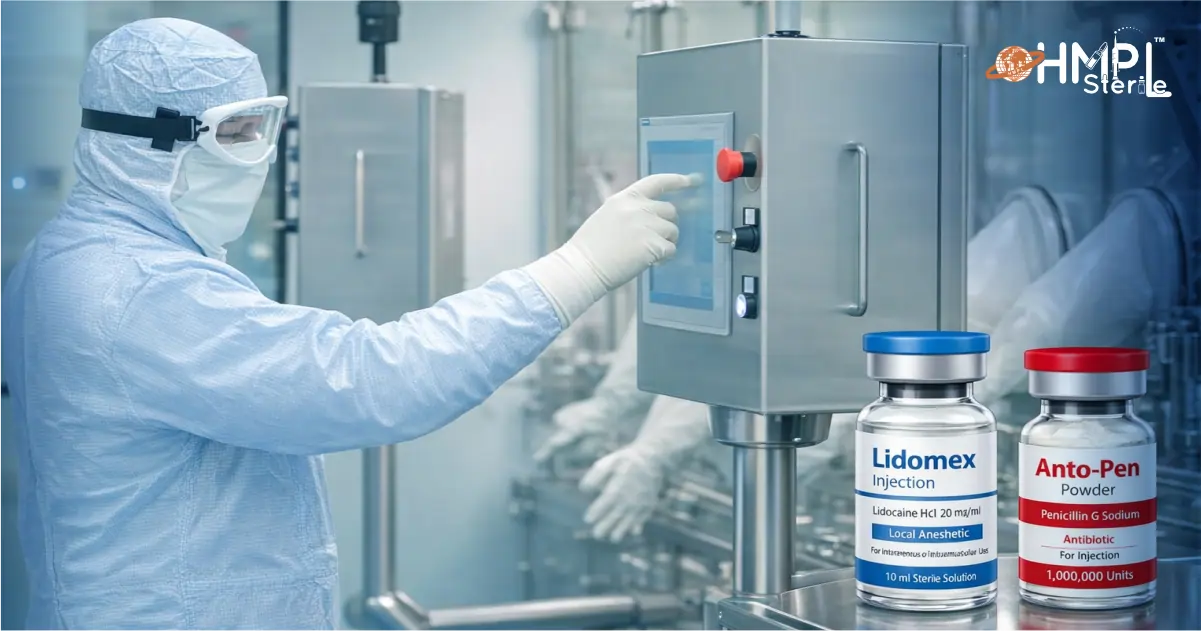
Vial Packaging: Definition, Process, and Its Role in the Pharmaceutical Industry
What Are Pharmaceutical Injectables?
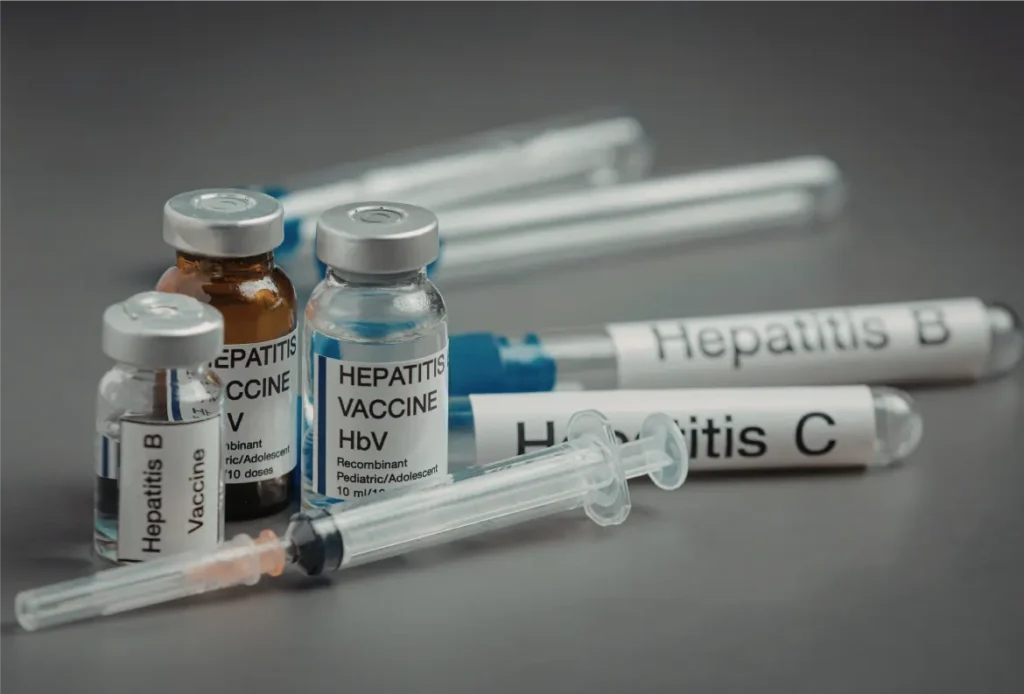
What Are Vials in the Pharmaceutical Industry?

Pharmaceutical Vial Packaging: Types, Applications, and Packaging Considerations
Packaging Considerations
Importance of Vials in Drug Stability and Safety
Types of Vials Used in the Pharmaceutical Industry
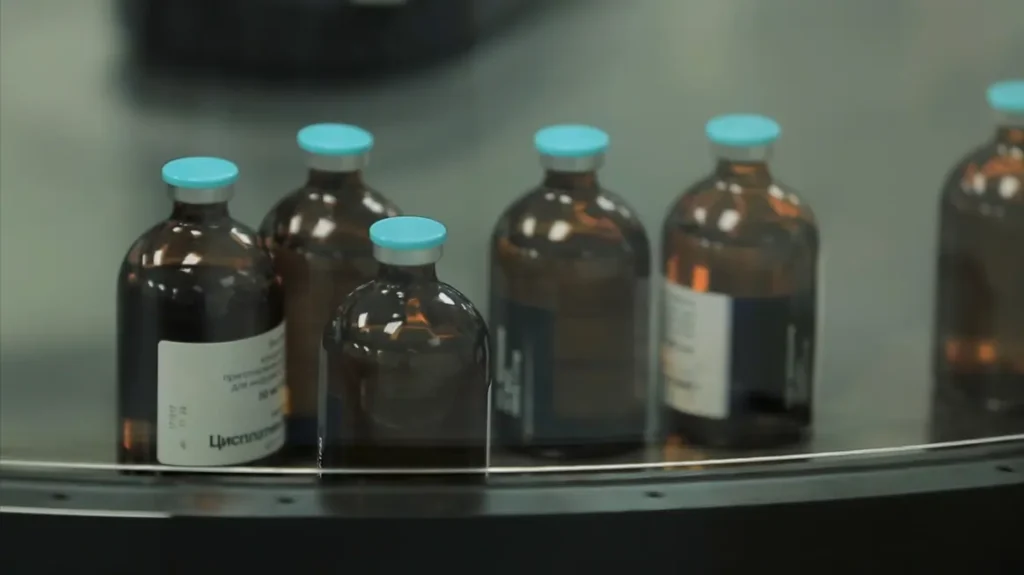
Vials Based on Manufacturing Method
Vials Based on Material
Vials Based on Size
Vials Based on Colour
Vials Based on Closure and Finish
Understanding the Serum Collar Finish for Pharmaceutical Vial Closures
Vials Based on Base Type
Types of Vial Bases Used in Pharmaceutical and Laboratory Applications
Components of Pharmaceutical Vials
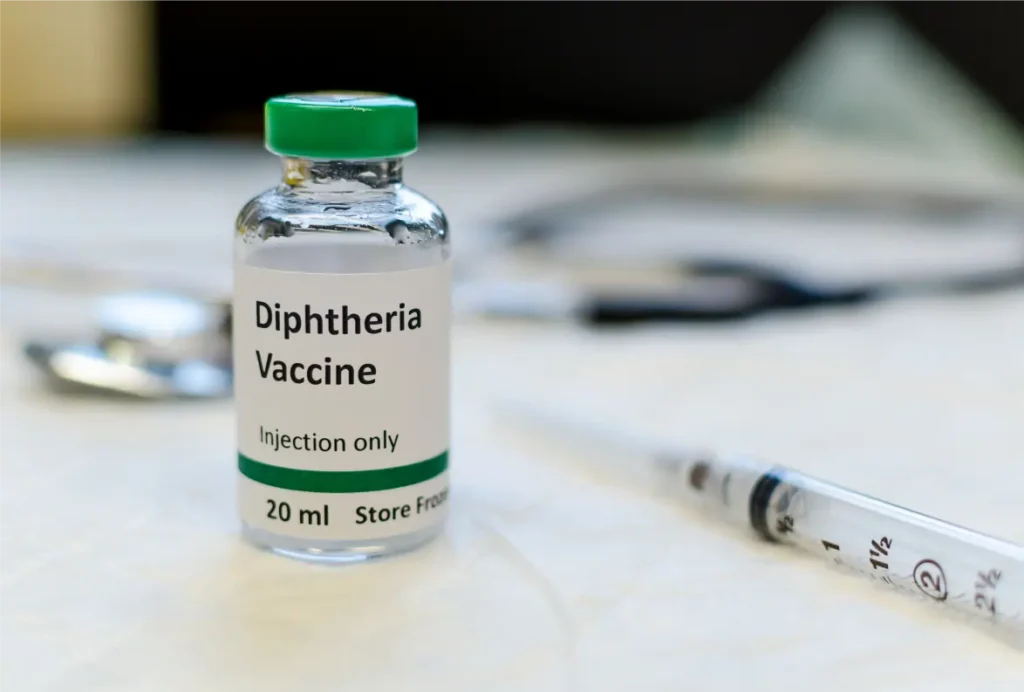
Components of Pharmaceutical Vial Packaging
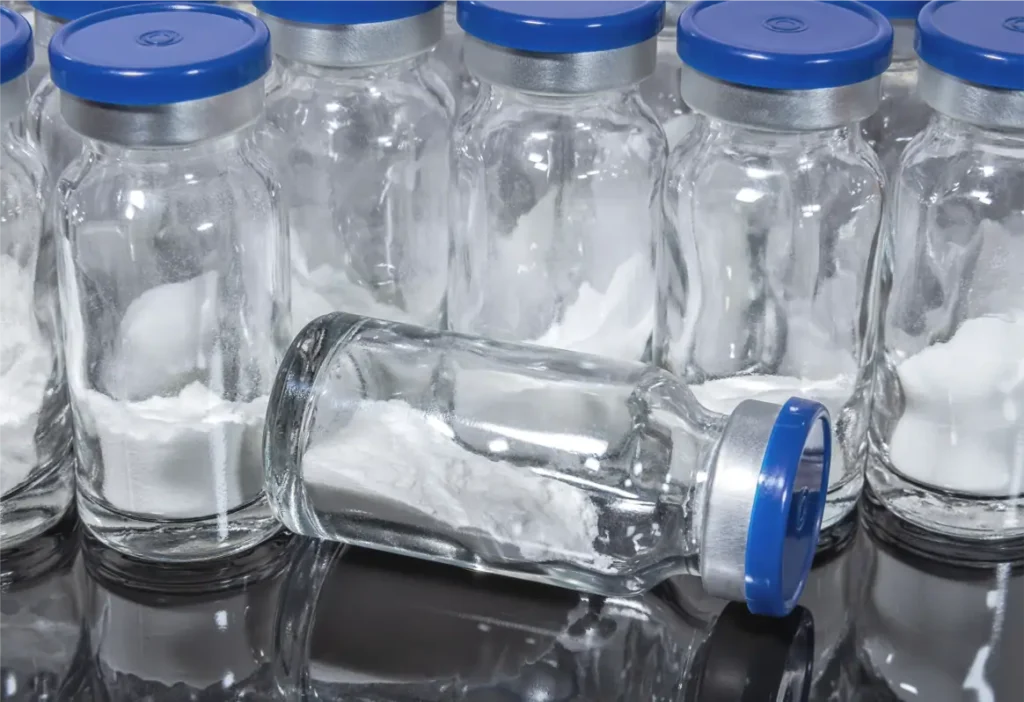
Glass Vial Packaging
Plastic Vial Packaging
This durability makes them safer for transportation, storage, and laboratory handling while reducing the risk of product loss caused by broken containers. In addition, plastic materials such as polypropylene provide good thermal insulation properties, helping maintain internal product temperature during short-term fluctuations. Their lightweight structure also reduces transportation and logistics costs, allowing pharmaceutical companies to ship large quantities of products more efficiently while making handling easier for healthcare professionals.
Advantages and Considerations of Plastic Vial Packaging
Applications of Pharmaceutical Vials
Lyophilization and Pharmaceutical Vials
Pharmaceutical Vial Packaging Systems
Vial Packaging Machinery and Automation
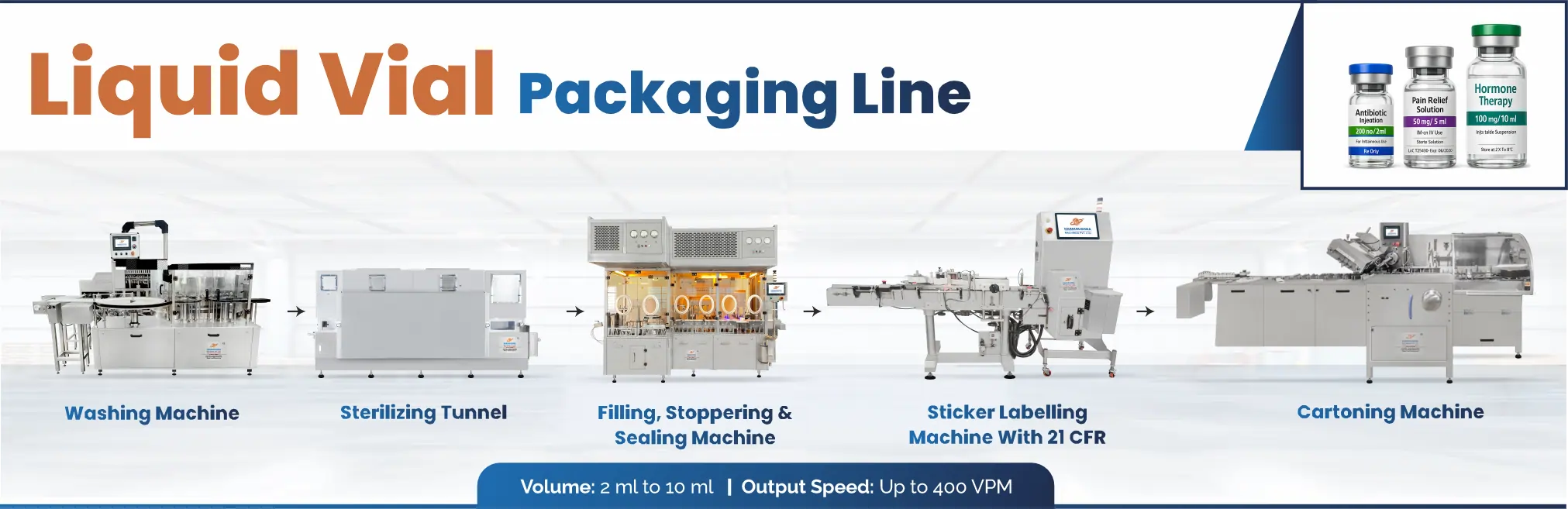
Complete Injectable Vial Liquid Packaging Line
Complete Injectable Dry Powder Vial Packaging Line
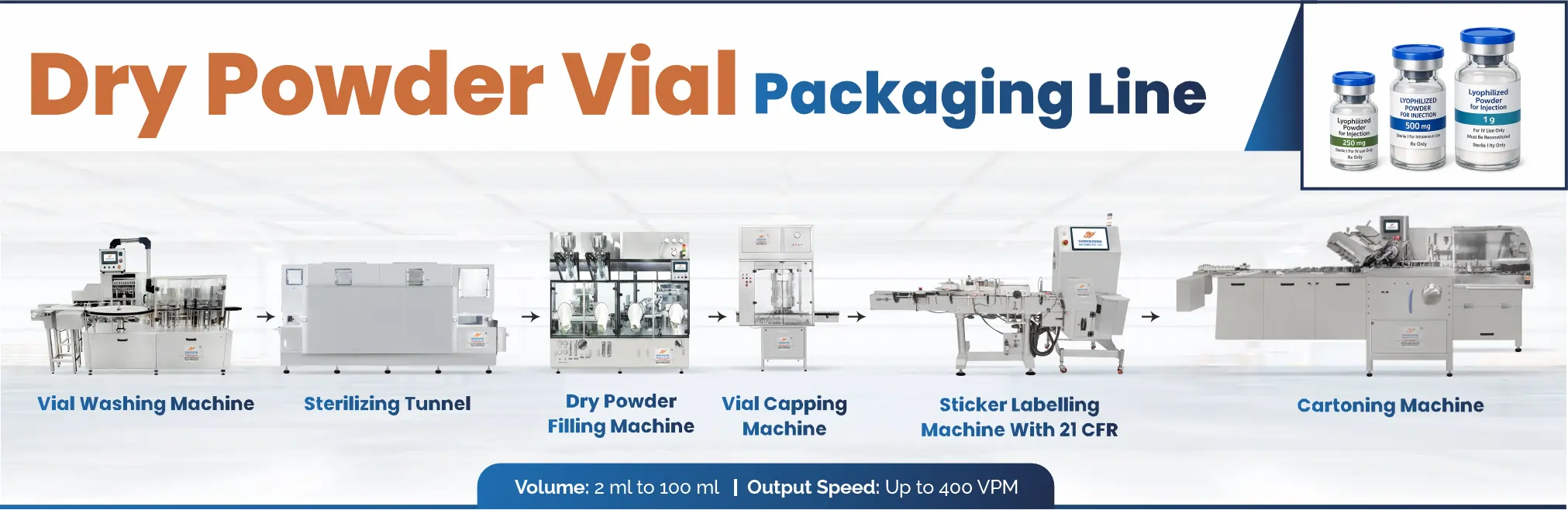
Key Machines in a Vial Packaging Line
- Rotary or linear vial washing machines for container cleaning
- Sterilization tunnels for depyrogenation and drying
- Liquid or powder filling machines with precise volumetric/weight dosing
- Stoppering machines for rubber closure insertion
- Crimping / sealing machines for aluminium cap application
- Visual inspection systems
- Vial labelling machines for sticker application and coding
Regulatory Standards for Pharmaceutical Vials
- US FDA 21 CFR Parts 210 & 211 Current Good Manufacturing Practice (cGMP) regulations for finished pharmaceuticals, covering container-closure integrity, sterility assurance, and process validation.
- WHO Good Manufacturing Practices (WHO Technical Report Series). International GMP guidelines are widely adopted in emerging markets and referenced for prequalification programmes.
- USP <660> Containers Glass and USP <661> Plastic Packaging Systems United States Pharmacopoeia standards specifying chemical and physical requirements for pharmaceutical container materials.
- European Pharmacopoeia (Ph. Eur.) 3.2.1 Standards for glass containers for pharmaceutical use in European markets.
- ISO 15747 Standard for plastic containers for intravenous injections.
- ISO 11040 / ISO 11608 Standards covering prefilled syringes and needle-based injection systems that interact with vial packaging.
- ICH Q8/Q9/Q10 International Council for Harmonisation guidelines on pharmaceutical development, quality risk management, and pharmaceutical quality systems.
Conclusion
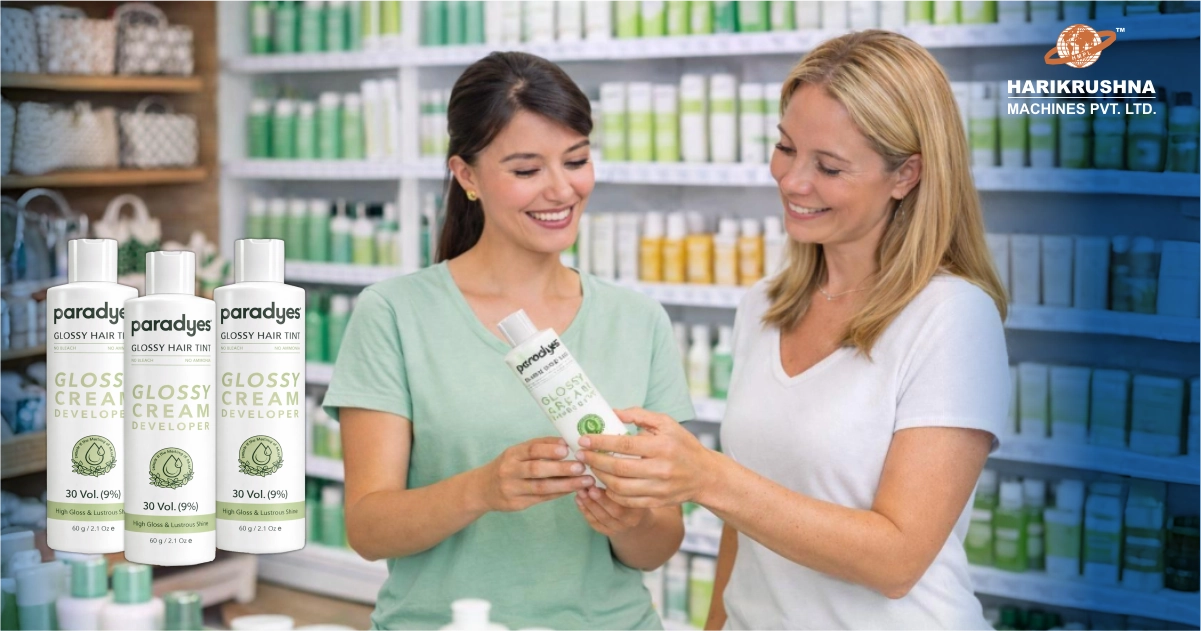
The Growing Importance of Cream and Lotion Packaging in Cosmetic Manufacturing

Automation as a Growth Enabler for Modern Cosmetic Brands
Paradyes: A Modern Indian Hair Color Brand Built on Trust and Innovation
Understanding Developer Cream Packaging: Challenges and Technical Considerations
- Variations in product viscosity
- Air entrapment risks
- Spillage during filling
- Inconsistent fill volumes
- Hygiene and contamination control
A Fully Integrated Cream Filling Line Designed for Performance
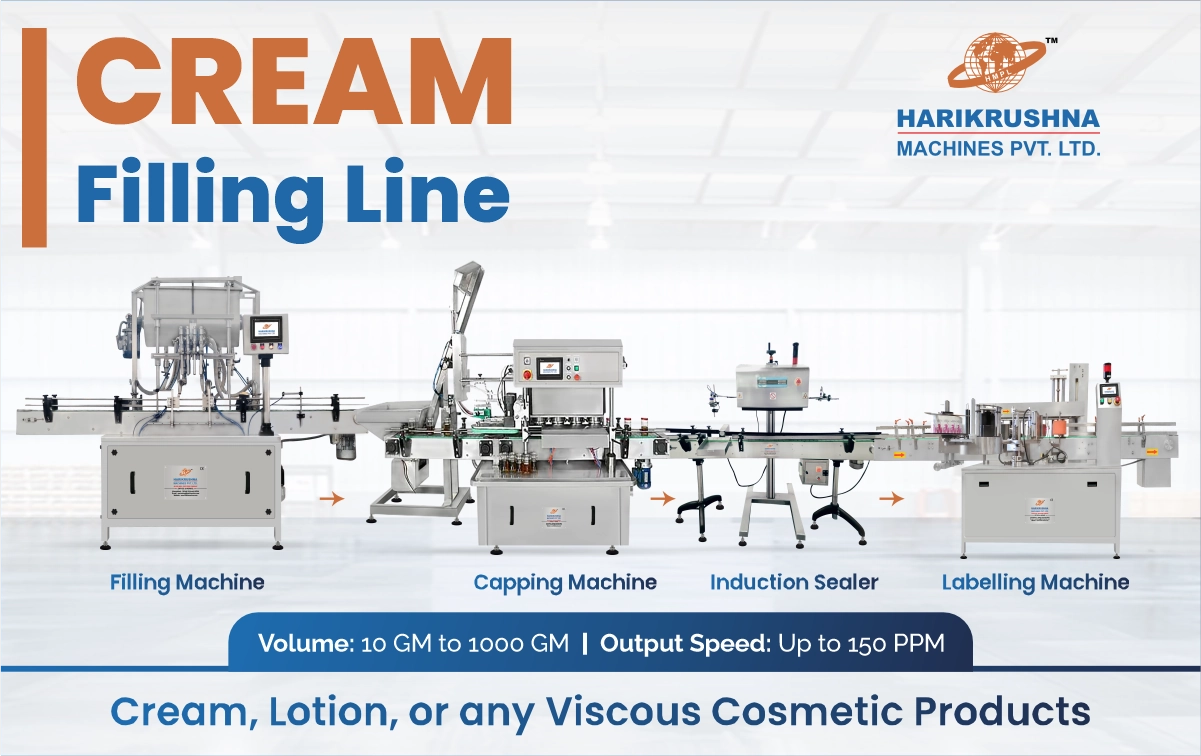
The Role of Precision Machinery in Maintaining Cosmetic Quality
Improving Productivity with a High-Performance Filling Machine for Creams
- Uniform fill accuracy across batches
- Reduced product wastage
- Higher output per minute
- Minimal downtime
- Long-term operational stability
Technical Advantages of Our Cosmetic Cream Filling Machine
- Precision piston-based filling.
- Anti-drip and anti-foaming nozzles
- Servo-controlled accuracy
- Quick changeover mechanisms
- User-friendly PLC & HMI interface
- Low-maintenance design
Harikrushna Machines Pvt. Ltd.: A Legacy of Engineering Excellence
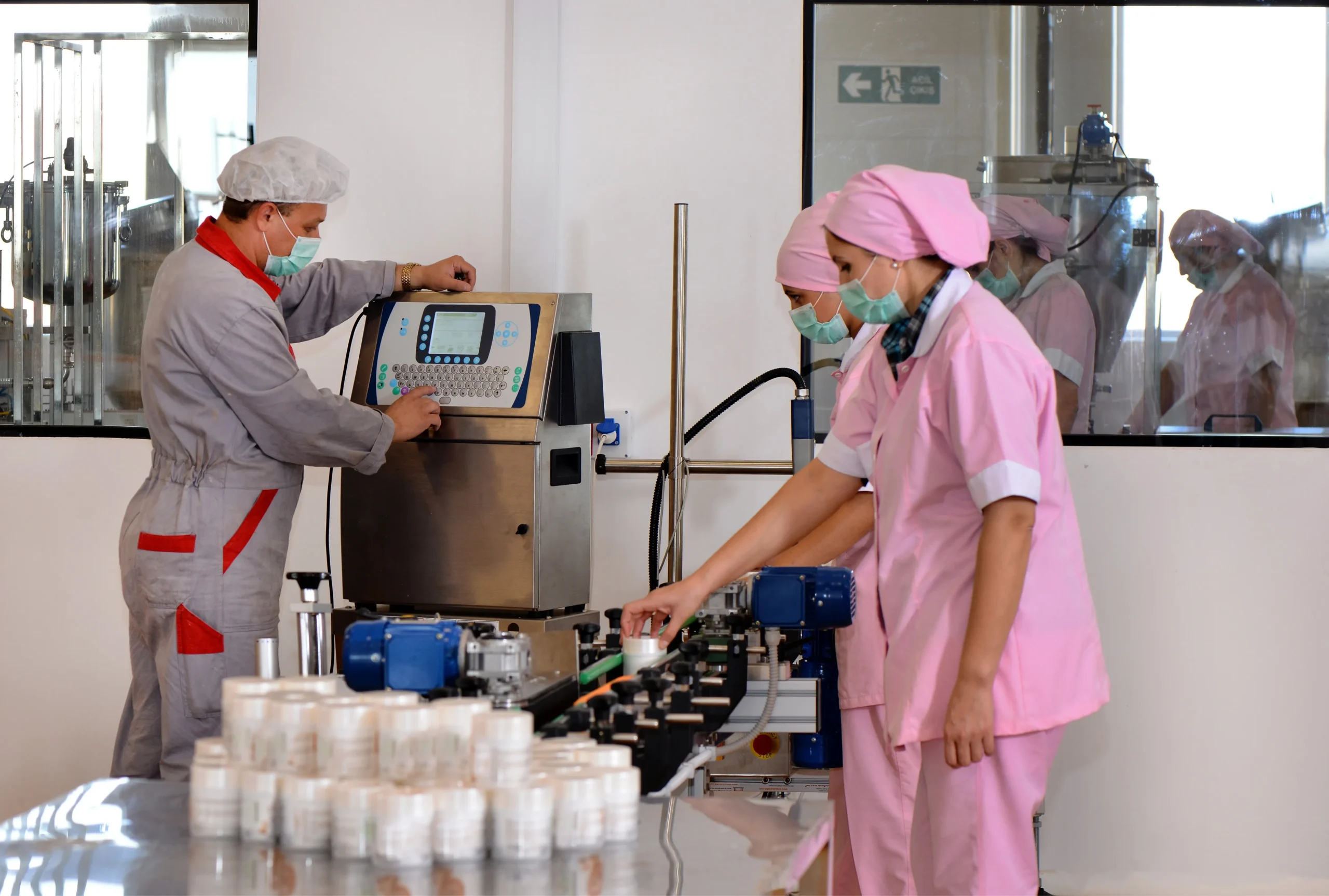
Comprehensive Packaging Solutions for Cosmetic Manufacturers
Versatility Across Multiple Cosmetic Applications

- Face creams
- Body lotions
- Sunscreen lotions
- Cold creams
- Moisturizers
- Beauty creams
- Hair developer creams
- Wax and shave gels
Why Packaging Matters: Protection, Hygiene, and Consumer Experience?

GMP-Compliant Machinery for Reliable Cosmetic Production
Advanced Packaging Machinery and Ancillary Equipment
Supporting Cosmetic Brands at Every Stage of Growth
Engineering the Future of Cosmetic Packaging

Premium and Mass-Market Trends in Modern Cooking Oil Packaging
The Strategic Role of Cooking Oil Packing in the Edible Oil Industry
Packaging as a Competitive Advantage in the Global Edible Oil Market
What Is Cooking Oil / Edible Oil?

Nutritional Value of Edible Oils and the Importance of Informed Oil Selection
Which Types of Cooking Oils Are Available in the Market?
Importance of Cooking Oil Packaging in the Edible Oil Businesses
Edible Oil Processing: Extraction Methods and Refinement for Quality and Stability
Refined Oils
Cold-Pressed Oil / Kachi Ghani Oil
Various Processing Types Used by Edible Oil Companies
Oil Extraction Methods
Refinement Processes
Importance of Edible Oil Packaging
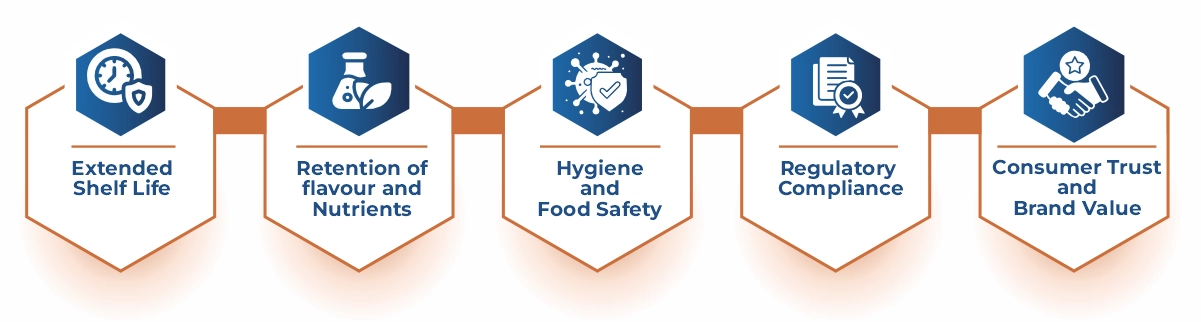
- Extended shelf life
- Retention of flavor and nutrients
- Hygiene and food safety
- Regulatory compliance
- Consumer trust and brand value
Types of Edible Oil Packaging and Their Importance
Metal Tins
Glass Bottles
Plastic Bottles (PET)
Plastic Containers and Jars
Jerry Cans
Pouches
Various Oils for Cooking Use
Consumers today have access to all types of oils for cooking, each offering unique properties.
Harikrushna Machines Pvt. Ltd.’s Edible Oil Packaging Line is the one-stop solution.
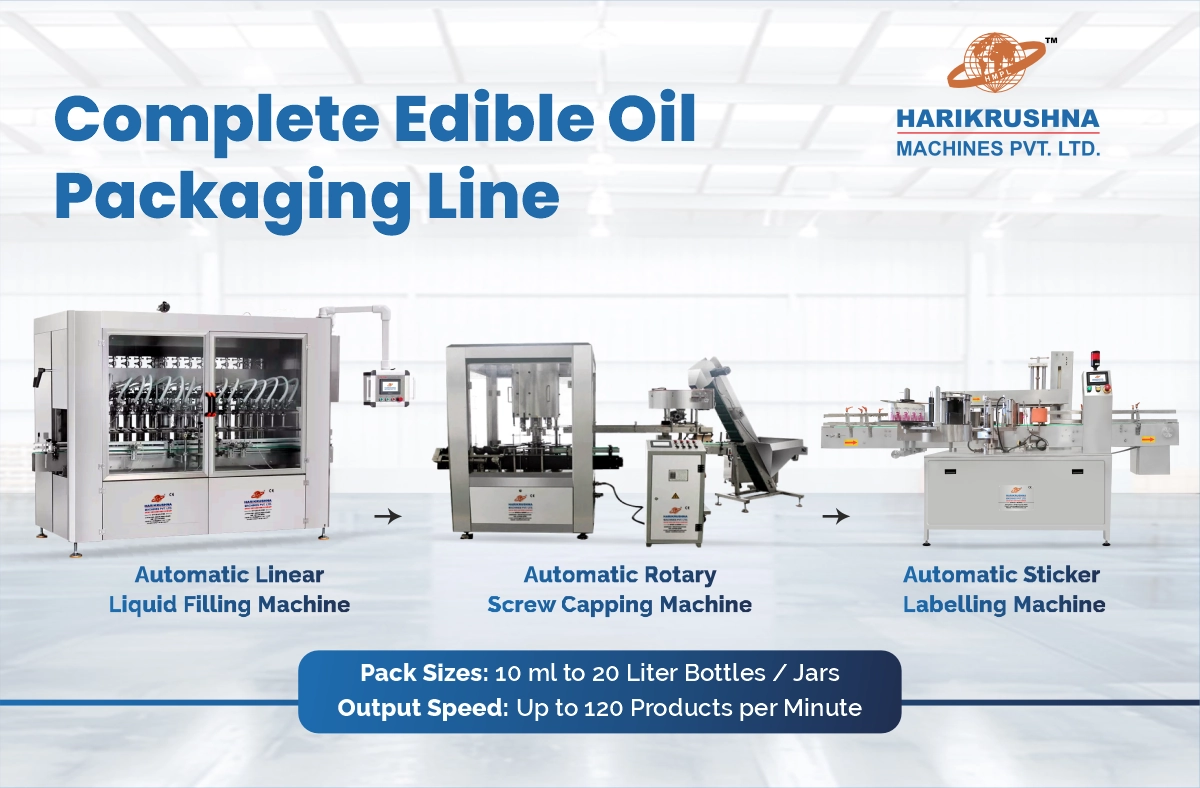
Edible Oil Filling Machine:
Automatic Rotary Screw Capping Machine:
Automatic Sticker Labelling Machine:
- PET bottles
- Glass bottles
- Plastic containers and jars
- Jerry cans
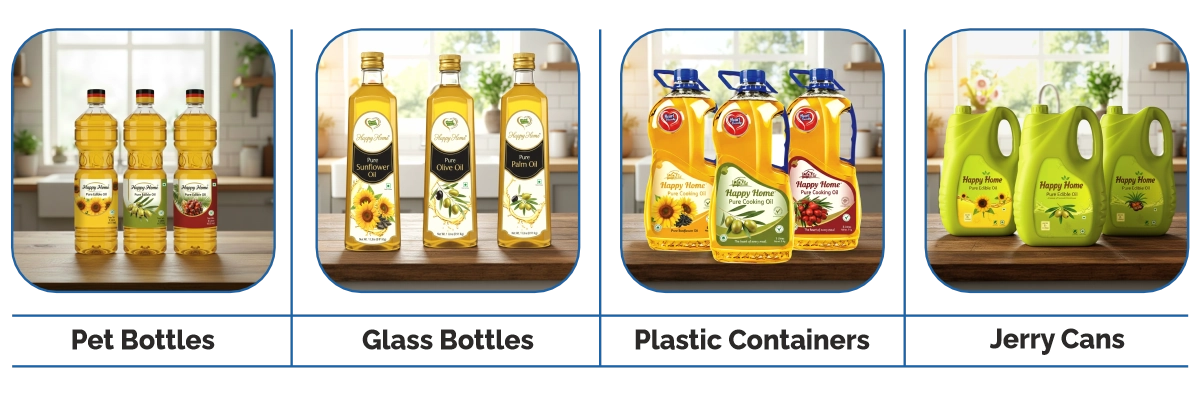
Sustainability in Edible Oil Packaging
- Recyclable PET bottles
- Lightweight edible oil containers
- Reduced plastic consumption
- Energy-efficient oil packaging machines
The Future of Cooking Oil Packing

Pharmaceutical manufacturing requires absolute precision. Even a single defective ampoule or vial reaching the market can put patient safety at risk, lead to expensive recalls, and harm brand reputation. Traditional manual inspection methods find it difficult to maintain consistent accuracy on high-speed production lines, where human fatigue and subjective judgment introduce variability.
AI-powered multi-functional inspection systems for ampoules and vials offer a game-changing solution to these problems. These intelligent systems use advanced machine vision and artificial intelligence algorithms to identify defects that may go unnoticed by humans. Whether it’s tiny cracks, foreign particles, incorrect fill levels, or misaligned labels, automated inspection technology provides unmatched reliability.
The integration of pharmaceutical quality control automation addresses critical industry needs:
- Consistent accuracy across millions of units inspected daily
- Real-time defect detection prevents faulty products from progressing downstream
- Comprehensive documentation supporting regulatory compliance requirements
Understanding how AI improves quality inspection in pharma manufacturing has become essential for manufacturers seeking to balance production efficiency with uncompromising quality standards.
Understanding AI-Based Inspection Systems in Pharma
An AI-based inspection system combines sophisticated hardware and intelligent software to scrutinize pharmaceutical containers with unprecedented precision. These systems integrate high-resolution cameras, specialized lighting configurations, and deep learning algorithms that work together to identify defects invisible to the human eye.
How AI-Based Inspection Systems Work?
Machine vision inspection technology forms the foundation of these intelligent solutions. Here’s how it works:
- Image Capture: Industrial-grade cameras capture multiple images of each ampoule or vial from various angles.
- Image Analysis: AI algorithms analyze these images in milliseconds.
- Defect Detection: The system identifies defects based on patterns learned from thousands of reference images.
The Vision-Based Defect Detection Process
The vision-based defect detection process involves several key components:
- Pattern recognition trained on thousands of reference images
- Real-time image processing that evaluates colour, shape, and texture
- Adaptive learning capabilities that improve detection accuracy over time
- Classification systems that distinguish between acceptable variations and critical defects
Advantages of AI-Based Inspection Systems
The intelligent inspection solution offers several advantages over manual inspection:
- Eliminates inconsistencies inherent in manual inspection
- Maintains constant vigilance across every unit
- Applies identical criteria regardless of production volume or shift duration
Applications in the Pharmaceutical Industry
Advanced inspection technology for pharma companies leverages neural networks specifically trained for pharmaceutical packaging. Here are some applications:
- Recognizing anomalies in fill levels
- Detecting microscopic cracks in glass containers
- Verifying label placement accuracy
- Assessing seal integrity
Continuous Improvement through AI Machine Vision
The AI machine vision for defect detection in packaging continuously refines its detection parameters based on production data. This creates a self-improving quality control mechanism that adapts to new packaging formats and regulatory requirements.
Key Features of AI-Powered Multi-Functional Inspection System for Ampoules & Vials
Modern multi-functional inspection systems deliver unprecedented precision through advanced technological capabilities designed specifically for pharmaceutical container inspection. These camera-based inspection systems achieve 100% inspection accuracy by analyzing every single unit on the production line in real-time, eliminating the possibility of defective products reaching end users.
The high-speed bottle inspection architecture employs sophisticated multi-camera setups that capture images from multiple angles simultaneously. This 360-degree coverage ensures comprehensive analysis of each container, with strategically positioned cameras detecting defects that single-view systems might miss. The glass ampoule inspection system technology processes thousands of units per minute without compromising detection quality.
Critical Inspection Parameters Monitored by Automatic Bottle Inspection Machines
Critical inspection parameters monitored by these automatic bottle inspection machines in India include:
- Packaging defects: Cracks, chips, scratches, and structural deformities in glass or plastic containers
- Label verification: Correct placement, orientation, readability, and authenticity of product labels using advanced optical character recognition
- Barcode scanning: Validation of serialization codes for track-and-trace compliance
- Seal integrity: Detection of compromised caps, missing closures, or improper crimping through automated rubber seal inspection
- Fill levels: Precise measurement of liquid volume to ensure dosage accuracy
- Surface conditions: Identification of contamination, particulate matter, or discolouration
The system’s intelligent algorithms continuously adapt to different product specifications, container types, and quality standards without requiring extensive reprogramming. This flexibility makes the technology suitable for diverse pharmaceutical manufacturing environments handling various ampoule and vial formats.
Additionally, these systems are designed with a robust framework that adheres to stringent regulatory standards such as those outlined in the FDA’s guidelines, ensuring not only efficiency but also compliance in the highly regulated pharmaceutical industry.
Benefits of Automated Visual Inspection in Pharmaceutical Manufacturing
Implementing AI visual inspection for pharma operations delivers measurable improvements across safety, compliance, and operational metrics. These systems address critical challenges facing modern pharmaceutical manufacturers while supporting business objectives.
Product Safety & Regulatory Adherence
Automated visual inspection systems ensure every ampoule and vial meets stringent quality standards before reaching patients. The technology provides complete documentation trails required for FDA 21 CFR Part 11 compliance, including electronic signatures and audit-ready records. EU FMD requirements for serialization verification become manageable through integrated barcode scanning and data capture capabilities. This level of documentation protects manufacturers during regulatory audits and product recalls.
Operational Excellence on High-Speed Lines
High-speed AI inspection for ampoule filling lines maintains accuracy even at production rates exceeding 300 units per minute. Advanced algorithms distinguish between genuine defects and acceptable variations, reducing false rejects by up to 40% compared to manual inspection methods. Production lines experience fewer interruptions, maintaining consistent throughput, while quality control automation in pharma eliminates bottlenecks associated with human inspection fatigue.
Financial Impact
The benefits of automated visual inspection for ampoules extend to the bottom line through multiple channels:
- Elimination of dedicated inspection personnel reduces labor costs by 60-70%
- Prevention of non-compliance penalties that can reach millions in fines
- Decreased product waste from improved reject accuracy
- Lower insurance premiums through demonstrated quality commitment
Integration & Traceability in Pharmaceutical Packaging Lines
Modern automatic inspection systems for pharmaceutical packaging lines must function as intelligent nodes within a broader manufacturing ecosystem. AI-powered inspection machines designed for ampoules and vials connect directly with existing Manufacturing Execution Systems (MES) and Enterprise Resource Planning (ERP) systems, enabling real-time data capture at every inspection point. This integration with MES and ERP systems transforms raw inspection data into actionable intelligence, creating comprehensive digital records that track each product unit from production through distribution.
Importance of Data Traceability
Data traceability in pharmaceutical packaging serves as the foundation for regulatory compliance and quality assurance.
The inspection system automatically generates detailed reports documenting:
- Batch-specific inspection results with timestamp accuracy
- Individual product images and defect classifications
- Statistical process control data for trend analysis
- Complete audit trails meeting FDA 21 CFR Part 11 requirements
Benefits of the Remote Diagnostic Inspection System
The remote diagnostic inspection system capability adds another layer of operational efficiency.
Technical specialists can access system performance metrics, troubleshoot issues, and implement software updates without physical presence on the production floor. This proactive maintenance approach minimizes unplanned downtime and ensures consistent inspection performance across multiple production shifts.
Real-time alerts notify operators of potential calibration drift or component wear, allowing scheduled interventions before quality issues emerge.
Application Areas & Industry Use Cases
Ampoule inspection system technology addresses critical quality control needs across injectable pharmaceutical production. Glass ampoules containing vaccines, biologics, and sterile solutions require meticulous examination to detect cracks, chips, or contamination before distribution. The vial inspection machine performs equally rigorous checks on both glass and plastic vials used for liquid medications, suspensions, and lyophilized products.
Pharmaceutical packaging automation by Harikrushna delivers targeted solutions for diverse manufacturing scenarios:
- Small-batch speciality drugs: Precision inspection for high-value biologics and personalized medicines where every unit matters
- High-volume generic production: High-speed AI inspection for ampoule filling lines processing thousands of units per hour without compromising accuracy
- Contract manufacturing operations: Flexible systems adaptable to varying product specifications and client requirements
The AI-powered systems excel at identifying multiple defect categories simultaneously:
- Physical damage: Broken vials, cracked necks, chipped edges
- Cosmetic issues: Discoloration, cloudiness, particulate matter
- Labelling defects: Misaligned labels, incorrect print, missing barcodes
- Fill-related problems: Underfilled or overfilled containers, inconsistent liquid levels
- Seal integrity: Compromised closures, missing caps, improper crimping
For ensuring the container closure integrity, which is crucial in maintaining the sterility and efficacy of pharmaceutical products, Harikrushna Machines also incorporates advanced testing technologies.
Moreover, Harikrushna Machines designs scalable inspection architectures that accommodate production lines ranging from pilot-scale operations to full-scale commercial manufacturing facilities. This ensures consistent quality standards regardless of output volume. Their expertise extends into the realm of packaging inspection equipment, providing comprehensive solutions that encompass all aspects of pharmaceutical packaging automation.
Future Trends & Technological Advancements in AI Inspection Systems
The pharmaceutical packaging industry is on the verge of significant technological breakthroughs. Adaptive learning models represent the next generation of advanced inspection technology for pharma companies, enabling systems to analyze historical defect patterns and predict potential quality issues before they occur on production lines. These predictive capabilities allow manufacturers to take proactive measures instead of reactive ones.
Real-time optimization through AI analytics transforms production environments into intelligent ecosystems. AI machine vision for defect detection in packaging now goes beyond simple identification to continuously improving processes. Systems analyze inspection data streams to recommend adjustments in filling speeds, lighting conditions, or camera angles, maximizing detection accuracy while minimizing false rejections.
The future for AI-powered ampoule and vial inspection machines looks promising:
- Speed enhancements enabling inspection rates exceeding 600 units per minute without compromising accuracy
- Precision improvements in detecting microscopic defects as small as 50 microns
- Scalability solutions allowing seamless expansion from pilot lines to full-scale production facilities
Leading AI inspection systems manufacturers in India are developing neural networks capable of distinguishing between harmless cosmetic variations and critical quality defects with 99.9% accuracy. These advancements position AI-Powered Multi-Functional Inspection Systems for Ampoules & Vials as essential tools for pharmaceutical manufacturers dedicated to maintaining competitive advantages in quality assurance.
Why Choose Harikrushna Machines for Your Inspection Needs?
Harikrushna Machines Pvt. Ltd. is a trusted AI inspection systems manufacturer in India, with decades of experience in automating pharmaceutical packaging. We have become a reliable partner for pharmaceutical manufacturers who need precise solutions that meet the highest quality standards.
Our Harikrushna Machines inspection systems offer unique advantages that make them stand out among other pharmaceutical inspection equipment:
- Customizability at Scale: Each system is designed to meet specific production needs, whether it’s for small-batch speciality drugs or large-scale generic manufacturing. The modular design allows for easy adjustment to different ampoule and vial formats without major changes.
- Comprehensive Technical Support: Our team of engineers provides complete assistance from the initial consultation to installation, validation, and ongoing maintenance. This includes on-site training programs to help operators make the most of the system’s capabilities.
- Regulatory Compliance Focus: All our solutions for pharmaceutical packaging automation are created with built-in features to comply with FDA 21 CFR Part 11, EU FMD, and other international standards. We also provide documentation packages to support validation protocols and audits.
- Innovation-Driven Development: We continuously invest in research and development to integrate the latest AI algorithms and machine vision technologies into our smart inspection solutions by Harikrushna, ensuring our clients have access to advanced capabilities.
Our commitment goes beyond delivering equipment; we strive to build long-term partnerships that promote manufacturing excellence and prioritise patient safety.
At Harikrushna Machines Pvt. Ltd. (HMPL), we are proud to announce a groundbreaking strategic Representative with Nelden Industry S.R.L., Italy — a European leader in bottling and packaging technology. This collaboration marks a significant milestone in our journey to bring cutting-edge, globally trusted solutions to India’s fast-evolving beverage and liquid packaging industry.
By becoming the official India representative of Nelden Industry, HMPL now delivers European-grade, high-speed bottling and packaging systems tailored for Indian operations. Backed by localized support, technical expertise, and efficient service networks, we are set to transform how Indian beverage manufacturers operate.
Bringing European Innovation to India as a Trusted Representative
As the official representative of Nelden Industry in India, this collaboration bridges Italian engineering excellence with India’s dynamic and rapidly growing beverage manufacturing sector.
Founded in 2002 and based in the renowned wine-producing region of Pavia, Italy, Nelden Industry specializes in turnkey bottling and packaging solutions for a wide range of still and carbonated liquids — across glass, PET, HDPE bottles, and cans.
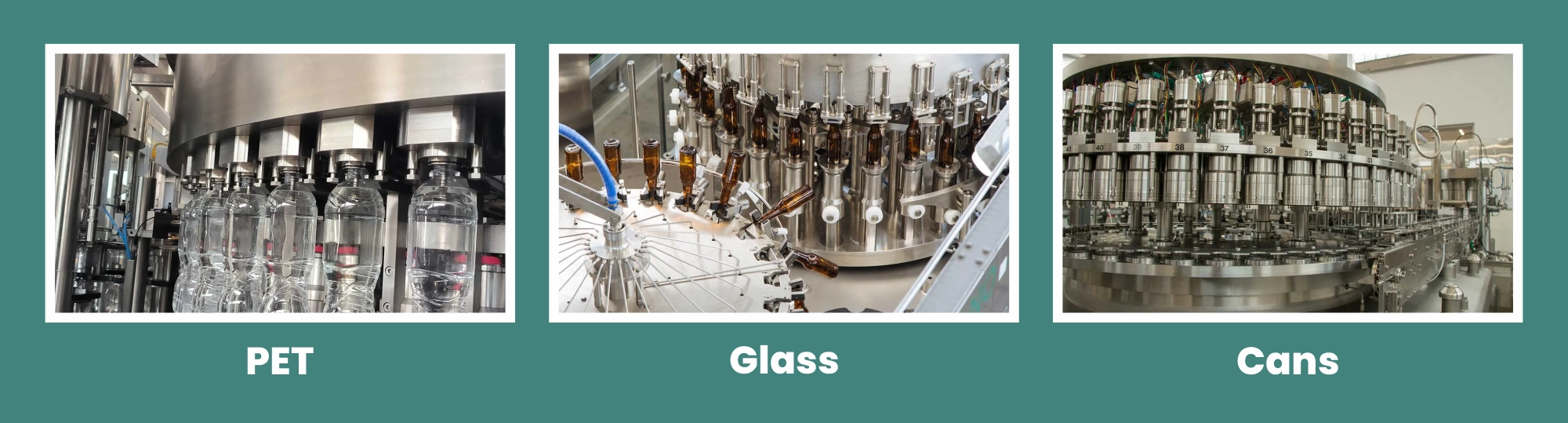
Nelden brings decades of engineering knowledge, precision craftsmanship, and technical innovation to the table. Their expertise spans Monoblock filling, rinsing, and capping systems, all designed to deliver superior hygiene, safety, flexibility, and production speed. Together, HMPL and Nelden offer a one-stop solution for the Indian beverage industry.
The Power of Turnkey Solutions
As the official representative of Nelden Industry in India, HMPL is now equipped to supply custom-engineered, fully integrated lines to Indian manufacturers — covering every stage from product filling and container rinsing to cap handling, labelling, and final packaging. These advanced systems cater to a wide range of applications, including:
- Still and sparkling water
- Carbonated soft drinks (CSD)
- Juices (with or without pulp)
- Energy and isotonic drinks
- Craft and commercial beers
- Malt beverages and cocktails
- Spirits, liquors, and wines
- Dairy-based beverages and flavoured milk
- Functional and flavoured waters
Nelden’s systems are built for performance, flexibility, and scalability — meeting production demands from 1,500 up to 80,000 containers per hour, depending on the configuration and format.
GIOVE Series: Flexible Filling for Still Products
The GIOVE Series Monoblocks are ideal for filling still beverages. These machines integrate rinsing, gravity/vacuum-based filling, and capping into a single compact unit. The system supports:
- Glass and PET bottles
- Sizes ranging from 50 ml to 20 liters
- Gravity, light pressure, or vacuum-based filling
- Net weight filling via integrated load cells
- Volumetric control using mass or magnetic flowmeters
With output capacities reaching up to 50,000 bottles per hour, the GIOVE Series offers unmatched versatility for beverages like juices, wines, waters, and liquors.
URANO Series: Precision for Carbonated Beverages
For carbonated and high-CO₂ beverages, the URANO Series brings isobaric filling technology into action. These machines handle:
- Sparkling water and sodas
- Beer and malt drinks
- Sparkling wines and ciders
- Energy drinks and carbonated cocktails
URANO systems ensure precision and product integrity through features like:
- Pre-evacuation or double pre-evacuation
- Self-levelling for glass bottles
- Volumetric PET bottle filling
- Degassing for product stability
They accommodate a wide range of bottle shapes and sizes and can achieve up to 50,000 bottles per hour.
URANO Cans: Efficient Canning with Volumetric Accuracy
The URANO CANS Series also offers advanced solutions for aluminium can packaging. Designed to handle still and carbonated drinks, these Monoblocks feature:
- Volumetric electronic filling with no can lifting jacks
- Quick format change without valve replacement
- Reduced setup time and low maintenance
- High-speed operation up to 80,000 cans per hour
Products suited for URANO Cans include:
- Sparkling water, CSD
- Beer and cider
- Energy drinks and isotonic beverages
- Clear and pulpy juices
With customisation available for hot filling, pulp dosing, and ultraclean configurations, Nelden’s canning systems adapt effortlessly to India’s diverse beverage segments.
The Complete Line — Beyond Just Filling
HMPL’s representation of Nelden Industry goes far beyond just supplying machinery. We offer end-to-end project execution and comprehensive lifecycle support, including:
- Technical Consultation: We assess your plant layout, product characteristics, and operational requirements to recommend a tailored solution.
- Project Engineering: Nelden’s team designs the complete line, ensuring efficiency, safety, and hygiene from bottle handling to final packaging.
- Manufacturing: All equipment is precision-built in Italy using advanced manufacturing techniques and premium materials like AISI 304/316 stainless steel.
- Shipping & Installation: HMPL manages timely delivery, on-site installation, and alignment as per the approved layout.
- Training: Operators and maintenance teams receive hands-on training to ensure seamless day-to-day operation.
- After-Sales Support: We provide prompt technical assistance, scheduled maintenance, and on-demand upgrades through our India-based service hubs.
- Line Upgrades: Whether you want to expand capacity or integrate new packaging formats, we offer customized retrofit and upgrade solutions.
Nelden’s Legacy in Bottling Technology
Since its inception as an engineering firm, Nelden Industry has evolved into a 360° manufacturing powerhouse. They design and build everything from Monoblocks and conveyors to capping, labelling, and auxiliary systems.
Their hallmark features include:
- Ultraclean Configurations with laminar airflow and enclosed chambers
- Electronic Volumetric Dosing using magnetic or mass flowmeters
- Hot Filling Systems with recirculation and modulating valves
- Pulp Handling Systems for particles up to 10×10 mm
- Compact Mobile Bottling Lines with integrated CIP and CO₂ dosing
Every Nelden system is tailor-made — built to customer needs, site specifications, and the unique properties of each product. The result: optimised performance, extended machine life, and operational peace of mind.
Shared Vision: Customer Success is Our Success
This collaboration stands on a shared philosophy — the belief that the best solutions come from deep customer understanding. At HMPL and Nelden, we don’t just sell machines; we build long-term relationships grounded in trust, technical support, and mutual growth.
As Nelden puts it:
“We believe that the best solutions come from listening and understanding what our customers need.”
By working hand-in-hand from the initial project analysis to after-sales support, we ensure your plant runs at maximum potential — today and in the future.
Applications Across Diverse Industries
Thanks to its broad capabilities, HMPL x Nelden lines serve multiple sectors:
- Beverages: Juices, soft drinks, water, RTDs, energy drinks
- Alcoholic Drinks: Beer, spirits, liquors, cocktails, wine
Whether you’re a start-up venturing into beverage manufacturing or a large player looking to scale operations with European precision, HMPL and Nelden deliver the right-fit solution.
Why Choose HMPL as the Official Representative of Nelden Industry in India?
- European Technology with localized Indian support
- End-to-End Project Ownership from layout to commissioning
- Custom-Built Machines based on your product, container, and output needs
- Flexible Format Handling: PET, Glass, HDPE, Cans — all supported
- 24/7 After-Sales Service and fast spare part availability
- Training, Upgrades & Consultation from experienced technical teams
- Scalable Solutions for SME and large-scale manufacturing
Nelden’s mobile filling & packaging lines: Filling and Packaging On Wheels
Nelden’s mobile filling and packaging lines redefine flexibility and efficiency in beverage processing. Engineered to handle glass, PET bottles, and cans, these compact units are ideal for on-the-go operations—perfectly suited for trailers or container-type structures. At the core lies a precision-engineered filler, equipped with advanced electro-pneumatic technology and a state-of-the-art filling valve, ensuring accurate, consistent, and hygienic filling every time. The fully integrated line includes labelling, capping, and packaging machines—delivering a turnkey solution ready for immediate product distribution or further refinement, such as in the case of premium wines.
What sets Nelden apart is the commitment to complete operational autonomy. From product filtration and neutral gas generation to CO2 dosing, CIP sanitization, and container setup assistance, every detail is covered. Even the trailer registration and export processes are simplified with Nelden’s expert support. With minimal staffing requirements and maximum performance, these mobile lines significantly reduce operating costs while offering unmatched reliability and quality—bringing bottling capabilities directly to the production site, wherever it may be.
Let’s Build the Future of Bottling Together
HMPL is now the official representative of Nelden Industry in India. We invite beverage manufacturers globally to discover how we can transform your packaging line. Whether you’re launching a new product or enhancing your current operations, we’re ready to deliver the precision, reliability, and technical support your production demands.
Interested in a demo or technical discussion?
Book your free consultation today.
Write to us at: marketing@harikrushna.com
Let’s raise the bar for bottling in India — with European technology, Indian agility, and a commitment to excellence.

Harikrushna Machines Pvt. Ltd. (HMPL), a leader in packaging and processing machinery in India, is proud to serve as the official India-based representative of Erkur Makine — a globally renowned Turkish manufacturer of thermoforming machines, molds, and conveyor systems. Through this representation, HMPL is bringing Erkur Makine’s advanced technology, precision engineering, and high-performance solutions to Indian industries, delivering a new wave of innovation and efficiency.
This alliance empowers HMPL to offer advanced thermoforming technologies with localized service, faster response times, and expert technical support — all under one trusted brand.
Who is Erkur Makine?
Founded in 1999 and headquartered in Istanbul’s Güneşli district, Erkur Makine has established itself as a global pioneer in manufacturing thermoforming machines and complete production solutions for plastic packaging.
With over 240 machines operating in more than 6 continents, Erkur Makine proudly serves clients from Russia to the UK, New Zealand to the US, and now, through HMPL, in India. Their solutions cater to the entire process — from granulate to finished product — ensuring complete efficiency and reliability across packaging production lines.
Driven by a clear mission and vision, Erkur aims:
- “To make packaging production easier, cheaper, and more efficient for business partners.”
- “To become the preferred global supplier for both new and refurbished machinery in plastic packaging production and decoration.”
Their dedication to quality, efficiency, and innovation has made them a go-to choice for customers seeking robust and future-ready plastic packaging systems.
At HMPL, we continuously evolve to deliver world-class machinery tailored to the dynamic needs of Indian manufacturers. As the official representative of Erkur Makine in India, we provide Indian companies with direct access to:
- Cutting-edge thermoforming machines
- Tailored for Specific Requirements
- Local spare parts availability
- Seamless installation and commissioning
- After-sales service & technical training
This representation brings together Turkish engineering excellence and Indian responsiveness, ensuring that manufacturers across sectors benefit from advanced machinery backed by fast, reliable, and locally available support.
Erkur’s Thermoforming Technology – Now Available in India
Thermoforming is the backbone of modern packaging — from food trays to blister packs. Erkur Makine designs high-speed thermoforming machines that deliver unmatched quality, durability, and performance. Their systems efficiently handle:
- Heating
- Forming
- Punching
- Cutting
- Stacking
Compatible with a wide range of materials such as PP, PET, PVC, PS, OPS, and more, these machines are engineered to meet the demands of food, pharma, industrial, and retail packaging.
Industries We Serve with Thermoforming Solutions:
- Dairy, Food & Beverage – Trays, cups, lids, and containers
- Pharmaceutical & Healthcare – Blister packs, sterile trays, vial & syringe packaging
- Plastic Packaging & Conversion – High-output custom packaging for all needs
- Automotive & Industrial – Paint line carriers, trays, and component holders
- Logistics & Handling – Stackable trays and reusable dunnage solutions
- Chemical & Bulk Processing – Large-format containers for raw material handling
Whether you’re packaging yogurt, assembling auto parts, or distributing syringes — Erkur’s thermoforming machines, now offered by HMPL, are your trusted solution.


Our End-to-End Commitment
As the official India representative of Erkur Makine, Harikrushna Machines Pvt. Ltd. handles every step of your journey with Erkur machines:
Machine Consultation & Selection
We guide you to the right solution, customized to your production goals.
Installation & Commissioning
Our experienced team ensures a fast, smooth setup at your facility.
Local Spare Parts Availability
No long waiting periods — essential parts are stocked locally.
Operator Training & Support
We train your teams for optimal use, safety, and long-term care.
After-Sales & Maintenance Services
You get long-term peace of mind with proactive service and fast support.
Why HMPL + Erkur Is the Perfect Fit for India?
Harikrushna Machines Pvt. Ltd. has always believed in technology that delivers results. With decades of experience in the packaging industry, we understand the unique demands of Indian businesses — whether you’re an MSME scaling up or a large manufacturer expanding your product lines.
Erkur Makine’s reliable machines, combined with our local expertise, will:
- Reduce your lead times
- Lower maintenance overhead
- Increase production speed
- Improve product consistency
- Ensure long-term value
Together, we bring “Make in India” and “Serve the World” under one integrated, future-ready platform.
A Representation Backed by Trust, Technology & Service
Erkur’s reputation has been built over 25 years of self-funded innovation, consistent investment in advanced manufacturing, and a customer-first mindset. From supplying extruders, molds, and full packaging lines to delivering fully refurbished machinery, Erkur Makine remains a name associated with performance and durability.
And now, Indian industries can access this excellence — supported by HMPL’s nationwide network, transparent communication, and strong after-sales ecosystem.
Let’s bring global innovation to Indian floors — with solutions that simplify your production, elevate your product quality, and drive your business forward.
About Harikrushna Machines Pvt. Ltd.
Harikrushna Machines Pvt. Ltd. (HMPL) is a global leader in packaging and processing machinery, offering turnkey solutions across the pharmaceutical, food, cosmetic, and chemical industries. With decades of experience, a strong engineering team, and an unwavering focus on innovation and service, HMPL has become a preferred partner for high-performance packaging lines in India and abroad.
Our mission is to deliver quality, speed, reliability, and customer satisfaction in every machine we build and every partnership we nurture.
About Erkur Makine
Erkur Makine is a Turkish manufacturer of thermoforming machinery, conveyor systems, and complete packaging solutions, serving a global client base across six continents. Established in 1999 and based in Istanbul, Erkur offers end-to-end systems from raw material handling to final product packaging. Their product line includes thermoforming machines, extruders, molds, and a wide range of custom conveyor technologies.
With over 240 machines operating globally and a team of 160+ experts, Erkur Makine combines engineering excellence with a commitment to innovation and customer service.
This representation marks a significant milestone in India’s packaging and automation journey. With Harikrushna Machines Pvt. Ltd. now representing Erkur Makine in India, our customers can expect:
- Global machinery, localized service
- Advanced systems, personalized consultation
- Trusted brands, powerful performance
Stay tuned for more updates, product demos, and joint innovations from HMPL & Erkur Makine. Together, we’re reshaping the future of Indian manufacturing.
Ready for a Live Demo or a Consultation?
We invite manufacturers across India to explore the next generation of packaging with technologies. Whether you’re setting up a new plant, upgrading your current line, or looking for a custom solution — HMPL and Erkur Makine are here to support you.