
Introduction to Ampoule Packaging
An ampoule is a small, sealed glass container that manufacturers use to hold a single dose of a liquid drug. Pharmaceutical companies rely on ampoules to protect injectable medicines from air, light, and microbial contamination. This makes ampoule packaging one of the most critical stages in pharmaceutical manufacturing.
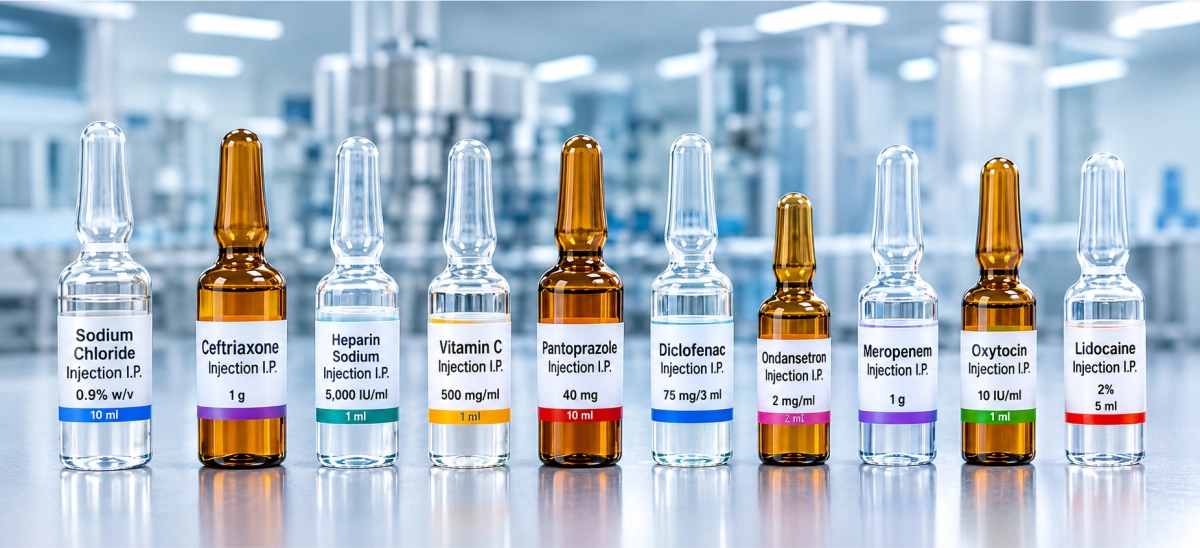
Manufacturers choose ampoules for injectable drugs because glass offers excellent chemical resistance and creates an airtight barrier once sealed. This barrier keeps the drug stable and sterile from the moment of filling until the moment a healthcare provider administers it to a patient.
Sterile packaging matters enormously in this context. Even a small breach in sterility can compromise an entire batch of medicine and put patient safety at risk. That’s why pharmaceutical companies invest heavily in validated, GMP-compliant packaging processes.
Demand for automated ampoule packaging lines has grown steadily across the pharmaceutical industry. Industry researchers value the global market for pharmaceutical glass ampoules in the billions of dollars, and that figure keeps climbing as vaccine programs, biologics, and injectable therapies expand worldwide. As drug volumes rise and regulatory scrutiny tightens, manufacturers increasingly turn to automation to improve consistency, reduce the risk of contamination, and meet strict global quality standards. This guide walks through the complete ampoule packaging line, its process, equipment, benefits, and the standards that govern it.
Understanding Ampoule Glass: Types, Forms, and Identification
What Is an Ampoule and How Is It Made?
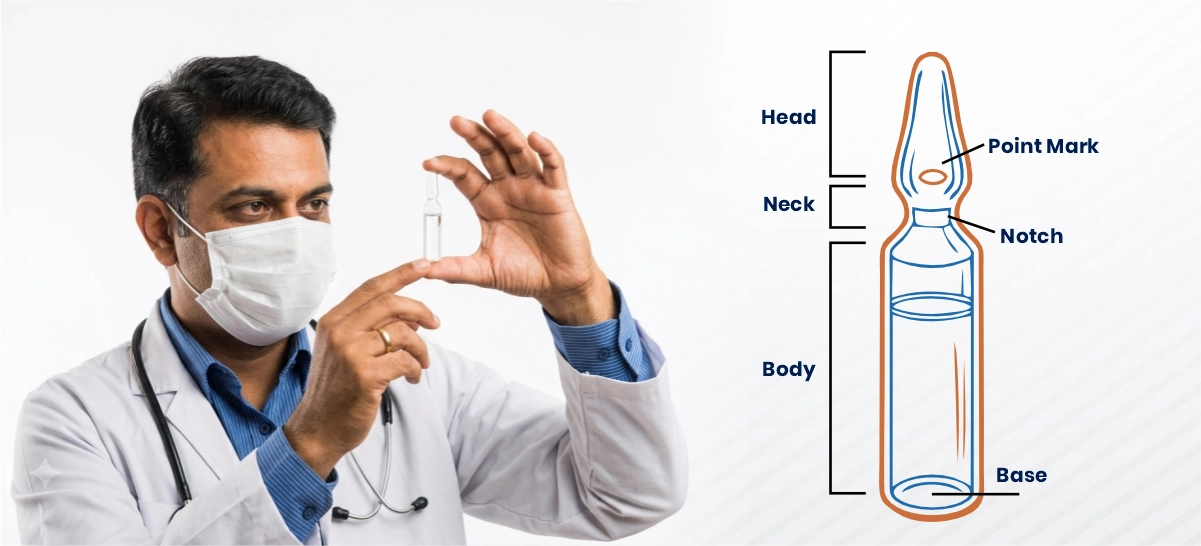
Before diving into the packaging line itself, it helps to understand what an ampoule actually is and how it’s built. An ampoule is a small, hermetically sealed glass vessel, closed by melting its narrow neck shut with an open flame. Manufacturers form them from short lengths of glass tubing on automated production lines, heating and shaping the glass with gas torches while computer vision systems monitor dimensional accuracy throughout the process.
Type I vs. Type III Glass: Choosing the Right Grade
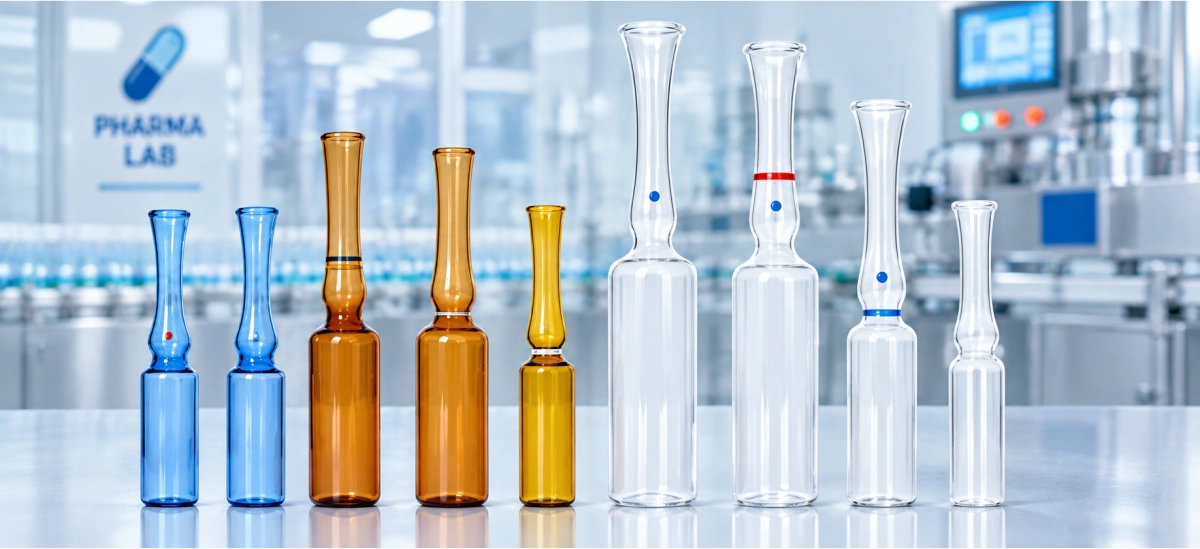
Glass grade matters. Ampoules typically use one of two types of pharmaceutical glass. Type I glass, commonly known as borosilicate glass, offers the highest chemical resistance and the best protection against ion leaching, making it the standard choice for sensitive injectable drugs. Type III glass, a treated soda-lime glass, costs less and suits less sensitive formulations such as oral solutions. Choosing the right glass type at the design stage directly affects long-term drug stability.
ISO 9187-1 Forms and the One-Point Cut (OPC) System
Standardized forms and safe opening. The international standard ISO 9187-1 governs ampoule dimensions, capacity, and performance, and defines three standardised forms still in use: Form B (cut/straight), Form C (open-funnel), and Form D (sealed). Most modern ampoules also feature a one-point cut (OPC), a tiny pre-made score on the neck marked by a colored dot which lets a healthcare worker snap the top off cleanly with the press of a thumb, without needing a file.
Colour-Coded Rings for Fast Identification
Colour coding for fast identification. Manufacturers often apply colored rings or enamel bands around the ampoule neck during production, between the forming and annealing ovens. These machine-readable rings let hospital staff and packaging lines quickly identify the substance inside, supporting safer handling, storage, and labelling further down the supply chain.
The Glass Particle Risk and How Design Reduces It
A known limitation worth designing around. Because ampoules are glass, opening them by snapping the neck can shed microscopic glass particles into the liquid. This is a well-documented concern in clinical literature, and it’s part of the reason inspection, careful glass forming, and OPC technology matter so much and why healthcare providers are often advised to draw medication through a filter needle. A well-engineered packaging line reduces this risk at the source through consistent glass quality and precise sealing.
What is an Ampoule Packaging Line?
An ampoule packaging line brings together a series of connected machines that carry ampoules through every stage of production, from raw glass to a finished, labelled carton ready for shipment. Each machine performs a specific function, and together they form a continuous, automated flow.
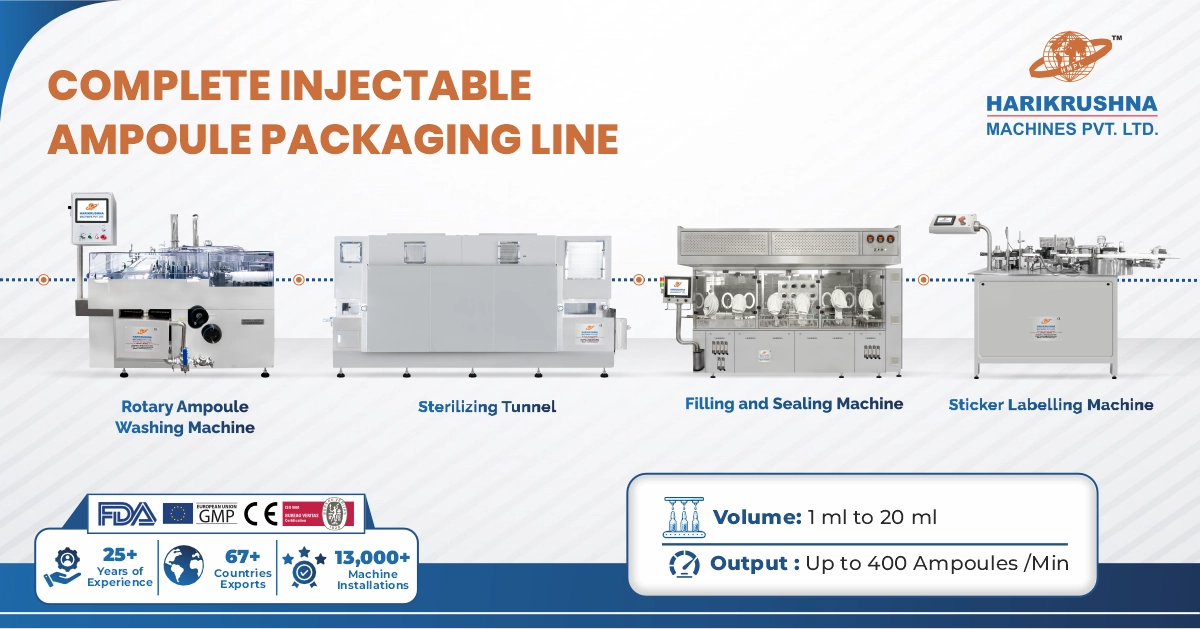
Here’s how the production flow typically looks:
Ampoule Washing Machine → Tunnel Sterilization Machine → Ampoule Filling & Sealing Machine → Ampoule Visual Inspection Machine → Ampoule Sticker Labelling Machine → Ampoule Tray Packing Machine → Cartoning Machine
This sequence ensures that ampoules move from cleaning to sterilization, then to filling and sealing, followed by inspection, labelling, and final packaging, all without manual handling that could introduce contamination.
HMPL offers integrated solutions that bring all of these stages together into a single, synchronized line, with the ampoule filling and sealing machine sitting at its core. Rather than sourcing machines from multiple vendors and struggling with compatibility issues, pharmaceutical manufacturers can implement a complete, validated system designed to work as one unit from day one.
Ampoule Packaging Process Step-by-Step
A. Ampoule Washing Machine
The process begins with thorough washing of every ampoule. Machines wash both the internal and external surfaces to remove glass particles, dust, and any residual contaminants from the manufacturing of the glass itself.
A multi-stage washing system repeats this cleaning cycle multiple times, using different combinations of water and air to achieve a consistently high level of cleanliness. Manufacturers use Water for Injection (WFI) and sterile air during these stages, since ordinary water or air could reintroduce the very contaminants the process aims to eliminate.
B. Sterilization & Depyrogenation
After washing, ampoules pass through a sterilization tunnel that removes pyrogens fever-inducing substances that can remain on glass surfaces even after washing. This step operates at high temperatures, often exceeding 300°C, to destroy any remaining microbial life and pyrogenic material.
This depyrogenation step gives manufacturers strong sterility assurance before the ampoules ever reach the filling stage, which is essential for any product that will be injected directly into a patient’s bloodstream.
C. Ampoule Filling and Sealing Machine
Once sterilized, ampoules move to the ampoule filling and sealing machine, the heart of the entire line. This machine doses each ampoule with an accurate, pre-set volume of liquid drug, ensuring every unit meets exact dosage requirements.
Many machines offer a nitrogen flushing option, which displaces oxygen inside the ampoule before sealing. This protects oxygen-sensitive drugs from degradation and extends shelf life. The machine then seals each ampoule using flame sealing technology, melting the glass tip to create a permanent, airtight closure.
Throughout this stage, the system works to prevent contamination by minimizing human contact and operating within a controlled, often laminar-flow, environment.
D. Inspection Machine
Every sealed ampoule then passes through a visual inspection stage. Inspection machines check for cracks in the glass, which could compromise sterility, as well as cosmetic defects that might indicate a manufacturing flaw.
These machines also detect particulate matter inside the liquid itself. Even microscopic particles can pose a serious risk if injected, so this inspection stage acts as a critical quality checkpoint before any ampoule proceeds further down the line.
Modern inspection stations increasingly rely on machine vision cameras paired with lighting configurations tuned specifically for glass to spot hairline cracks, fill-level inconsistencies, and foreign particles that the human eye would likely miss at production speed. Academic research into ampoule inspection systems has shown that lighting configuration alone can significantly change defect-detection accuracy, which is why serious packaging line manufacturers treat vision system design as its own engineering discipline rather than an afterthought.
E. Labelling & Secondary Packaging Machine
In the final stage, machines apply labels to each ampoule to support traceability throughout the supply chain. Batch coding on each label allows manufacturers and regulators to trace a specific unit back to its exact production batch, which is essential for recalls and quality audits.
Ampoules then move into trays and cartons, which protect them during transportation and storage. Proper secondary packaging prevents breakage and keeps ampoules organized for distribution to hospitals, pharmacies, and clinics.
Because glass ampoules are fragile and easy to chip, leading secondary packaging systems increasingly use robotic arms and sensor-guided singulation rather than rigid mechanical pushers, so each ampoule is picked up, tilted, and placed into its tray or carton with minimal shock. High-throughput cartoning and case-packing equipment on the market today can process several hundred units per minute while still handling multiple pack formats on the same machine, with tool-free format changeovers that take well under an hour.
Key Components of a Complete Ampoule Packaging Line
The table below summarizes the core equipment in a complete ampoule packaging line and the function each machine performs.
| Equipment | Function |
|---|---|
| Ampoule Washing Machine | Cleaning |
| Sterilization Tunnel | Depyrogenation |
| Ampoule Filling & Sealing Machine | Filling & Sealing |
| Visual Inspection Machine | Quality Control |
| Labelling Machine | Product Identification |
| Cartoning Machine | Secondary Packaging |
Each of these machines plays a specific, non-negotiable role. Skipping or under-investing in any single stage can compromise the sterility, accuracy, or traceability of the finished product.
Benefits of Automated Ampoule Packaging
- Improved Accuracy: Automated filling systems deliver precise filling volumes for every single ampoule, eliminating the inconsistency that comes with manual dosing.
- Higher Production Speed: Automated lines significantly increase output, allowing manufacturers to meet large-scale demand without sacrificing quality.
- Reduced Human Intervention: By minimizing manual handling, automated lines lower the risk of contamination that comes from direct human contact with sterile components.
- Regulatory Compliance: Automated systems help manufacturers maintain consistent GMP compliance, since machines follow validated, repeatable processes every time.
- Lower Product Wastage: Better process control across washing, filling, and sealing reduces the number of rejected or defective units, cutting down on wasted drug product.
- Enhanced Product Safety: A fully automated, sterile manufacturing environment protects the final product and, ultimately, the patients who receive it.
Pharmaceutical Standards and Compliance
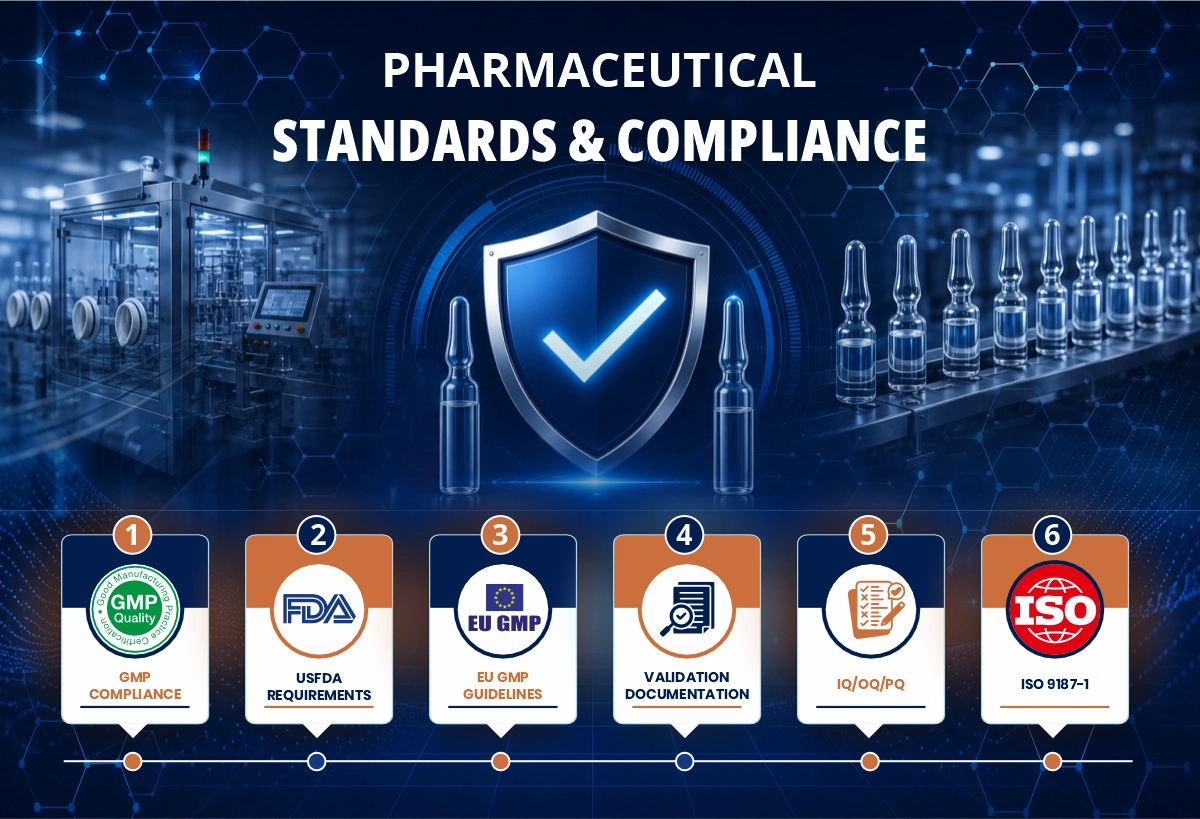
Ampoule packaging lines must meet a range of pharmaceutical standards before manufacturers can use them for commercial production. Key requirements include:
- GMP Compliance – Good Manufacturing Practice guidelines govern every stage of production, from equipment design to operator procedures.
- USFDA Requirements – Manufacturers exporting to the United States must meet the U.S. Food and Drug Administration’s strict requirements for sterile drug packaging.
- EU GMP Guidelines – The European Union enforces its own detailed GMP framework for pharmaceutical packaging equipment.
- 21 CFR Part 11 – Where applicable, this regulation governs electronic records and signatures, relevant for lines with digital data logging and traceability features.
- Validation Documentation – Manufacturers must maintain thorough documentation proving that each machine performs consistently and reliably.
- IQ/OQ/PQ – Installation Qualification, Operational Qualification, and Performance Qualification protocols verify that equipment is installed correctly, operates as intended, and performs consistently under real production conditions.
- ISO 9187-1 – This international standard specifically governs ampoule materials, dimensions, capacity, and performance, giving manufacturers a shared benchmark for container quality across markets.
Meeting these standards isn’t optional; it’s the foundation that allows pharmaceutical companies to sell their products in regulated global markets.
Applications of Ampoule Packaging
- Pharmaceutical Products: Ampoule packaging serves a wide range of pharmaceutical products, including injectable drugs, vaccines, antibiotics, and analgesics. Each of these product categories depends on sterile, tamper-proof packaging to remain safe and effective.
- Biotechnology Products: Biotechnology companies use ampoule packaging for specialized sterile formulations, particularly where product stability and contamination control are especially critical.
- Veterinary Products: Ampoule packaging also extends to injectable veterinary medicines, which require the same level of sterility and dosage accuracy as human pharmaceutical products.
Glass Ampoules vs. Plastic Ampoules
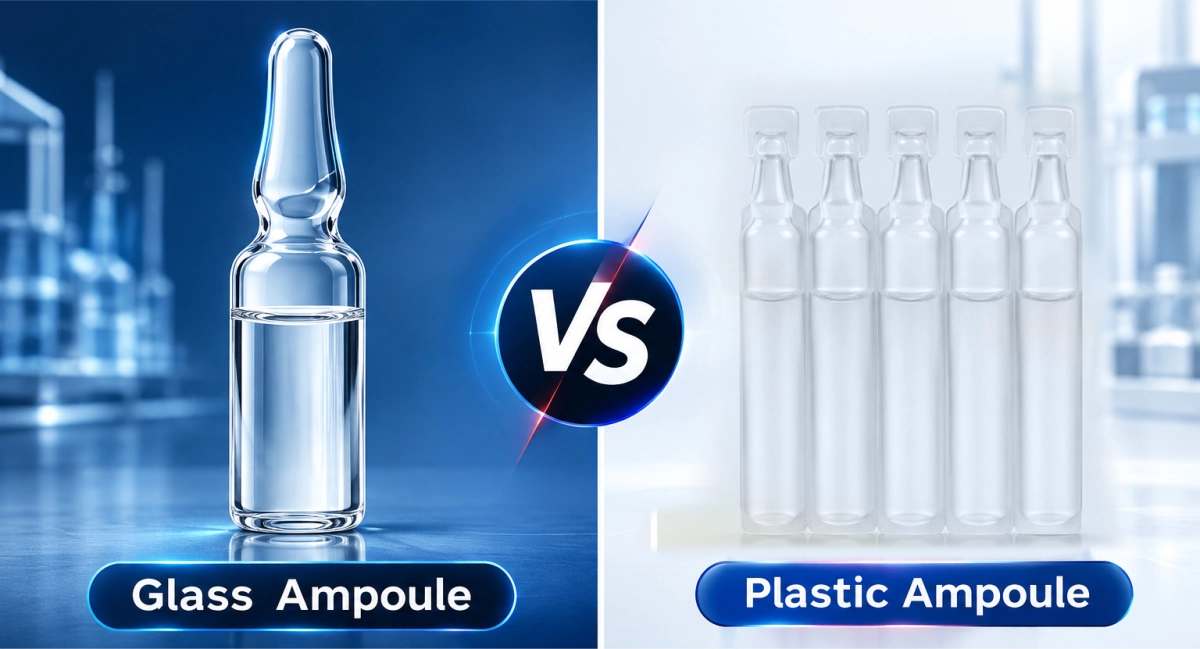
Not every product calls for glass. Manufacturers choosing packaging for a new formulation often weigh glass ampoules against plastic alternatives, and the right choice depends on the drug itself.
Glass wins on chemical inertness and barrier performance; it offers a near-perfect barrier against gases and moisture and won’t leach ions into the formulation, which matters most for highly sensitive injectables. Glass can also be tinted amber to shield light-sensitive compounds. The trade-off is fragility: glass ampoules can chip or crack during transport, and breaking the neck to open one carries a small risk of shedding glass particles into the dose.
Plastic ampoules trade some of that chemical inertness for durability and convenience. They resist shattering, weigh less (which lowers shipping costs), and open with a simple twist or snap rather than a scored-glass break. For less sensitive formulations, many over-the-counter liquids, certain cosmetic actives, or products where user convenience outweighs maximum barrier performance, plastic is often the practical choice.
For manufacturers standardizing around glass, which remains the dominant format for injectable pharmaceuticals, the packaging line described in this guide represents the proven, regulator-trusted path.
Features to Look for in an Ampoule Filling and Sealing Machine
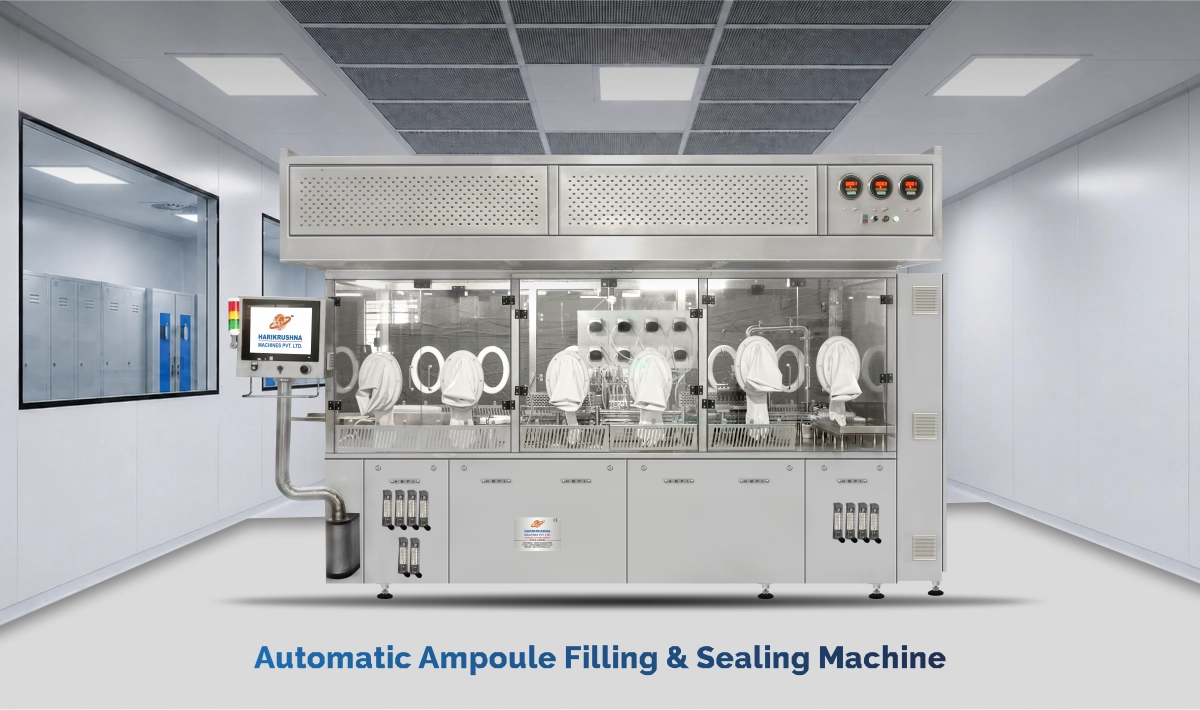
When evaluating an ampoule filling and sealing machine, manufacturers should look for the following features:
- Servo-driven filling system for precise, repeatable dosing accuracy
- No ampoule, no filling functionality, which prevents wasted product when an ampoule is missing or misaligned
- Nitrogen flushing to protect oxygen-sensitive formulations
- PLC + HMI controls for intuitive operation and process monitoring
- CIP/SIP compatibility (Clean-in-Place/Sterilize-in-Place) for efficient, thorough sanitation between batches
- Tool-less changeover to reduce downtime when switching between ampoule sizes or products
- Online rejection system to automatically remove defective units without stopping the line
- Compact GMP design that fits cleanroom space constraints while meeting regulatory standards
These features directly impact production efficiency, product safety, and long-term operating costs, so they deserve careful consideration during the equipment selection process.
Why Choose HMPL? A Leading Ampoule Filling Machines Manufacturer in India
Harikrushna Machines Pvt. Ltd. (HMPL) is a leading manufacturer and exporter of liquid processing and packaging machinery[cite: 1]. HMPL stands out as an end-to-end ampoule packaging line manufacturer, offering complete solutions rather than standalone machines. This approach gives pharmaceutical manufacturers a single point of accountability across their entire packaging process.
As one of the established ampoule filling machines manufacturers in India, HMPL combines local engineering expertise with globally benchmarked design standards, making it a practical choice for both domestic pharmaceutical companies and international buyers sourcing equipment from India.
HMPL delivers customized solutions tailored to each client’s production volume, ampoule sizes, and specific formulation requirements. Every machine HMPL builds is GMP-compliant, designed from the ground up to meet the sterility and documentation standards regulators demand.
With an impressive track record of over 13,000 installations across 67 countries[cite: 1], HMPL brings proven experience to pharmaceutical manufacturers of every scale. As a full-line ampoule filling machines manufacturer in India, the company also provides comprehensive technical support and validation support, helping clients navigate IQ/OQ/PQ documentation and regulatory audits with confidence.
Beyond installation, HMPL offers training and after-sales service, ensuring that operators know how to run and maintain their equipment correctly for years to come. This full-lifecycle support sets HMPL apart as a long-term partner rather than a one-time equipment vendor.
Future Trends in Ampoule Packaging
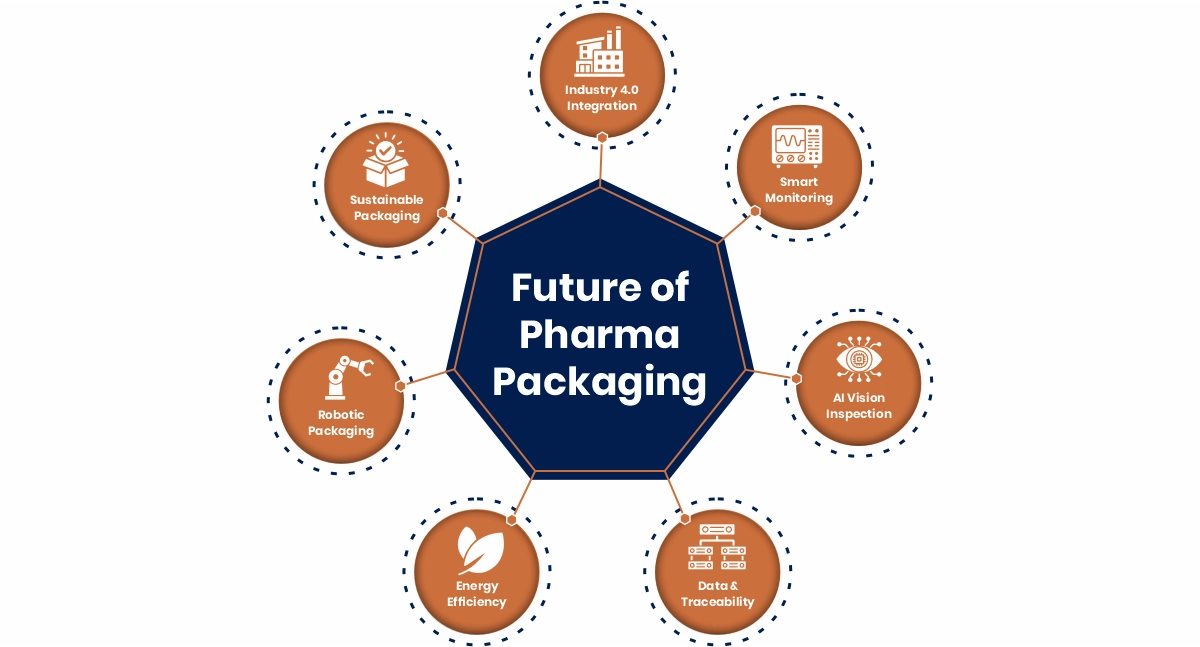
The ampoule packaging industry continues to evolve alongside broader manufacturing technology trends. Key developments shaping the future include:
- Industry 4.0 integration, connecting packaging lines to broader digital manufacturing ecosystems
- Smart monitoring systems that track machine performance and flag issues before they cause downtime
- Automated inspection using AI vision, which improves defect detection accuracy beyond traditional visual inspection methods
- Data logging and traceability, supporting compliance with electronic record-keeping regulations
- Energy-efficient equipment, reducing the environmental footprint and operating costs of packaging lines
- Robotic packaging solutions, further reducing human intervention and improving speed and precision at the secondary packaging stage.
- Sustainable secondary packaging, with a growing number of manufacturers replacing plastic trays with molded paperboard or card trays to cut plastic use without compromising product protection
As these technologies mature, pharmaceutical manufacturers who invest in modern, upgradable ampoule packaging lines will find themselves better positioned to meet rising production demands and tightening regulatory expectations.