Syringe Filling Machines for RTU Packaging: Prefilled Syringes, Cartridges & Vials
Pharmaceutical packaging has changed fast over the last decade. Bulk vials and manual reconstitution used to dominate injectable drug delivery. Today, the industry relies on Ready-to-Use (RTU) formats instead: prefilled syringes, dental cartridges, and nested vials.
These formats reduce human error. They improve sterility assurance. And they get life-saving therapies to patients faster. For manufacturers, choosing the right syringe filling machines isn’t optional anymore. It’s central to staying compliant, competitive, and export-ready.
This guide covers what each RTU format is, why it matters, the USFDA and EU GMP rules that govern it, and the types of syringe filling machines used to produce it. We’ll also look at the machine range from HMPL Sterile.
What Are Prefilled Syringes?
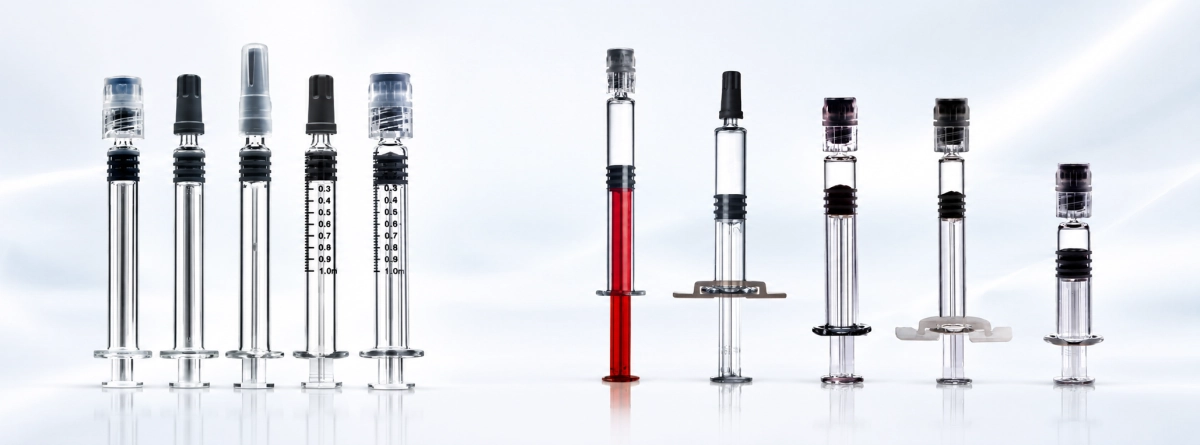
A prefilled syringe (PFS) arrives from the manufacturer already filled with the exact dose a patient needs. There’s no separate vial, no drawing up liquid, and no measuring. The clinician or patient just removes the cap and injects.
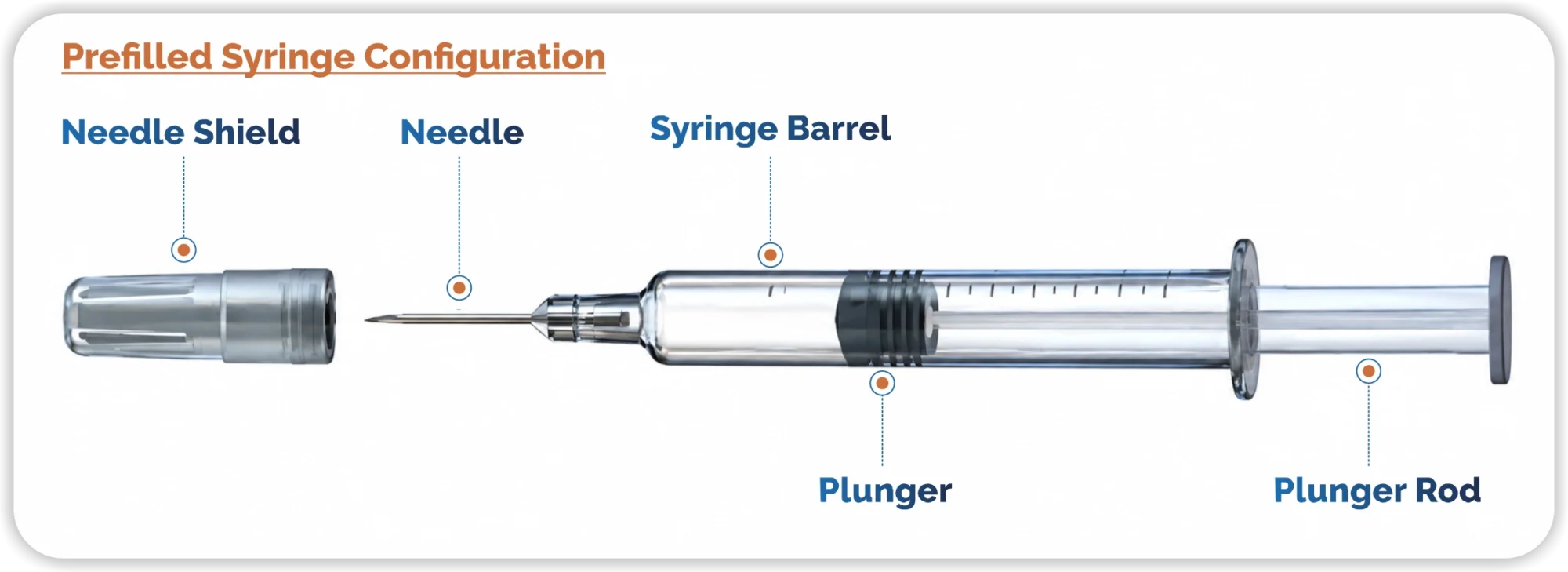
Most prefilled syringes use cyclic olefin polymer (COP) or borosilicate glass barrels. They’re fitted with a rubber stopper, a tip cap or needle shield, and sometimes a staked needle. Manufacturers use them for biologics, vaccines, anticoagulants, insulin, monoclonal antibodies, and emergency drugs like epinephrine.
Why prefilled syringes matter:
- Dosing accuracy. Each syringe is filled to a validated volume. This removes the under- or over-dosing risk that comes with manual draw-up.
- Lower contamination risk. Fewer touchpoints between drug and environment mean lower bioburden risk.
- Patient convenience. Chronic-condition therapies, including diabetes and rheumatoid arthritis treatments, depend on PFS formats for at-home use.
- Faster emergency response. In critical care, prefilled syringes save seconds that matter.
- Less drug wastage. Manufacturers don’t need overfill to compensate for draw-up loss, which matters for costly biologics.
What Are Dental Cartridges?
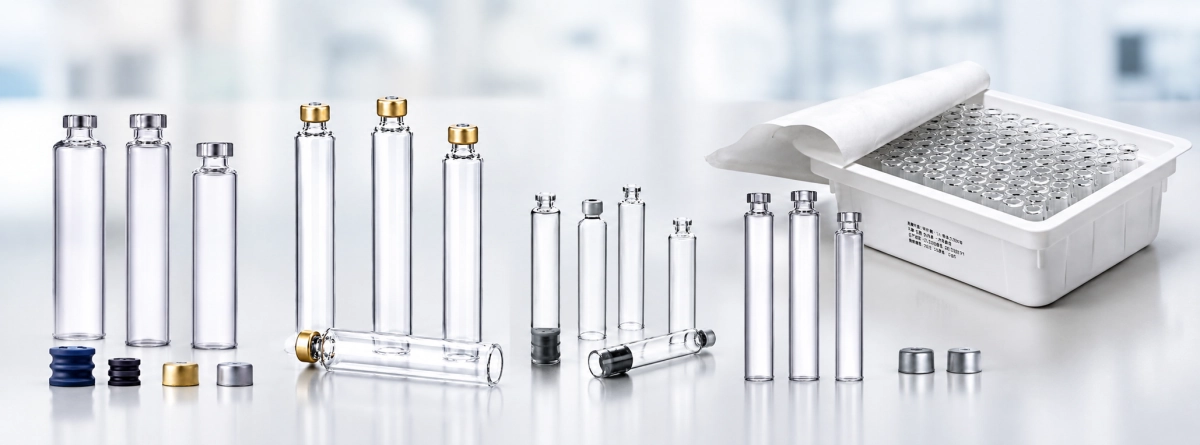
Dental cartridges, also called carpules, are small glass or polymer containers. They typically hold 1.7 ml to 2.2 ml of local anaesthetic, such as lidocaine, articaine, or mepivacaine. Dentists load them directly into a carpule syringe, then attach a needle at the point of use.
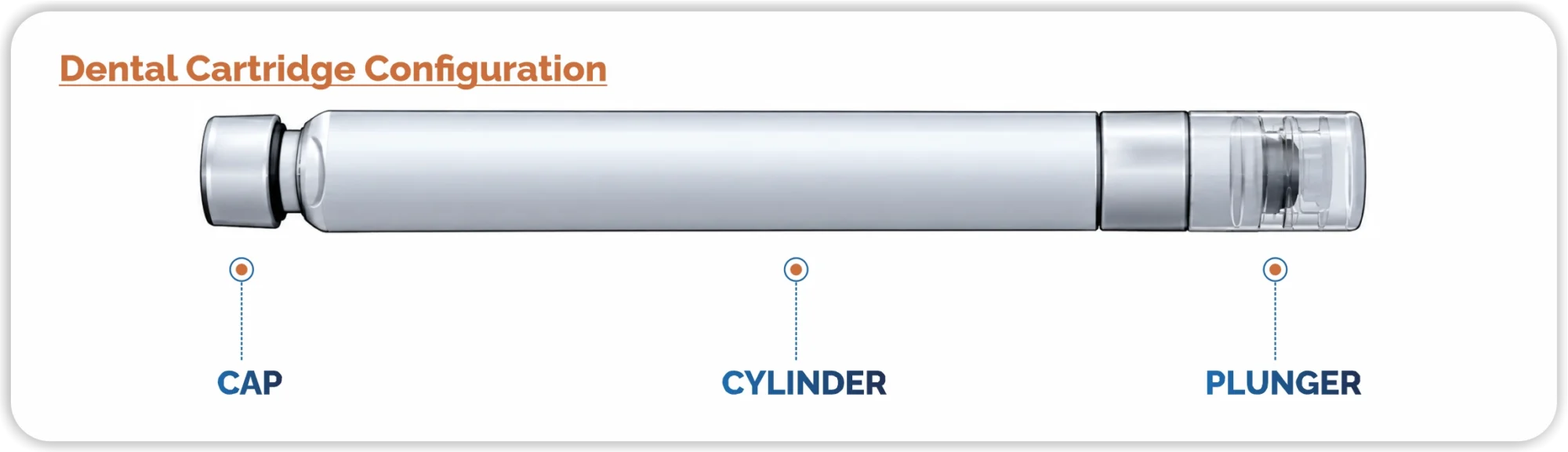
Each cartridge has a rubber plunger on one end. The other end has a pierceable rubber diaphragm sealed with an aluminium cap, so the needle can pierce through without exposing the solution to air.
Why dental cartridges matter:
- Standardized, single-patient dosing eliminates cross-contamination between patients.
- High-volume dental practices need cartridges that load instantly, so speed matters.
- The sealed diaphragm and aluminium cap protect the anaesthetic from microbial contamination until use.
- Cartridges are built for long-term storage without degrading the anaesthetic or its additives.
What Are Nested Vials?
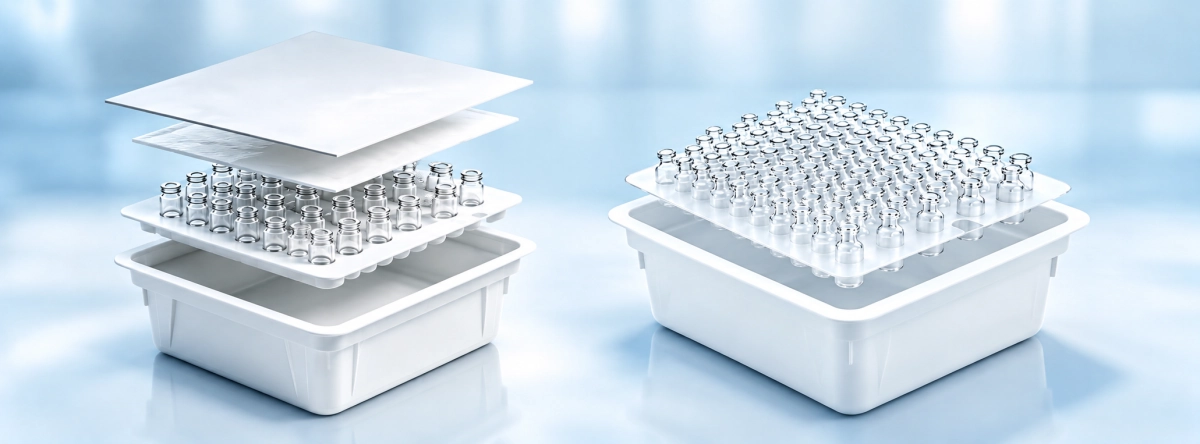
Traditional vials arrive at a fill-finish line in bulk. They need washing, depyrogenation, and sterilization on-site before filling. Nested vials flip this model. The container manufacturer pre-washes and pre-sterilizes them, arranges them in a rigid plastic nest inside a sealed tub, and ships them ready for direct loading.
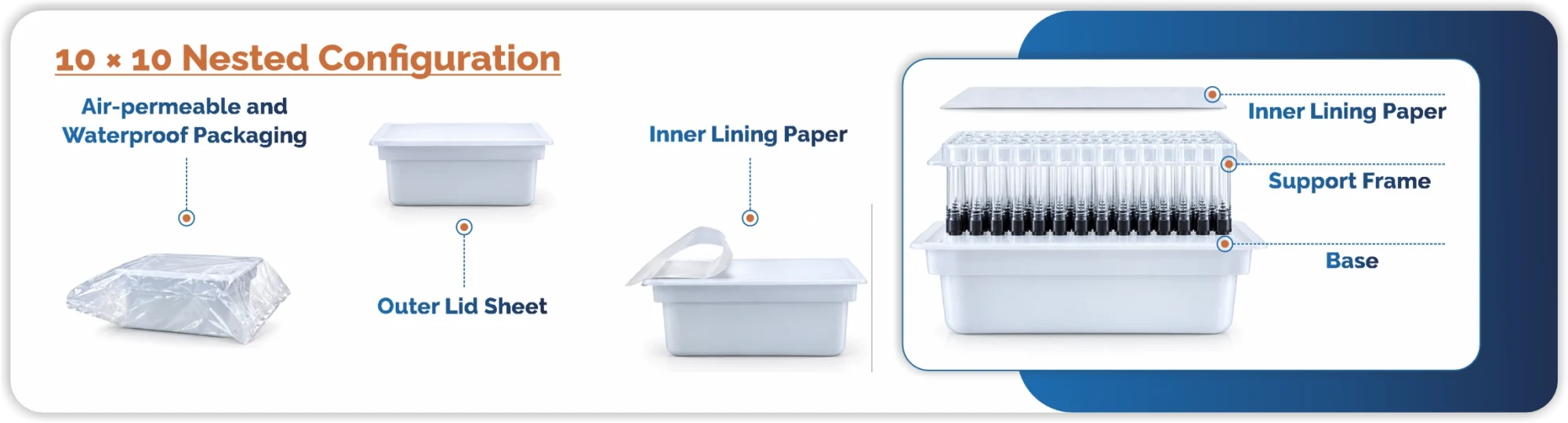
This closed-vial format is now standard for high-value biologics, cell and gene therapies, and vaccines, where manufacturers need to minimize manual handling and cleanroom footprint.
Why nested vials matter:
- Skipping washing and depyrogenation on the fill line cuts capital investment, cleanroom space, and cycle time.
- Containers are sterilized in a controlled environment and never touched by hand before filling, which improves sterility assurance.
- Small-batch and high-value biologics benefit most, since nested formats support flexible, modular filling lines for personalized medicine and orphan drugs.
- Cushioned, isolated containers reduce particulate contamination and breakage from glass-on-glass contact.
- The same isolator or RABS (Restricted Access Barrier System) can process syringes, cartridges, or vials with minimal format changes, so changeovers happen faster.
What Is RTU (Ready-to-Use) Packaging?
RTU is the umbrella term covering prefilled syringes, dental cartridges, and nested vials or cartridges. Any primary packaging component that arrives pre-washed, pre-sterilized, and often pre-siliconized counts as RTU. It only needs filling, stoppering, and sealing before it reaches the patient.
RTU containers represent a shift in manufacturing philosophy. Instead of building washing and sterilization capability into every facility, drug manufacturers now outsource container prep to specialized converters. This lets them focus cleanroom investment purely on aseptic filling.
Why RTU packaging matters industry-wide:
- Manufacturers avoid the capital cost of in-house vial washers, tunnel sterilizers, and depyrogenation ovens for every product line.
- RTU lines need a fraction of the cleanroom footprint that conventional wash-to-fill lines require.
- Time-to-market shrinks, which matters most during pandemic response, biosimilar launches, and personalized medicine rollouts.
- Container quality stays consistent across batches, since upstream converters control it under their own validated processes.
- RTU lines use less water and energy than traditional wash-sterilize-fill lines, which supports sustainability goals.
Why RTU Packaging Matters for Pharma Manufacturers
Bringing these formats together, RTU packaging’s strategic value breaks down into five areas.
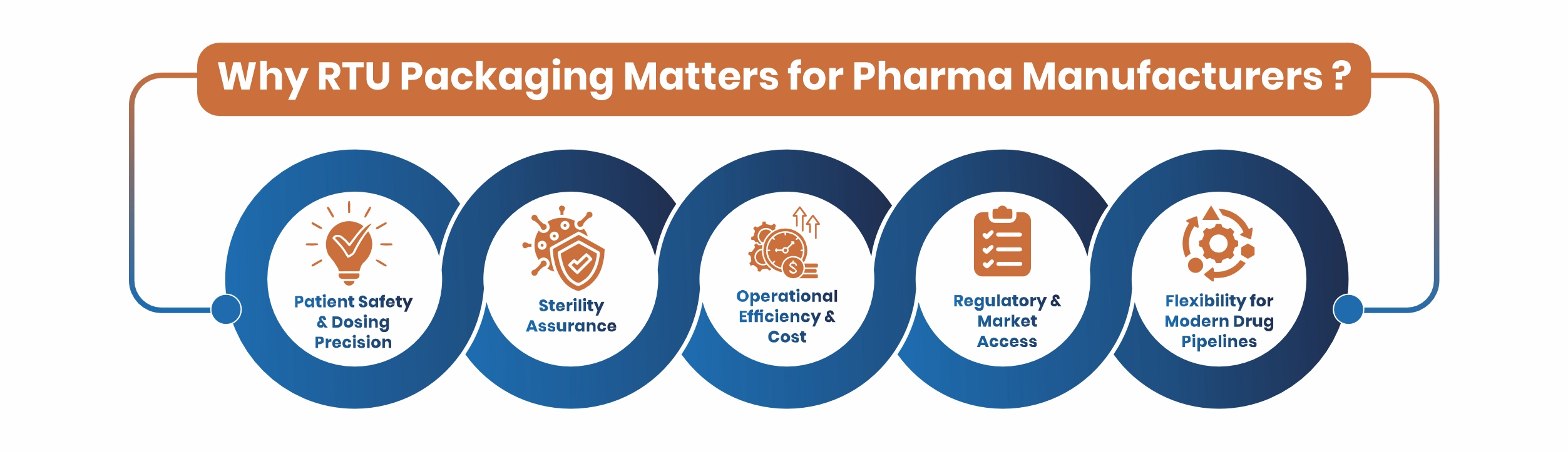
- Patient safety and dosing precision: Manual reconstitution from multi-dose vials causes many medication errors. RTU formats remove this variability, since manufacturers validate the dose at the point of production.
- Sterility assurance: Every manual step in a fill-finish process adds contamination risk. RTU formats minimize human intervention from container prep through final seal, which supports the sterility assurance level regulators expect for parenteral products.
- Operational efficiency and cost: RTU containers cost more per unit than bulk glass. However, total cost of ownership often comes out lower once you factor in washing, sterilization, cleanroom space, utilities, and validation. This especially holds for small-batch biologics and orphan drugs, where economies of scale don’t apply.
- Regulatory and market access: Global regulators increasingly favour RTU formats for high-risk biologics, vaccines, and self-administered therapies. Manufacturers using RTU containers tend to move through USFDA and EU GMP inspections more smoothly.
- Flexibility for modern drug pipelines: Biosimilars, cell and gene therapies, and precision medicine all demand flexible filling lines that can switch between syringes, cartridges, and vials without major requalification. Nested RTU formats are built for exactly this kind of agility.
USFDA and EU GMP Compliance Standards
Manufacturers producing prefilled syringes, dental cartridges, or nested vials must design their filling operations around two regulatory frameworks.
USFDA Requirements
- 21 CFR Part 210 & 211: Current Good Manufacturing Practice (cGMP) rules covering personnel, facilities, equipment, production controls, and quality control.
- 21 CFR Part 11: Electronic records and signatures. PLC/HMI-driven filling machines must support audit trails, data integrity, and secure access controls.
- USP <788>, <789>, <790>, <1207>: Standards for particulate matter testing, container-closure integrity testing, and visible particulates, all directly relevant to syringe and vial inspection.
- Aseptic Processing Guidance (2004, with later updates): FDA guidance on sterile drug products made by aseptic processing. It governs environmental monitoring, media fill validation, and equipment design.
EU GMP Requirements
- EU GMP Annex 1: Revised in 2022 and effective from August 2023, Annex 1 emphasizes Contamination Control Strategy (CCS), barrier technology, and closed RTU systems as the preferred approach for aseptic filling.
- EU GMP Volume 4: Core GMP principles covering facilities, qualification, validation, and quality risk management.
- EU MDR / ISO 11040 & ISO 13926: Dimensional and container-closure standards for syringes and cartridges, especially relevant when a prefilled syringe qualifies as a combination product.
- PIC/S Guidelines: Many EU GMP principles carry over under the Pharmaceutical Inspection Co-operation Scheme, which harmonizes inspection standards across more than 50 member authorities.
In practice, this means filling machines for RTU formats need laminar airflow or isolator/RABS enclosures, servo-driven dosing for accuracy, 21 CFR Part 11-compliant controls, IQ/OQ/PQ documentation support, and GMP-compliant materials like SS 304/316L construction.
Types of Syringe Filling Machines
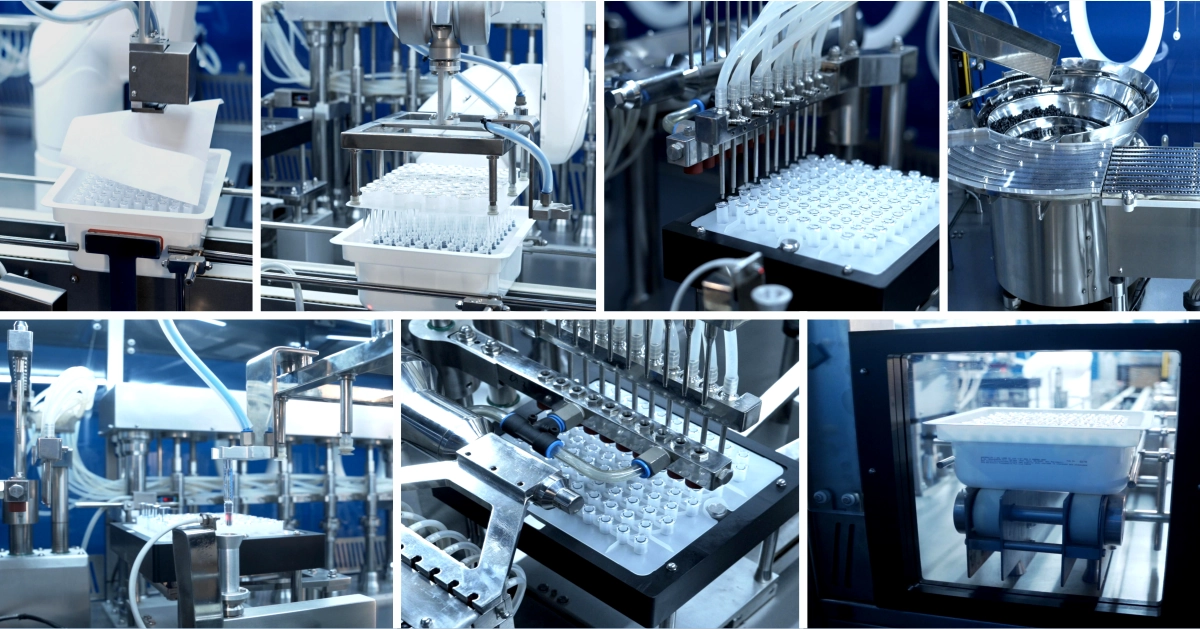
Syringe filling machines fall into a few categories, depending on scale, automation, and container format.
- R&D / lab-scale filling machines: Low-volume, often semi-manual machines for formulation development, small clinical batches, and feasibility studies before scale-up.
- Semi-automatic filling machines: Operator-assisted machines for small and mid-sized runs, common among CDMOs and generics manufacturers.
- Fully automatic nested filling and stoppering machines: High-throughput systems built for nested tub-format syringes, cartridges, and vials. These combine filling, stoppering, and sometimes capping into one contact-free process.
- Rotary or continuous motion filling machines: Built for very high-volume production, like commercial-scale biologics and vaccines. They offer the highest throughput but need larger capital investment.
- Robotic and isolator-integrated filling lines: The most advanced category. These combine robotic handling with isolator barrier technology to meet strict EU GMP Annex 1 contamination control requirements.
- Plunger rod insertion, labelling, and secondary packaging machines: Downstream equipment that finishes the syringe by inserting the plunger rod, applying labels, and preparing units for cartoning.
Harikrushna Machines Pvt. Ltd. (HMPL Sterile): Company Overview
HMPL Sterile is the specialized division of Harikrushna Machines Pvt. Ltd. dedicated to aseptic filling solutions for the pharmaceutical industry, built to meet the precise sterility, containment, and process integrity demands that pharma manufacturing requires. The division offers a focused range of equipment including liquid manufacturing plants, washing and sterilization systems, filling and sealing machines, labelling systems, cartoning machines, and complete integrated packaging lines, all engineered specifically for sterile production environments.
At its core is a dedicated line of pre-filled syringe filling machines designed for syringes, dental cartridges, and nested vials, addressing the exacting precision needed for injectable and patient-administered dosing formats. Through this concentrated focus on aseptic-specific engineering, HMPL Sterile serves as a trusted partner for pharma manufacturers seeking validated, compliant, and reliable sterile filling solutions.
Pre-Filled Syringe Machines Range
HMPL Sterile’s Pre-Filled Syringe Machines product range features machines under this category, with our team continuously innovating to meet customer needs and address market challenges through advanced-level solutions.
Nested pre-filled syringe filling and stoppering machine
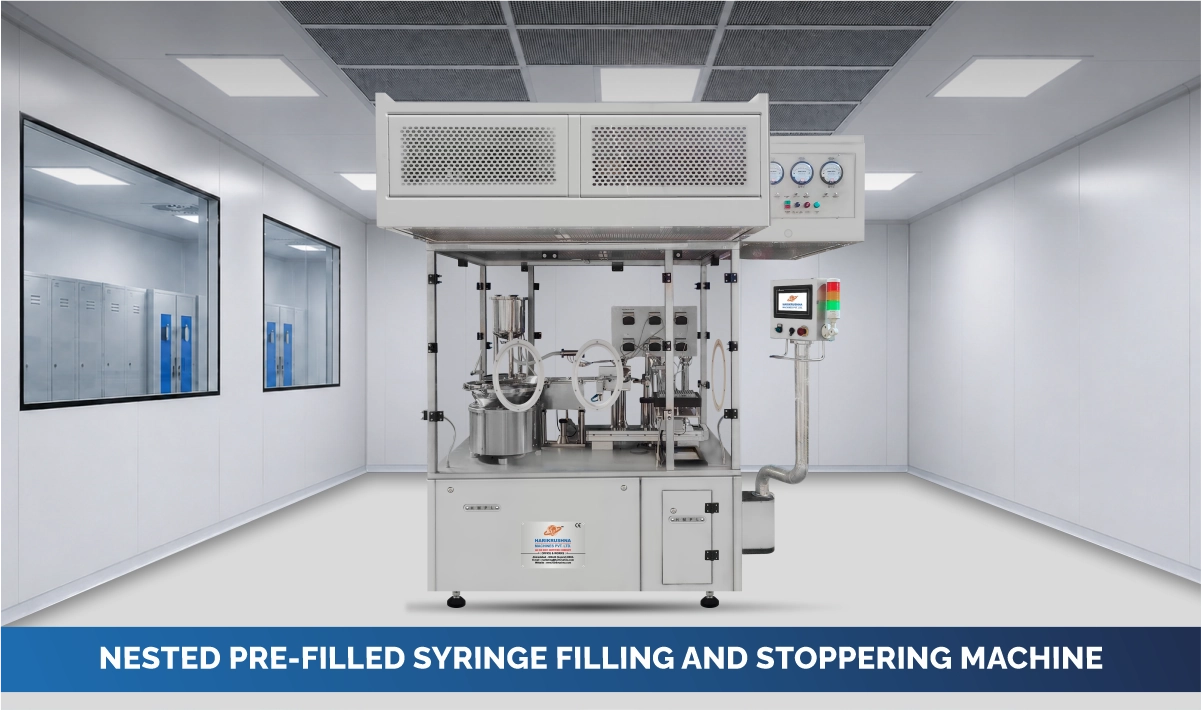
This Nested pre-filled syringe filling and stoppering machine fills and stoppers pre-filled syringes, cartridges, and vials from 0.1 ml to 5 ml. It uses servo-driven dosing heads for precise volume control, a five-station vacuum stoppering system, and a fully enclosed polycarbonate cabinet with laminar airflow. Its modular design allows quick changeover between formats, which matters for manufacturers running multiple SKUs on one line.
Automatic filling and closing system for nested pre-fillable syringes, cartridges & vials
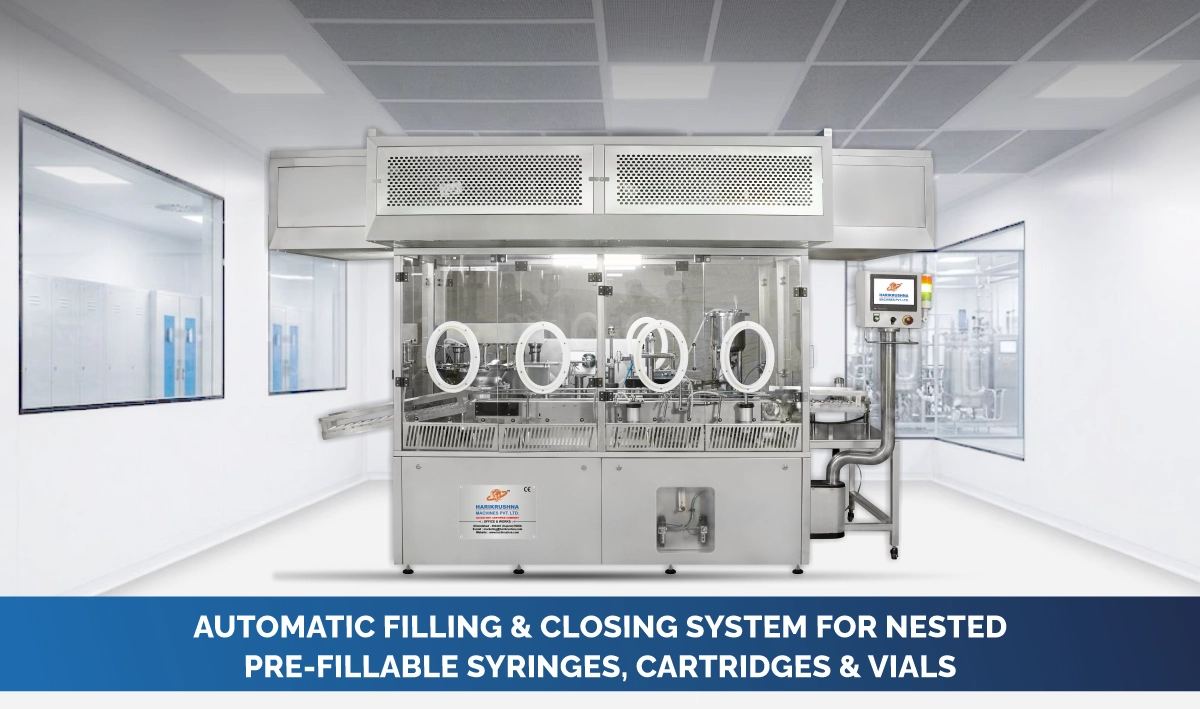
Automatic filling and closing system for nested pre-fillable syringes, cartridges & vials automates the full cycle, from nested tub loading through final container closure. It’s built for manufacturers who want one integrated system instead of separate filling and capping stations, which reduces manual intervention and improves batch-to-batch consistency.
R&D prefilled syringe filling machine
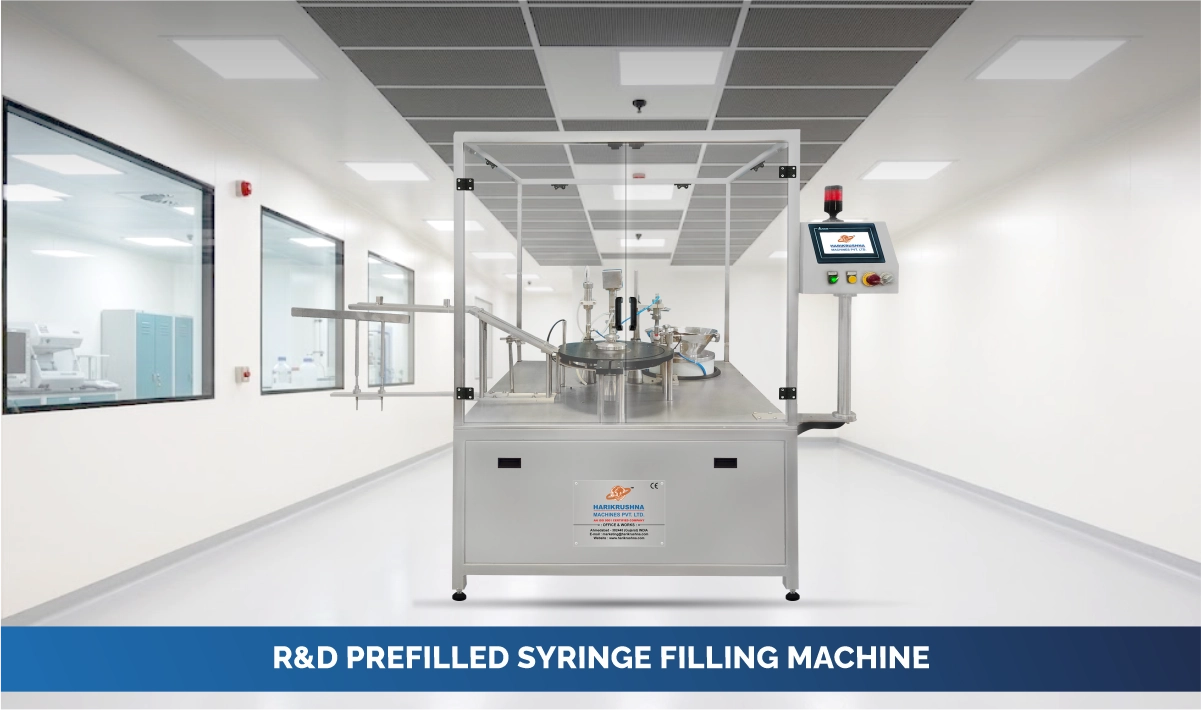
R&D prefilled syringe filling machine lets R&D teams and CDMOs trial new formulations, validate fill volumes, and produce clinical trial material without committing to full commercial-scale equipment. It still follows core GMP design principles, including contact-free handling and precision dosing.
Automatic plunger rod insertion and labelling machine
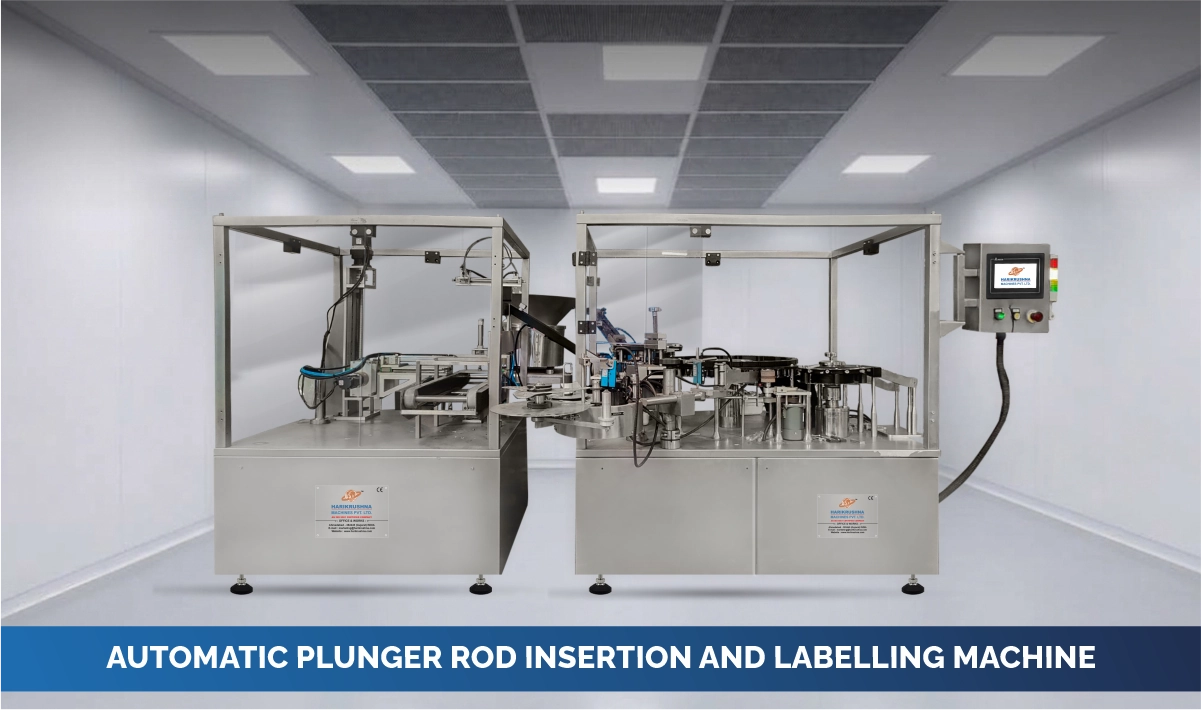
Automatic plunger rod insertion and labelling machine completes the syringe by inserting the plunger rod into stoppered syringes and applying primary labels. Without this step, a syringe can’t be dosed by the end user, so it’s essential for both usability and labelling compliance under USFDA and EU rules.
Pre-filled syringe and dental cartridge filling, stoppering and sealing machine
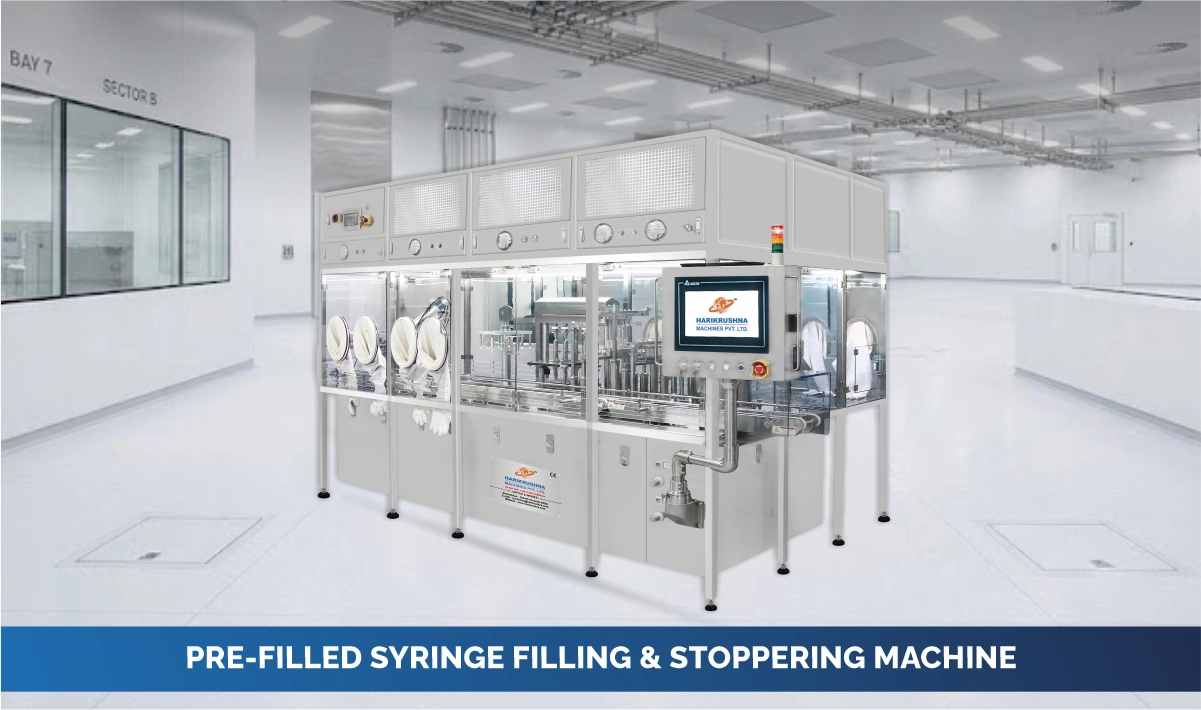
Pre-filled syringe and dental cartridge filling, stoppering and sealing machine is a dual-format machine that handles both prefilled syringes and dental cartridges on one platform, combining filling, stoppering, and sealing into a single operation. Contract manufacturers serving both injectable pharma and dental anaesthetic markets can cover two product categories with one capital investment.
Pre-filled flush syringe filling and capping machine with reverse system
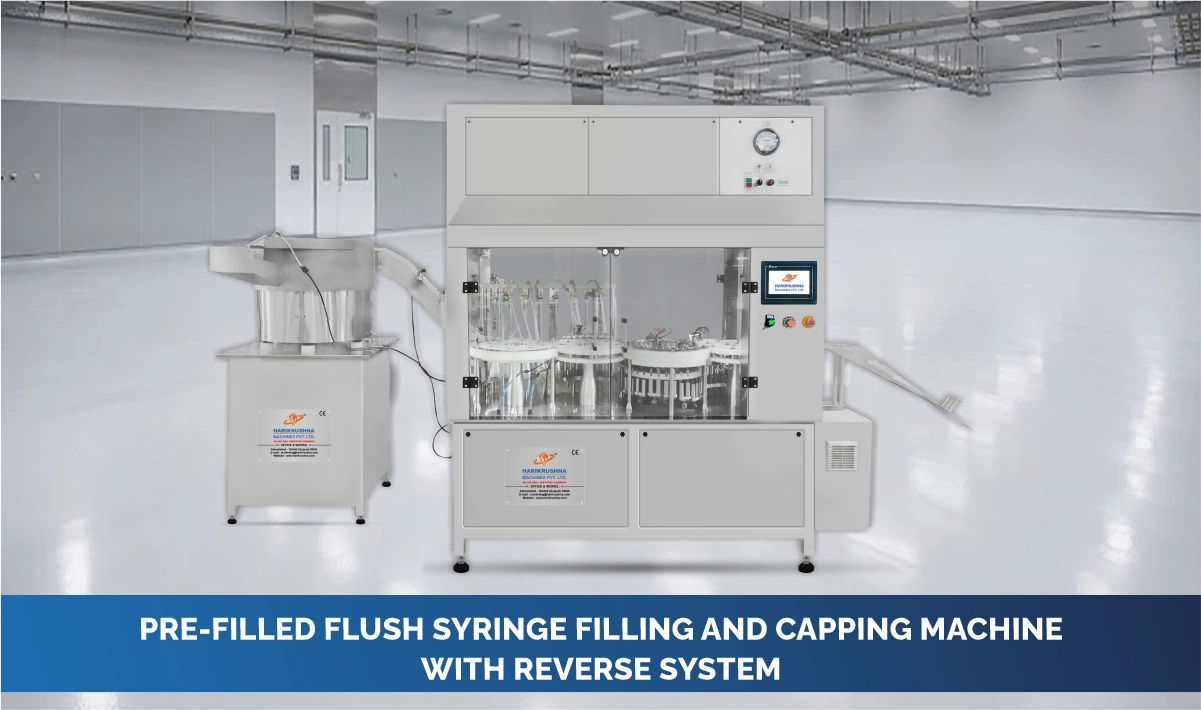
Flush syringes clear IV lines with saline or heparin and need high-speed, high-volume filling given our large production runs. A pre-filled flush syringe filling and capping machine with reverse system supports the fast, repetitive cycles that flush syringe manufacturing demands, while keeping the process sterile and contact-free.
PFS packaging line
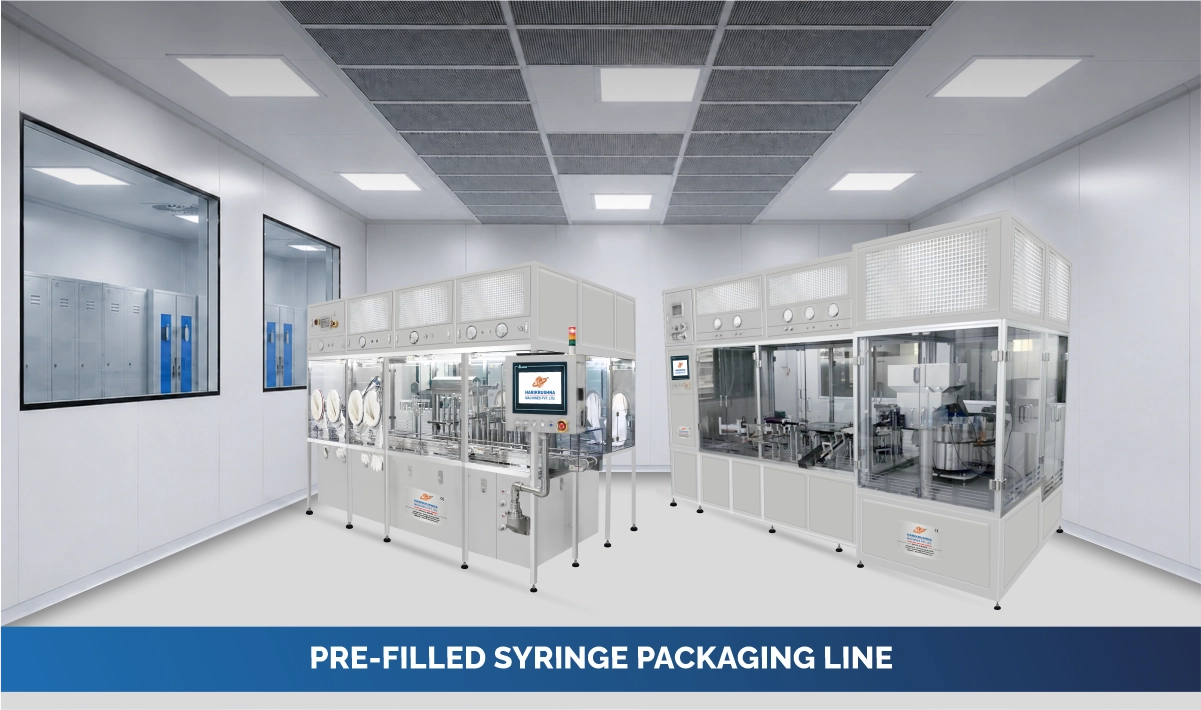
PFS packaging line end-to-end line takes filled, sealed syringes through secondary packaging, including labelling in one synchronized sequence. It reduces manual handling between stages and supports the serialization requirements now common in US and EU track-and-trace rules.
Robotic PFS packaging line
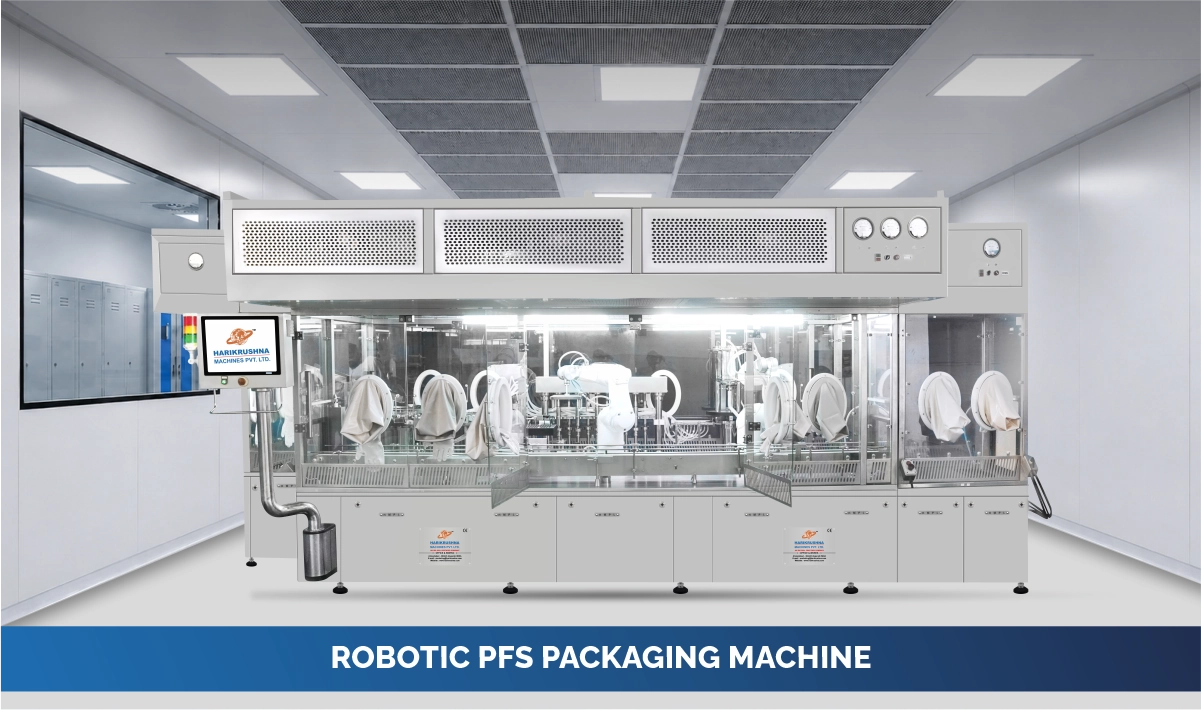
The most advanced option in the range, this Robotic PFS packaging line adds robotic pick-and-place technology to the packaging sequence. Robotics reduce human contact further than conventional automation, which supports the strictest readings of EU GMP Annex 1’s contamination control strategy.
Automatic dental cartridge plugging, filling and sealing machine
This dedicated Automatic dental cartridge plugging, filling and sealing machine automates plug insertion, anaesthetic filling, and aluminium-cap sealing for dental carpules. It follows the same aseptic design approach as the syringe machines, with SS 304 construction, laminar airflow, and servo-driven precision, while meeting the dimensional and sealing requirements specific to dental cartridges.
Visual Inspection System for Prefilled Syringes & Dental Cartridges
HMPL represents Shandong Hawk-Eye Mechanical Technology in India, bringing advanced visual inspection systems for prefilled syringes and dental cartridges to pharmaceutical and healthcare manufacturers across the country. These systems are engineered to detect foreign particles, cosmetic defects, fill-level variations, and container imperfections with precision and consistency. Whether deployed as a semi-automatic, operator-assisted workstation for smaller batches or a fully automatic high-speed system for large-scale production, the machines adapt to diverse product formats and throughput requirements, helping manufacturers uphold the strictest quality standards without compromising on efficiency.
Designed with an ergonomic layout and intelligent inspection support, these systems reduce operator fatigue while improving detection accuracy and repeatability, batch after batch. This translates directly into stronger GMP compliance, fewer rejects, and greater confidence in every unit that reaches the line’s end. Backed by HMPL’s strong local service network and deep application expertise, this partnership gives Indian pharmaceutical and healthcare manufacturers dependable, on-ground support for maintaining product quality, regulatory compliance, and operational reliability across packaging lines.
Bringing It All Together
The shift toward RTU formats isn’t a passing trend. It’s a structural change in how the pharmaceutical industry approaches sterile drug delivery, driven by patient safety, tightening EU GMP Annex 1 expectations, and the operational reality that closed, pre-sterilized containers are simply safer to process.
For manufacturers navigating this shift, choosing the right syringe filling machines matters as much as formulation science. Equipment needs to combine precision dosing, GMP-compliant construction, format flexibility, and data integrity. That’s the combination HMPL Sterile has built into its pre-filled syringe machines range, from R&D-scale units to fully robotic packaging lines.
Whether you’re scaling up a biologic, launching a self-administered therapy, or expanding dental anaesthetic production, understanding both the reasoning behind RTU packaging and the machinery that delivers it lays the foundation for a compliant, future-ready fill-finish operation.
FAQs

Pharmaceutical packaging is a crucial component in the drug delivery process, directly impacting the safety, efficacy, and usability of medications. As the demand for advanced, efficient, and reliable packaging solutions increases, Harikrushna Machines Pvt. Ltd. stands at the forefront, offering cutting-edge machinery designed to meet the stringent requirements of the pharmaceutical industry. Our latest innovation, the Pre-Filled Syringe Packaging Line, exemplifies our commitment to excellence and innovation.
Pre-Filled Syringes & Dental Cartridges Solutions
The Pre-Filled Syringe Packaging Line by Harikrushna Machines Pvt. Ltd. is a state-of-the-art system tailored to meet the specific needs of packaging pre-filled syringes and dental cartridges. This sophisticated line integrates multiple processes to ensure a seamless and efficient packaging workflow, from loading to sealing.
Key Features:
Pre-Filled Syringe Loading System
The process begins with our robust Pre-Filled Syringe Loading System, designed to handle syringes with precision and care. This system ensures that syringes are correctly positioned for subsequent operations, reducing the risk of contamination and mechanical damage.
Automatic Nest Picking-Up and Transferring System
This feature facilitates the smooth transfer of syringes from one stage to the next. By automating the movement of syringes, this system minimizes the risk of human error and maintains the integrity of the packaging process.
Sensor Inspection System
Integrated sensors meticulously inspect each syringe for shortages or empty rubber stoppers. This ensures that only complete and correctly filled syringes proceed to the next stage, maintaining the highest quality standards.
Rubber Stopper Feeding System
This automated system ensures the precise placement of rubber stoppers on each syringe. Accurate stopper placement is critical for maintaining sterility and ensuring the safety of the medication.
Finger Grips Loading System
Designed for user convenience, this system adds finger grips to the syringes, making them easier to handle and use. This feature is particularly important for healthcare professionals who need to administer injections quickly and accurately.
Plunger Rod Insertion and Tightening Mechanism
This feature guarantees the secure insertion and locking of the plunger rod. The mechanism rotates to lock and fix the plunger rod with controlled tightness, ensuring the integrity of the packaging and the reliability of the syringe’s performance.
Efficiency and Accuracy in Pharma Packaging
Our Pre-Fill Syringe Packaging Line embodies efficiency and accuracy. Each component of the line works in harmony to deliver high-quality, ready-to-use pre-filled syringes and dental cartridges. This comprehensive solution not only enhances productivity but also ensures the safety and efficacy of the packaged products, meeting the high standards required by the pharmaceutical industry.



Harikrushna Machines Pvt. Ltd.: A Legacy of Excellence
Global Reach and Impact
Harikrushna Machines Pvt. Ltd. is a name synonymous with innovation and reliability in the pharmaceutical machinery industry. We have 12,500 machines installed in more than 60 countries, we are trusted packaging partner for many startups and SMEs. Our dedication to quality and customer satisfaction has propelled us to the forefront of the industry.
Esteemed Clientele
Our extensive clientele includes some of the most respected names in the pharmaceutical industry. We are proud to serve:
Sun Pharma | Cipla | Dr. Reddy’s Laboratories | Zydus Cadila | Torrent Pharmaceuticals | Lupin | Aurobindo Pharma | Alkem Laboratories | AKUMS | Otsuka | Glenmark Pharmaceuticals | ITC | Sava Healthcare | Mylan | Rusan | GlaxoSmithKline (GSK) | Hetero
State-of-the-Art Manufacturing Facility
Our manufacturing unit, located in Vatva, Ahmedabad, Gujarat, is equipped with the latest technology and machinery. This facility enables us to design, develop, and produce high-quality pharmaceutical packaging machines that meet the evolving needs of the industry. Our commitment to excellence is reflected in every aspect of our manufacturing process, from the selection of raw materials to the final assembly and testing of our machines.
Why Choose Harikrushna Machines Pvt. Ltd.?
Innovation and Technology
At Harikrushna Machines Pvt. Ltd., we are committed to continuous innovation. Our team of experts constantly explores new technologies and processes to enhance our product offerings. The PreFilled Syringe Packaging Line is a testament to our innovative spirit and dedication to excellence. We invest heavily in research and development to ensure that our machines are at the cutting edge of technology, providing our clients with the most advanced solutions available.
Quality Assurance
Quality is at the core of everything we do. Our stringent quality control measures ensure that every machine we produce meets the highest standards of safety, reliability, and performance. From the selection of raw materials to the final inspection, every step is meticulously monitored to guarantee the best possible outcomes. We adhere to international quality standards and certifications, ensuring that our machines are compliant with global regulatory requirements.
Customer-Centric Approach
We believe in building lasting relationships with our clients. Our customer-centric approach ensures that we understand and cater to the unique needs of each client. We offer comprehensive support services, including installation, training, and maintenance, to ensure the seamless operation of our machines. Our dedicated customer support team is always available to address any issues or concerns, providing prompt and efficient solutions.
Sustainability
Sustainability is an integral part of our business philosophy. We strive to minimize our environmental impact through energy-efficient processes and sustainable practices. Our commitment to sustainability extends to our product designs, which focus on reducing waste and promoting eco-friendly packaging solutions. We are continually exploring new ways to enhance the sustainability of our operations and products, ensuring that we contribute positively to the environment.
Detailed Insights: Pre-Filled Syringe Packaging Line
Our Pre-Fill Syringe Packaging Line is designed to incorporate several advanced systems to meet the diverse needs of pharmaceutical companies. This includes the Pre-Fill Syringe Machines, Pre-Filled Syringe Filling & Stoppering System, Nested Prefilled Syringe & Stoppering Machine, Semi Automatic Pre-Fillable Syringes & Nested Stoppers, and the Automatic Pre-Filled Syringe Plunger Rod Insertion and Labeling Machine. Each machine is engineered to enhance productivity and ensure compliance with stringent industry standards.
Specific Machines in Our Line

- Pre-Fill Syringe Machines
These machines are efficient and accurate filling of pre-filled syringes. They ensure precise dosing and minimize the risk of contamination. - Pre-Fill Syringe Packaging Line
This comprehensive line integrates various processes, from syringe loading to final packaging, ensuring a seamless workflow. - Nested Prefilled Syringe & Stoppering Machine
This machine handles syringes in nests, ensuring efficient stoppering and reducing the risk of contamination. - Semi-Automatic Pre-Fillable Syringes & Nested Stoppers
Ideal for smaller batches, this machine offers flexibility and efficiency for semi-automatic operations. - Plunger Rod Insertion, Finger Grip Placement & Labeling System
This system ensures the accurate insertion of plunger rods, placement of finger grips, and labelling of syringes, enhancing usability and traceability. - Pre-Fill Syringe Filling & Stoppering System
Ensures precise filling and stoppering of syringes, maintaining sterility and dosage accuracy. - Pre-Filled Syringe Filling & Stoppering System
Similar to the Pre-Fill Syringe Filling & Stoppering System, this machine guarantees the integrity of the filling and stoppering processes. - Cartridge Filling, Sealing, and Stoppering Machine
This machine is perfect for the filling, sealing, and stoppering of cartridges, ensuring product safety and efficacy. - Automatic Pre-Filled Syringe Plunger Rod Insertion and Labeling Machine
Automates the insertion of plunger rods and labelling of syringes, enhancing efficiency and reducing manual handling. - PFS Packaging Machine
Our PFS (pre-filled syringe) packaging machines provides high precision and efficiency in packaging processes. - PFS Filling Line
Our PFS Filling Line is perfect for pre-filled syringes, ensuring accurate filling and compliance with industry standards. - Pre-Filled Syringe Filling Machine
This machine ensures the precise filling of pre-filled syringes, maintaining the integrity of the medication. - Pre-Filled Syringe Filling and Stoppering Machine
Combines filling and stoppering in one machine, ensuring a streamlined process and high product quality.